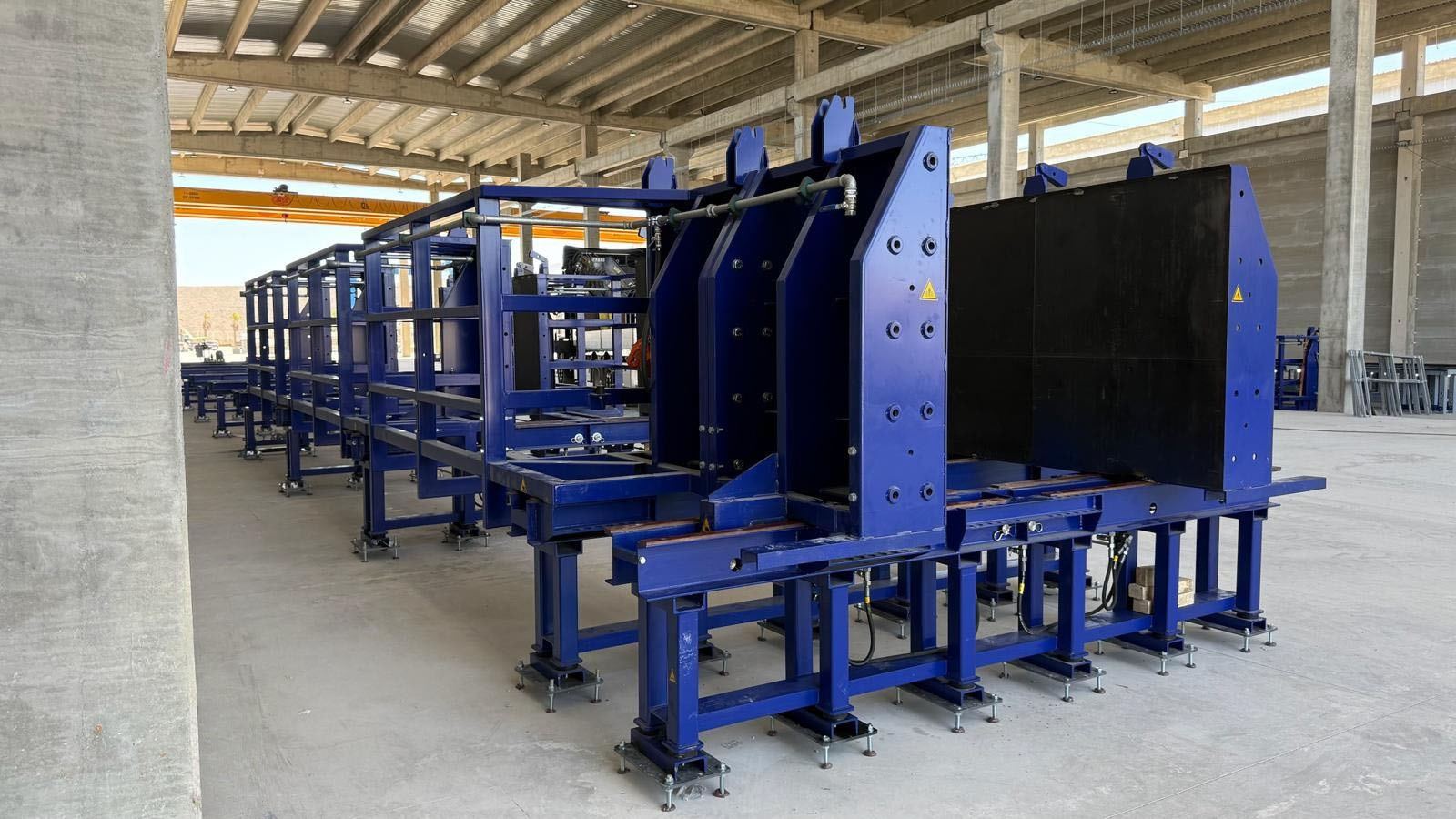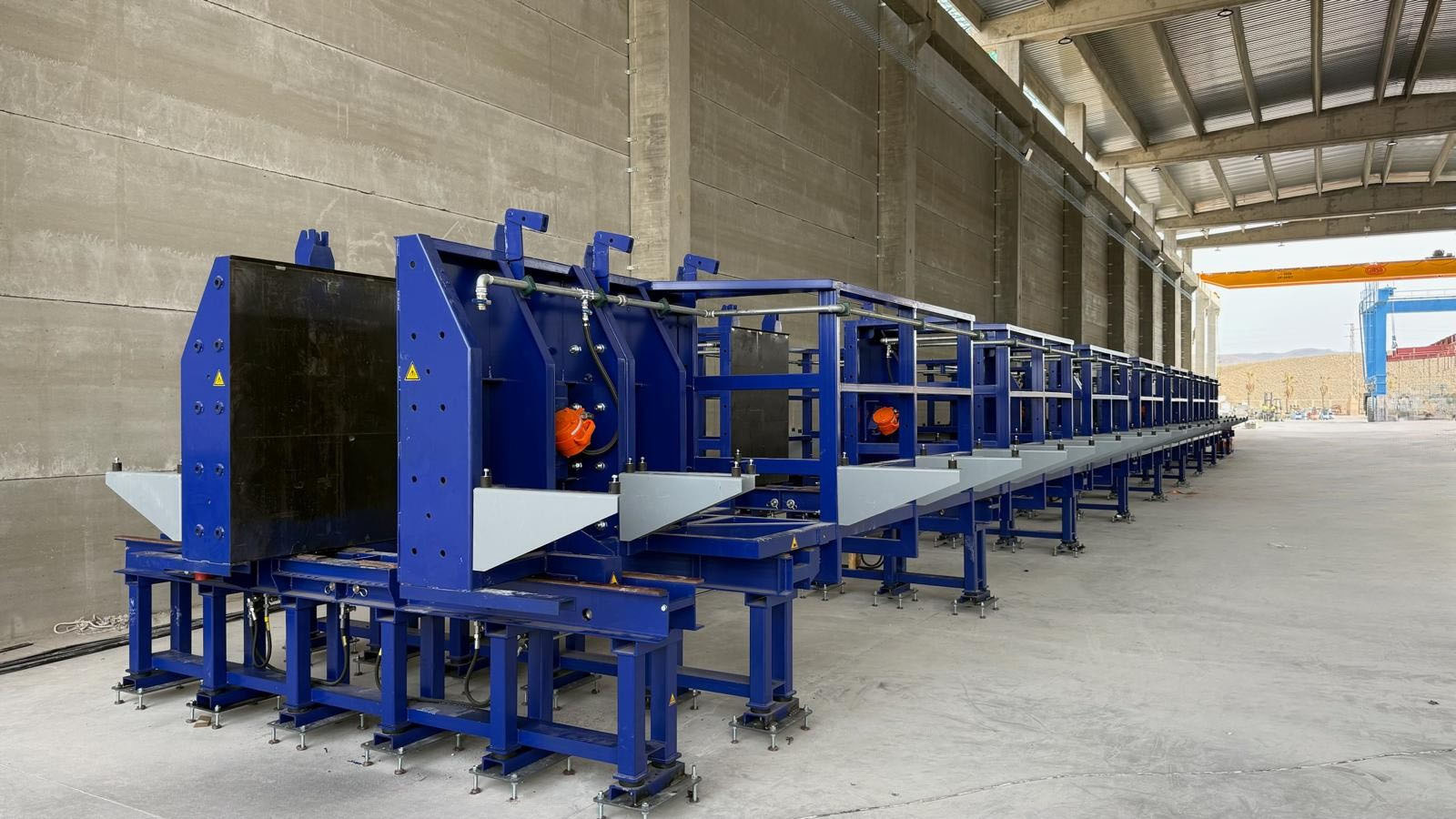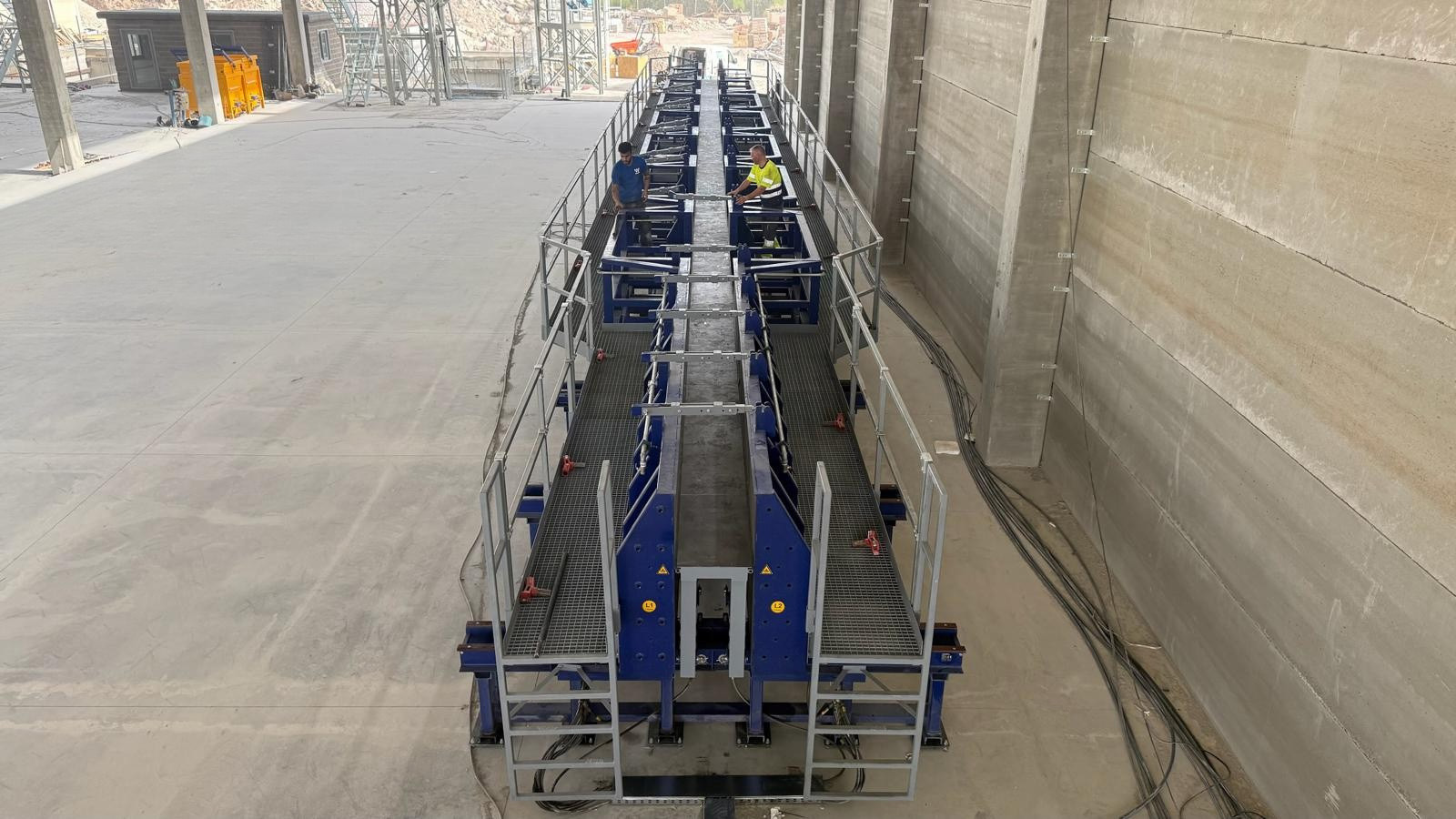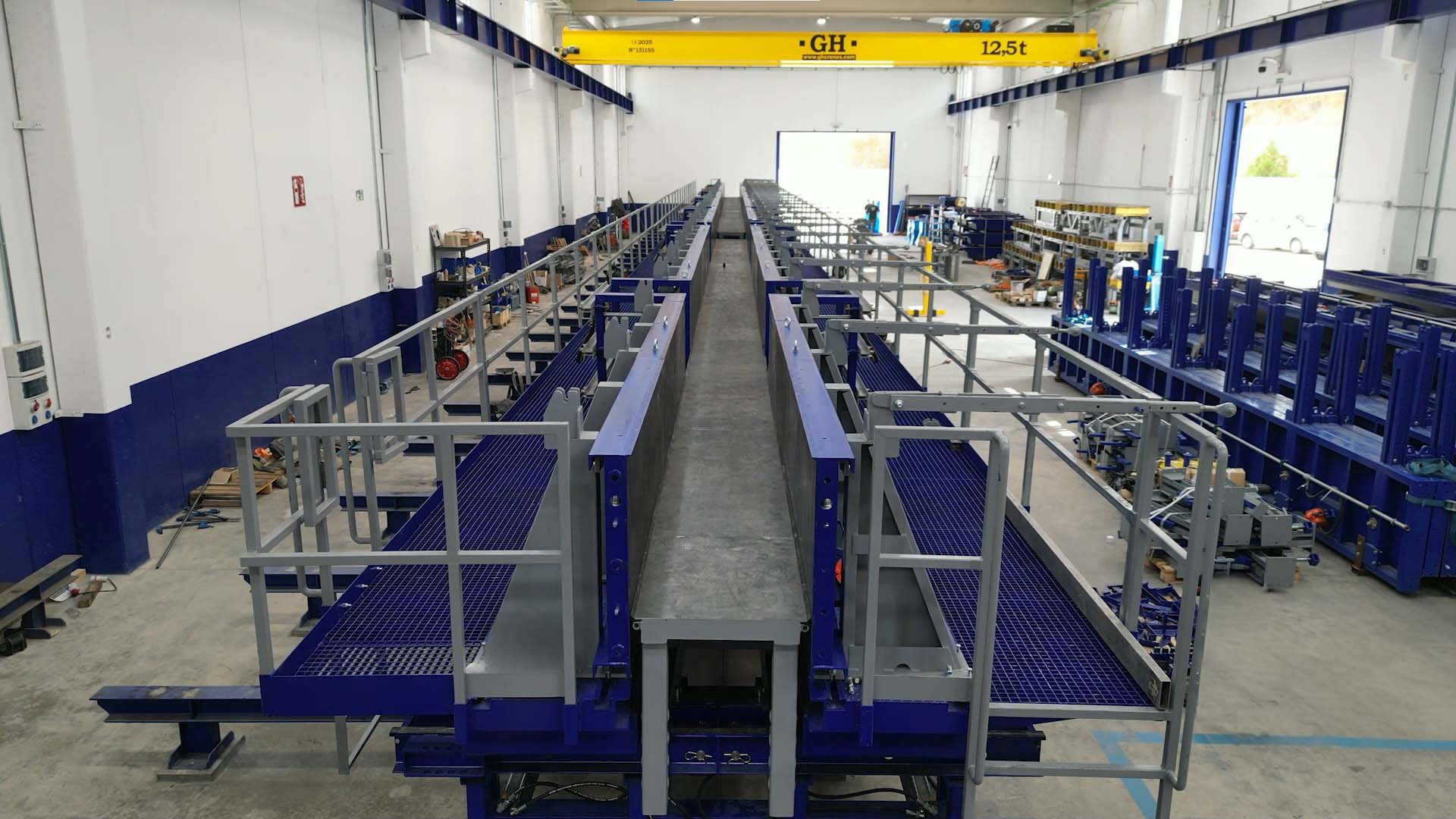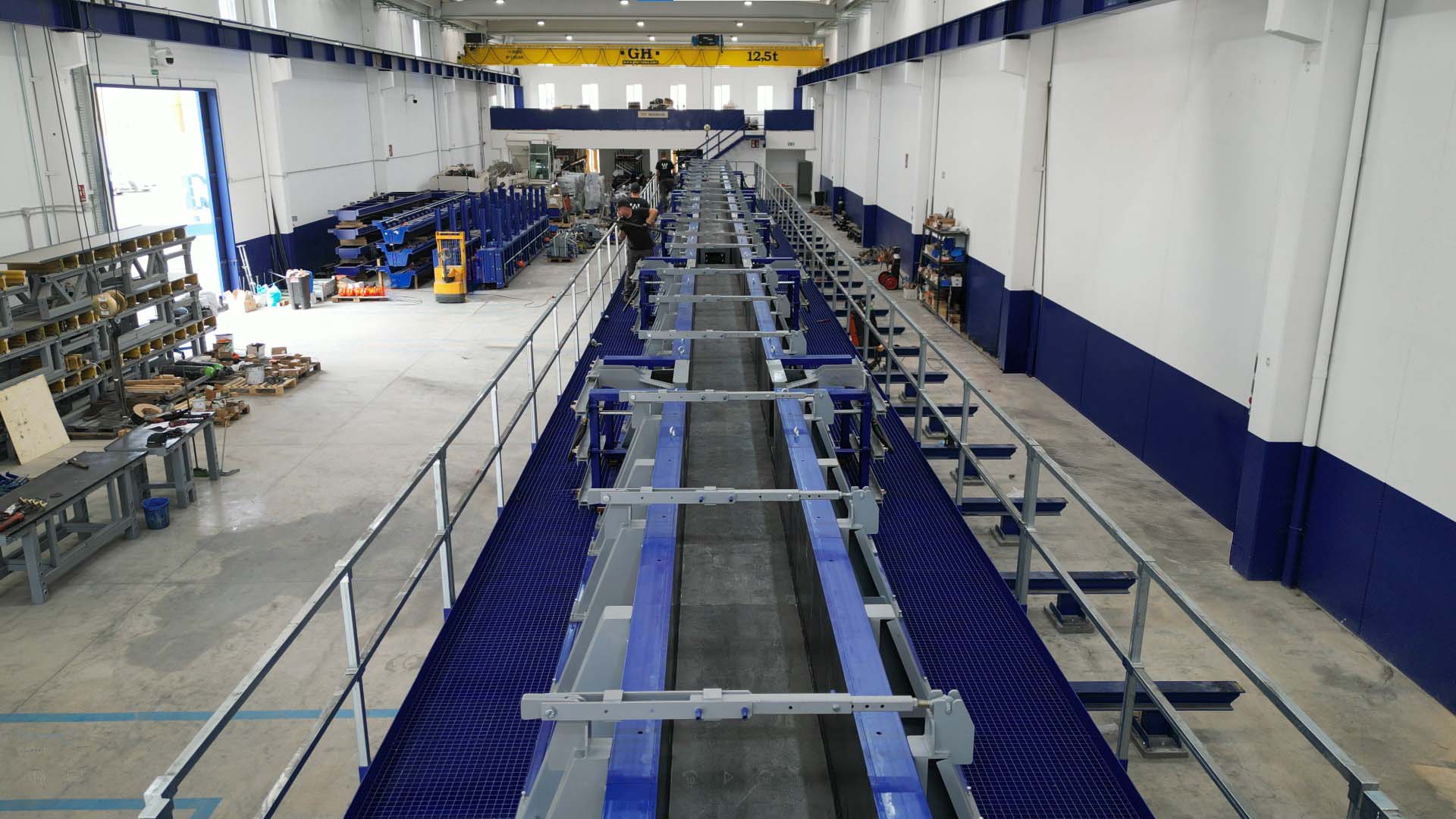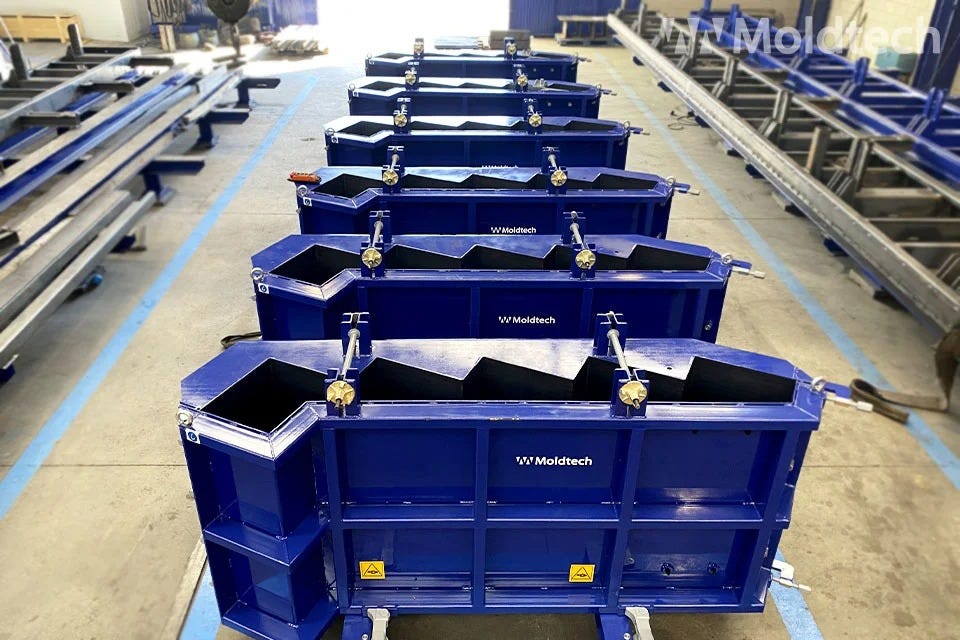


Moldtech has manufactured two column moulds, 30 and 50 metres long, for the production of precast concrete columns for industrial buildings in Spain. Both units form part of the same supply and feature configurable bases, hydraulic side-panel opening and closing, and pneumatic vibration.
The resulting columns will form part of the buildings’ load-bearing structures. Their corbels will provide bearing points for beams and other precast elements, in accordance with the structural layout and design requirements.
INDUSTRIALISED CONSTRUCTION AND PRECAST CONCRETE IN SPAIN
Industrialised construction is gaining importance in Spain as the sector seeks to expand production capacity and address shortages of skilled labour. Manufacturing components in a factory allows operations traditionally carried out on site to be completed in advance, with transport and erection planned as subsequent stages.
Market figures reflect growing activity. Following an 8% increase in 2025 compared with 2024, precast concrete consumption in Spain rose by 16% between January and June 2026 compared with the same period in 2025. Both figures cover the precast concrete sector as a whole and its various applications, rather than columns or industrial buildings alone.
In industrial construction, prefabrication allows structures to be assembled using columns, beams and other components manufactured in advance. This approach requires the dimensions of the elements, their connections, transport requirements and erection sequence to be coordinated from the early design stages.
Digitalisation helps connect these operations through models containing geometric and technical information. These models link component design with manufacturing instructions and support traceability throughout transport and erection.
Within this process, moulds translate the geometry defined in the design into the finished concrete element. Their adjustability allows an organised manufacturing process to accommodate the specific requirements of each structure.
COLUMNS AND CORBELS FOR INDUSTRIAL STRUCTURES
Columns receive loads from other structural components and transfer them to the foundations. Their cross-sections, lengths and bearing arrangements are determined by the requirements of each building.
Corbels are projections cast integrally with the concrete column to support beams or other structural elements. Producing these columns requires the mould to reproduce both the main column body and the shape and position of each corbel.
The two moulds supplied address these requirements through different lengths and component arrangements.
50-METRE FLEXIBLE COLUMN MOULD
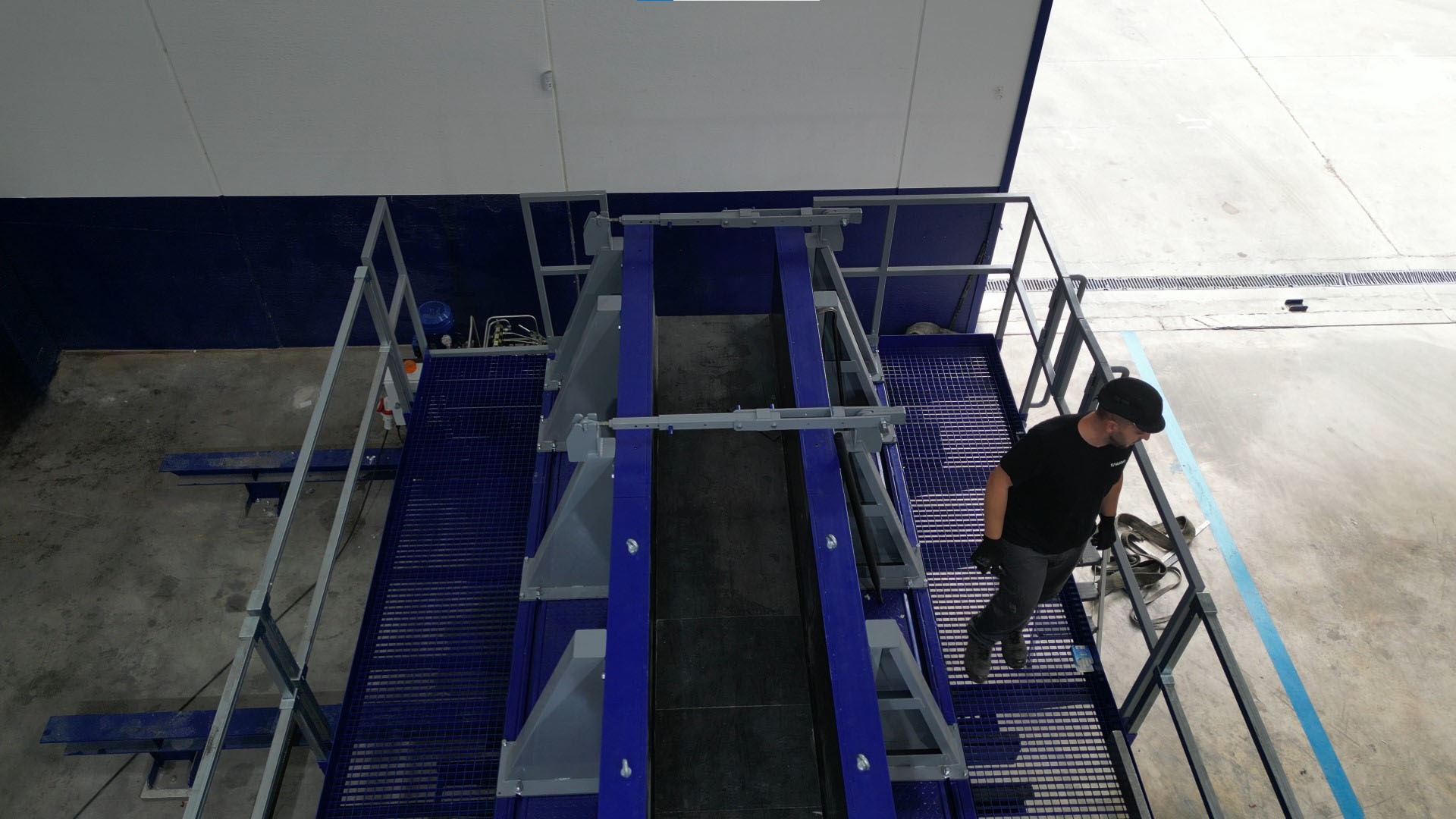
The longer unit comprises two 50-metre side panels, configurable bases, support legs, upper closing devices and a working platform.
The bases define the casting cross-section, while the corbel formers reproduce the bearing features specified for each column. The upper closing devices adjust to the selected configuration and secure the assembly during casting.
This arrangement allows the components defining the concrete element to be changed while retaining the mould’s main structure. The equipment can therefore accommodate different geometries within its configuration limits.
The working platform provides access to the upper area during preparation and concrete placement. The movable side panels allow access to the interior when the mould is open.
30-METRE MOULD WITH CONFIGURABLE CORBEL FORMERS
The second unit comprises two 30-metre side panels, a configurable base support and removable stop ends. These define the longitudinal limits of the elements within the casting space.
The supply includes steel bases in widths of 500, 600, 700 and 800 mm, allowing columns with different cross-section widths to be manufactured. It also includes top, bottom and side corbel formers for the required column configurations.
This combination allows the column cross-section and bearing arrangement to be adapted to the requirements of the industrial structure.
The base support incorporates adjustment mechanisms, height extensions, an adjustment scale and base-fixing clamps. These components establish and secure the required configuration before concrete placement begins.
HYDRAULIC OPENING AND CLOSING
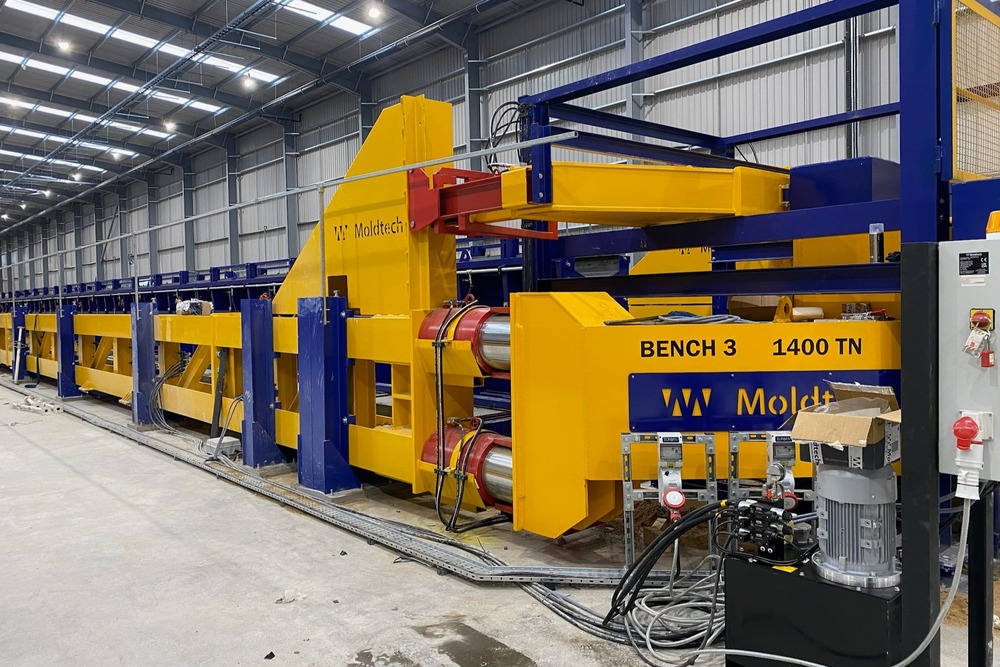
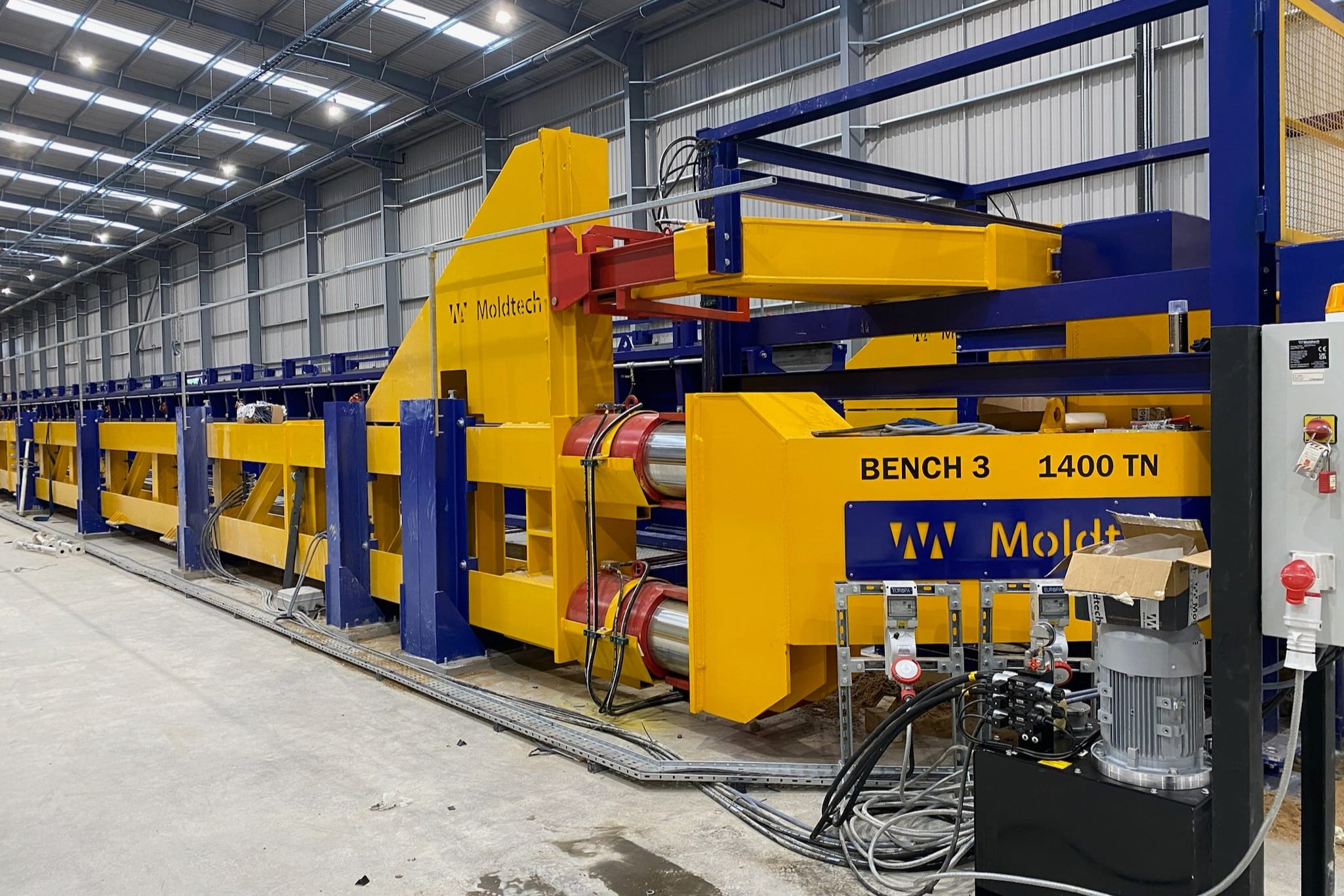
Both moulds are equipped with a hydraulic power unit and an electrical control cabinet to operate the opening and closing of the side panels.
Opening the panels facilitates surface cleaning, release-agent application, reinforcement placement and inspection of the mould interior before casting. Once preparation is complete, the hydraulic system brings the side panels into their working position, where they are secured using the corresponding connecting and locking components.
After the concrete has hardened and the required demoulding conditions have been reached, the panels open to release the sides of the elements and allow their removal. Hydraulic operation therefore supports both mould preparation and column demoulding.
INTEGRATED PNEUMATIC VIBRATION
Both units feature pneumatic vibrators mounted on the side panels, connected to a compressed-air supply.
The system transmits vibration through the mould to promote concrete compaction during placement and help distribute the concrete around the reinforcement.
This is particularly relevant at the junctions between the column body and its corbels. In these areas, changes in geometry require appropriate filling and compaction to reproduce the specified shape.
DESIGNED AND MANUFACTURED IN SPAIN
Moldtech designs and manufactures moulds and equipment for the precast concrete industry at its facilities in Alcalá de Guadaíra, Seville. Its range includes solutions for structural elements, building components and infrastructure products.
With this supply for the Spanish market, the company continues to develop equipment for industrial construction, applying its experience in domestic and international projects to the production of precast concrete columns.