

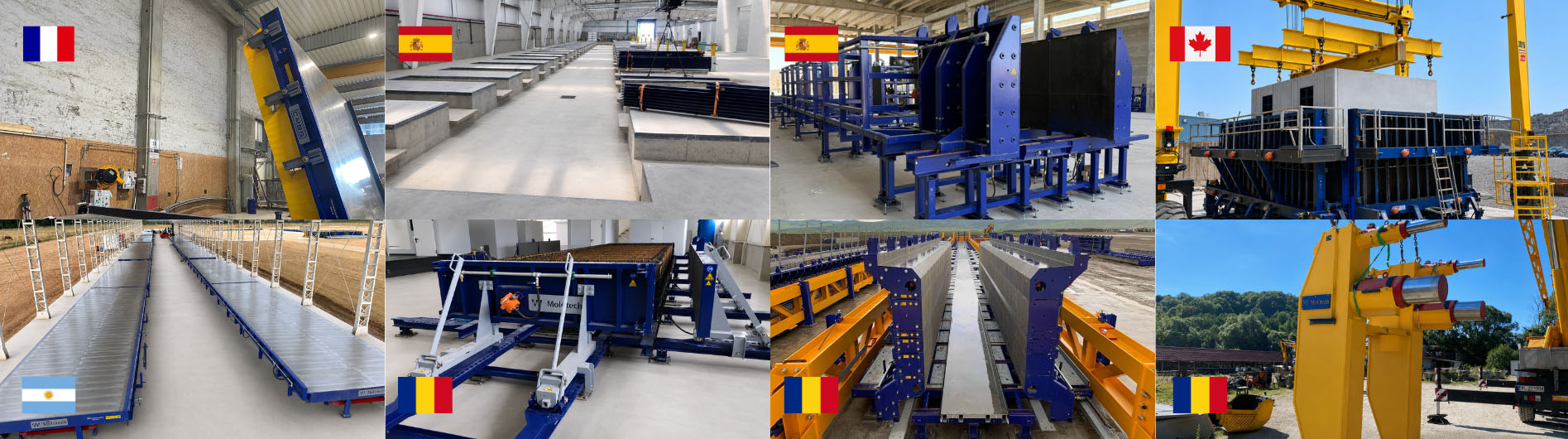
Moldtech is simultaneously carrying out the installation and commissioning of nine projects in France, Spain, Canada, Romania, Argentina and Ghana. This international deployment, spanning Europe, the Americas and Africa, reflects not only the company’s technical capacity to develop equipment for different precast concrete applications, but also the strength of its industrial, logistical and organisational structure.
The projects cover the three main areas of industrialised construction—residential construction, civil engineering and industrial construction—and include tilting tables, 3D moulds, circulation systems, prestressing beds and configurable moulds for structural elements. This combination of solutions demonstrates Moldtech’s growth and its ability to respond in a coordinated manner to highly diverse production requirements.
“The simultaneous execution of these projects shows that our capacity is no longer measured solely by the manufacture of equipment, but also by the trust placed in us by our international customers to develop complete installations,” says Ángel Cejudo, CEO of Moldtech.
Nine Installations, One Global Plan
Managing nine installations at the same time requires far more than manufacturing the equipment. Each project demands specific planning, beginning with the engineering phase and continuing through manufacturing, testing, documentation, transport, installation and technical support at destination.
Each of these projects involves hundreds of components, international logistics planning and coordination between engineering, manufacturing and installation teams to ensure that every system enters operation according to the agreed schedule.
The simultaneous coordination of these activities involves mobilising personnel and technical resources across different geographical locations, organising production and shipping schedules, preparing components and spare parts, and anticipating the specific conditions of each installation.
All of this must be carried out while maintaining full traceability of every supply package and ensuring that the equipment reaches the site in the correct sequence to avoid interruptions during assembly.
This deployment demonstrates Moldtech’s ability to manage complex international projects from its design and manufacturing centre in Spain, coordinating its engineering, production, quality, logistics, installation and technical service departments across the entire process.
Logistics as Part of the Industrial Solution
The logistics involved in large-scale industrial machinery differ significantly from those of a conventional supply. Equipment dimensions, modular configurations, integrated hydraulic and electrical systems, and the need to follow a precise installation sequence require each shipment to be carefully planned.
In some projects, the equipment must be divided into modules to optimise transport. In others, successive shipments must be coordinated so that the different parts of the installation arrive in line with the progress of the assembly work. Planning must also take into account the unloading resources available, access to the plant, foundation conditions and the auxiliary machinery required at each site.
Managing these operations simultaneously across six countries and three continents requires an overall global perspective combined with individual project management tailored to the specific characteristics of each installation.
Six Markets with Different Requirements
France, Spain, Canada, Romania, Argentina and Ghana each present different industrial, regulatory and logistical environments. For every destination, technical documentation, shipping procedures and installation preparations must be adapted to the specific requirements of the market and the customer.
Administrative and documentary management therefore plays a particularly important role in this type of operation. Certificates, packing lists, customs documentation, manuals, drawings, safety procedures and technical files must all be prepared in a coordinated manner to facilitate transport, reception and installation.
These requirements are compounded by differences in internal plant procedures, site working conditions, applicable technical standards and the need to coordinate suppliers, transport companies and local teams.
The addition of Ghana further extends the geographical scope of this deployment and introduces a new operational context in Africa, with its own logistical, documentary and planning requirements.
The ability to anticipate and manage these particular conditions is essential for meeting deadlines and ensuring that each installation progresses in an orderly and controlled manner.
Solutions for Residential Construction, Civil Engineering and Industry
The nine projects reflect the wide range of applications currently addressed by Moldtech within the precast concrete sector.
In residential construction, tilting tables and three-dimensional moulds enable the production of concrete panels, façades and volumetric modules under controlled factory conditions. These solutions improve dimensional accuracy and repeatability while reducing the amount of subsequent work required on site.
In civil engineering, high-capacity prestressing beds enable the manufacture of structural beams for bridges, viaducts and other infrastructure projects. These systems are designed to control the stressing, casting and detensioning processes.
In the industrial sector, moulds for columns, Timpan elements, transformer substations, beams and other special components allow structural and functional precast elements to be manufactured according to the specific requirements of each project.
Moldtech’s simultaneous involvement in these three sectors confirms its ability to develop customised solutions ranging from individual machines to complete production lines.
Nine Projects with Specific Technical Configurations
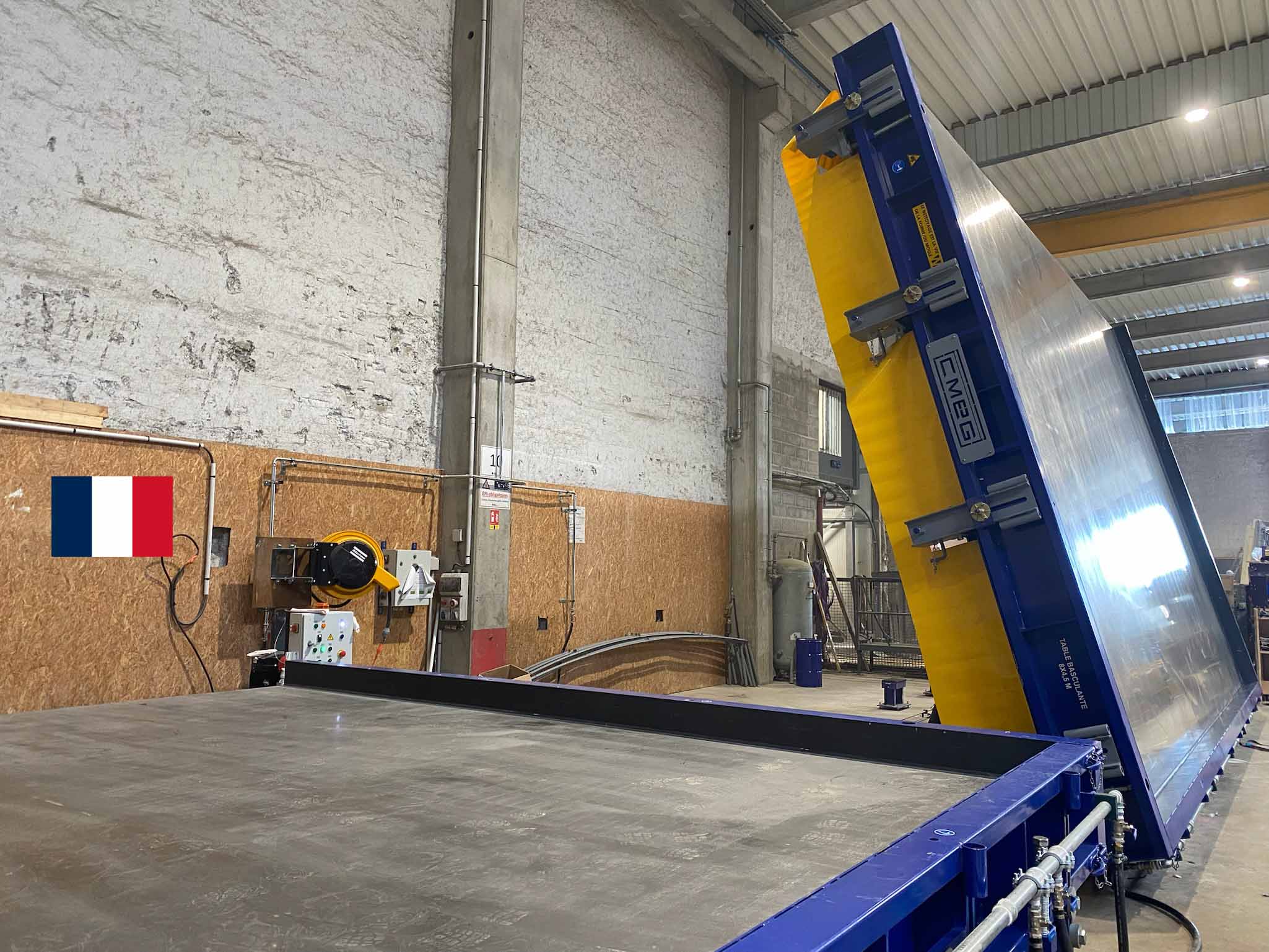
In France, Moldtech will install a tilting table for the production of non-prestressed precast concrete panels. The equipment will manufacture elements measuring up to 8 metres in length and 4.5 metres in width, with thicknesses ranging from 150 to 350 millimetres. The table is tilted by hydraulic cylinders operated from the main control cabinet.
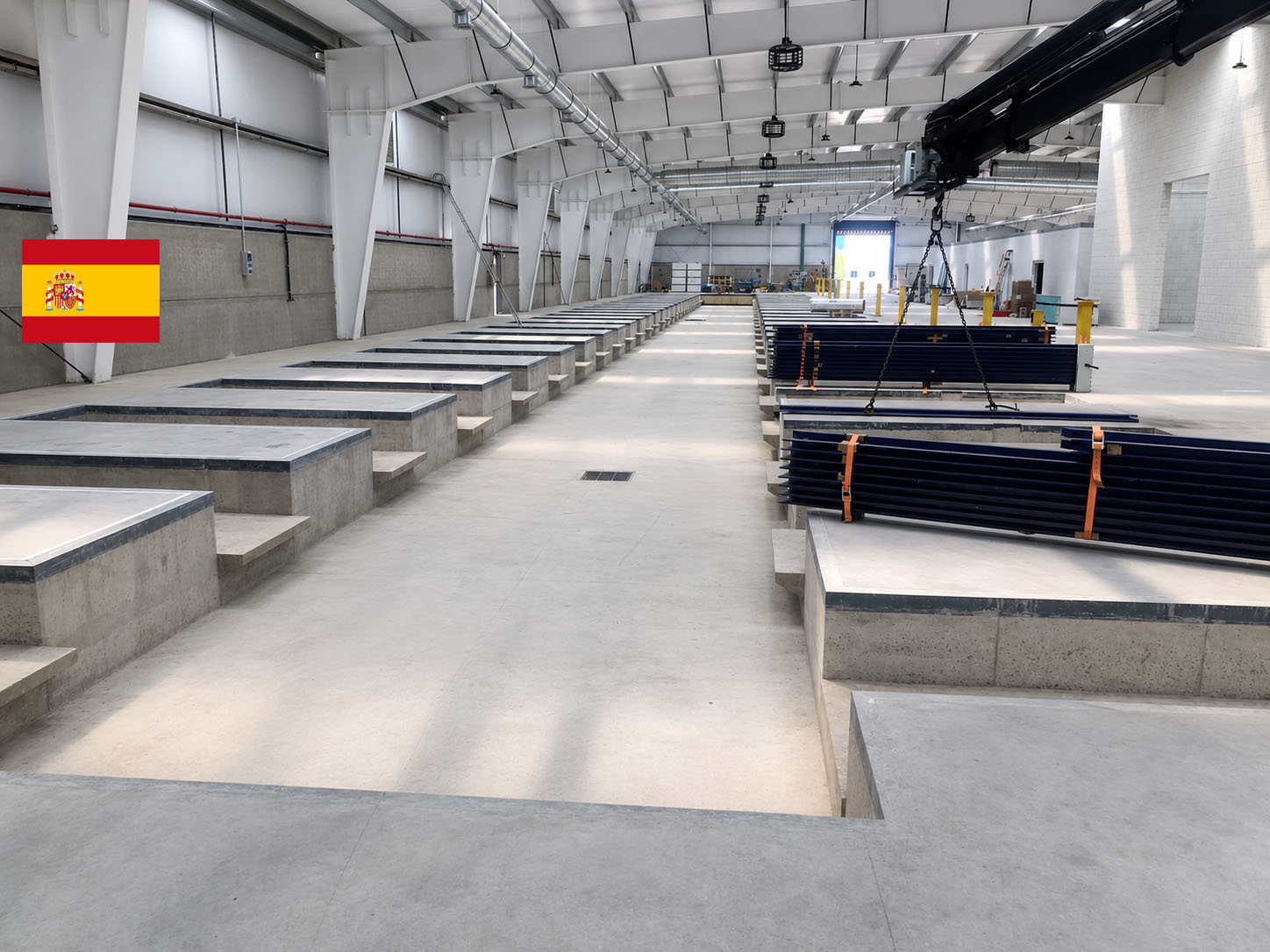
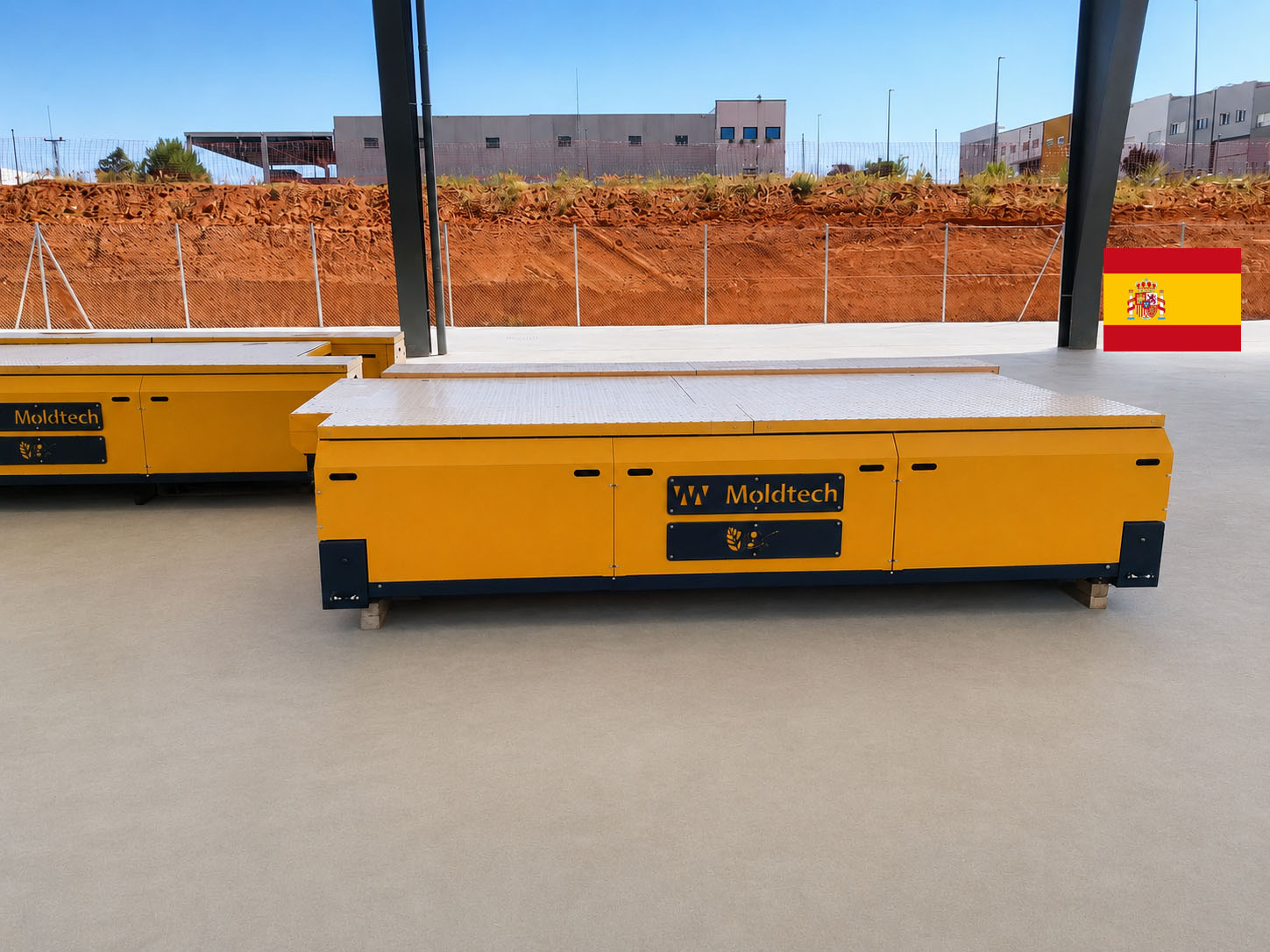
In Spain, one of the projects consists of a circulation and transport system comprising a central longitudinal rail and 50 lateral storage cells. The system will transport the precast elements between the different positions in a controlled manner, organise the internal production flow and reduce manual handling.
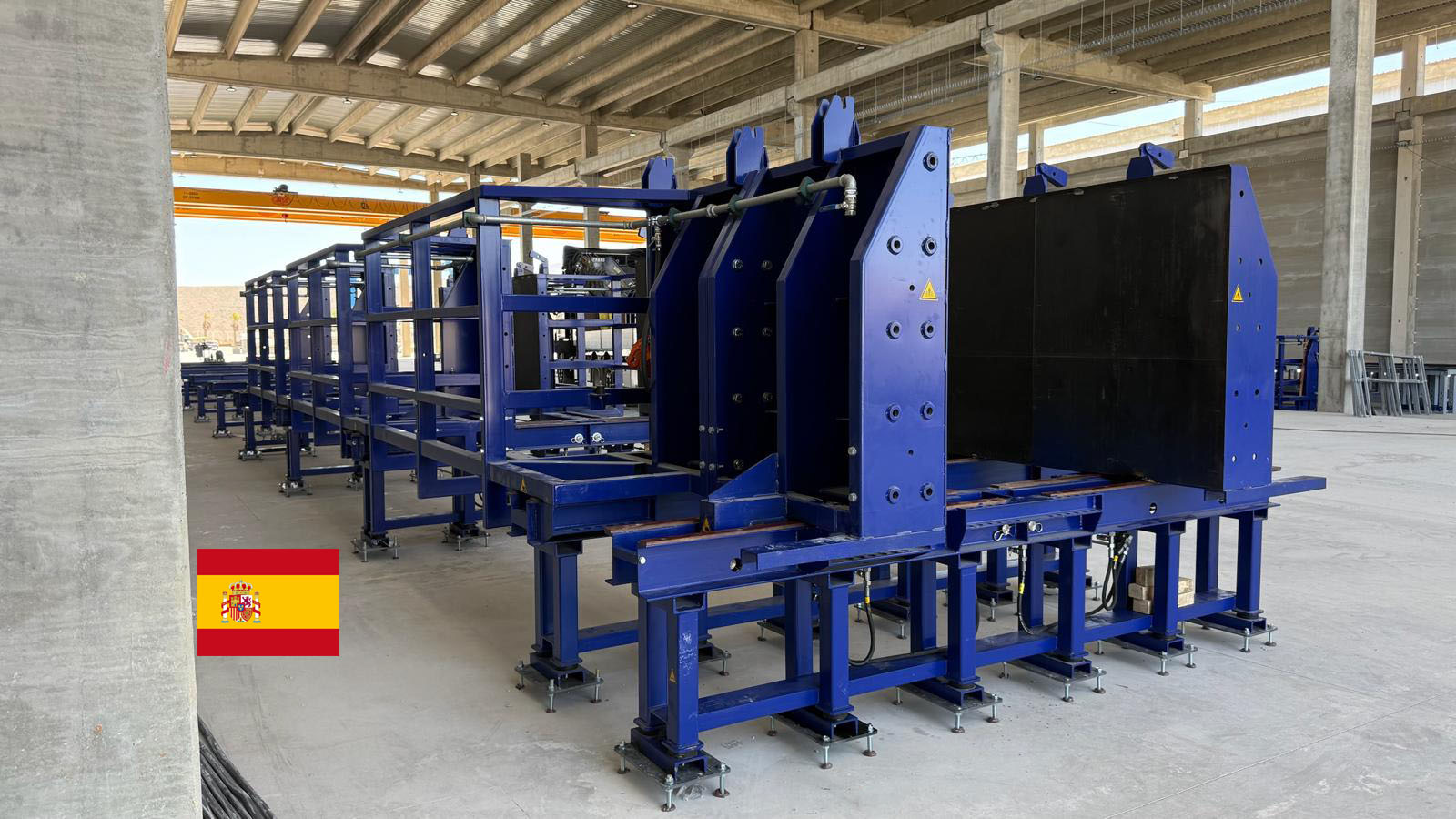
A second project in Spain involves the installation of a single-lane flexible column mould with a total length of 50 metres. The equipment is designed to manufacture columns with cross-sections ranging from 50 × 50 to 80 × 80 centimetres and incorporates pneumatic vibration and a steel chamfer former along the upper edge.
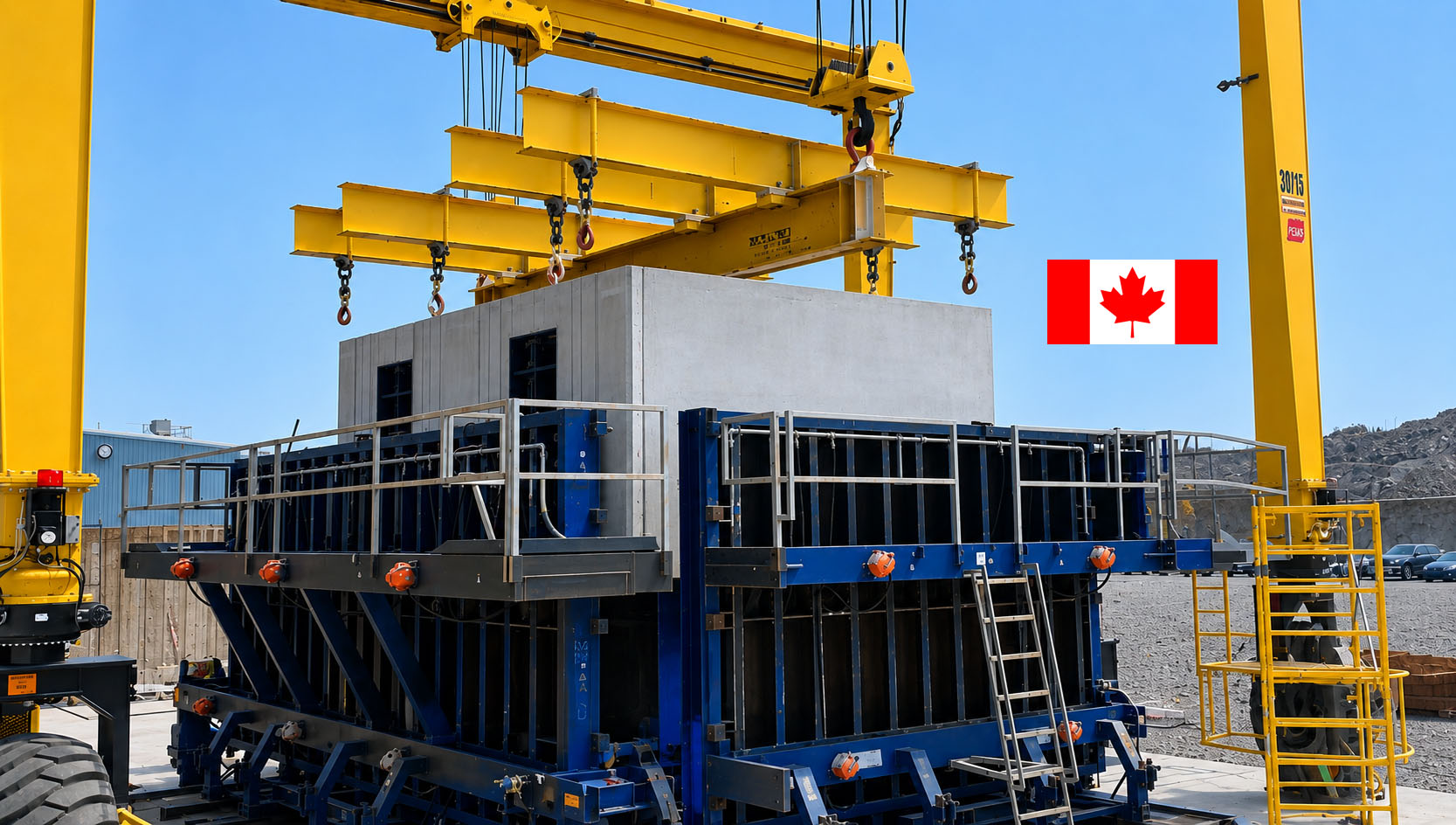
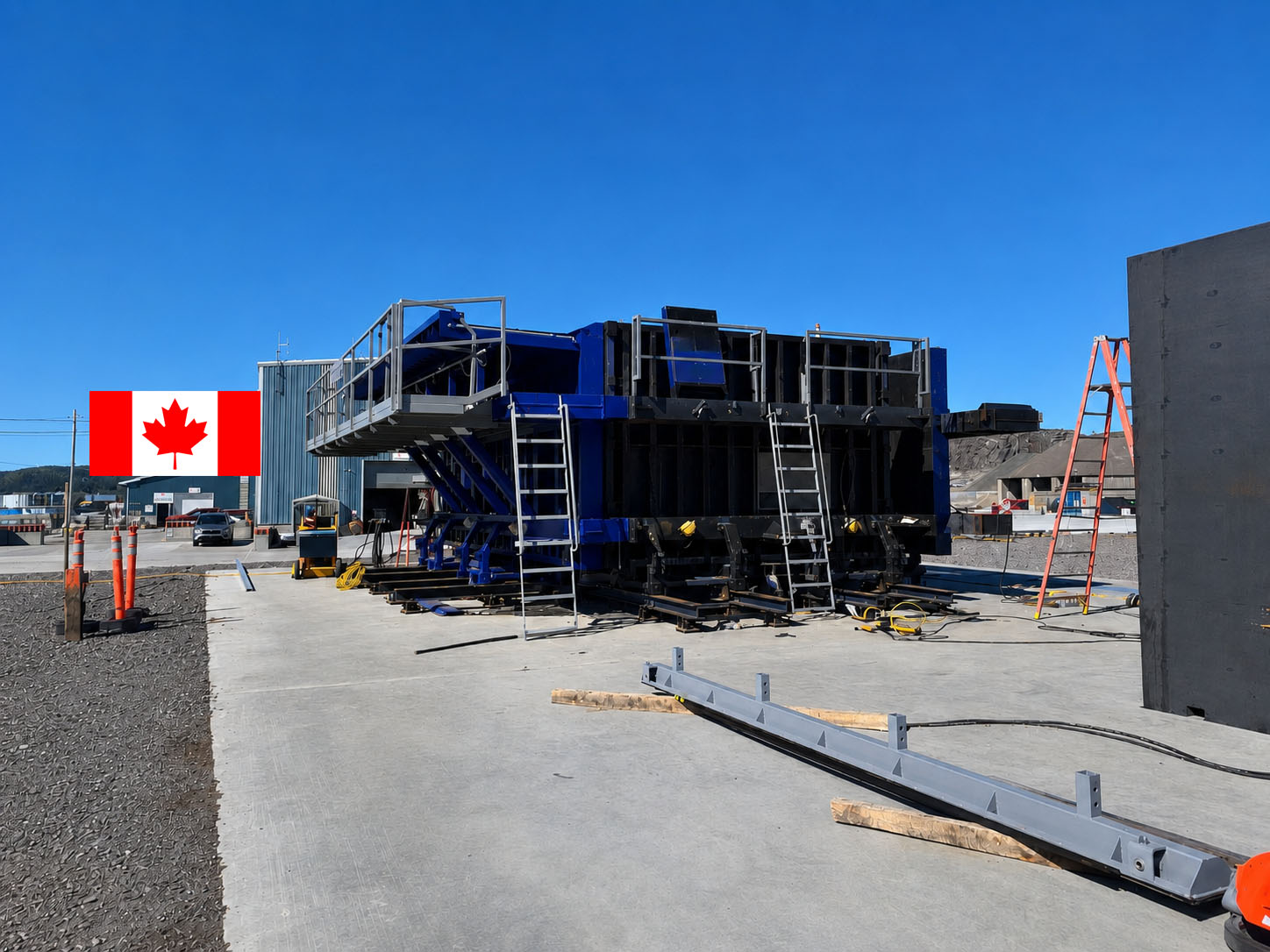
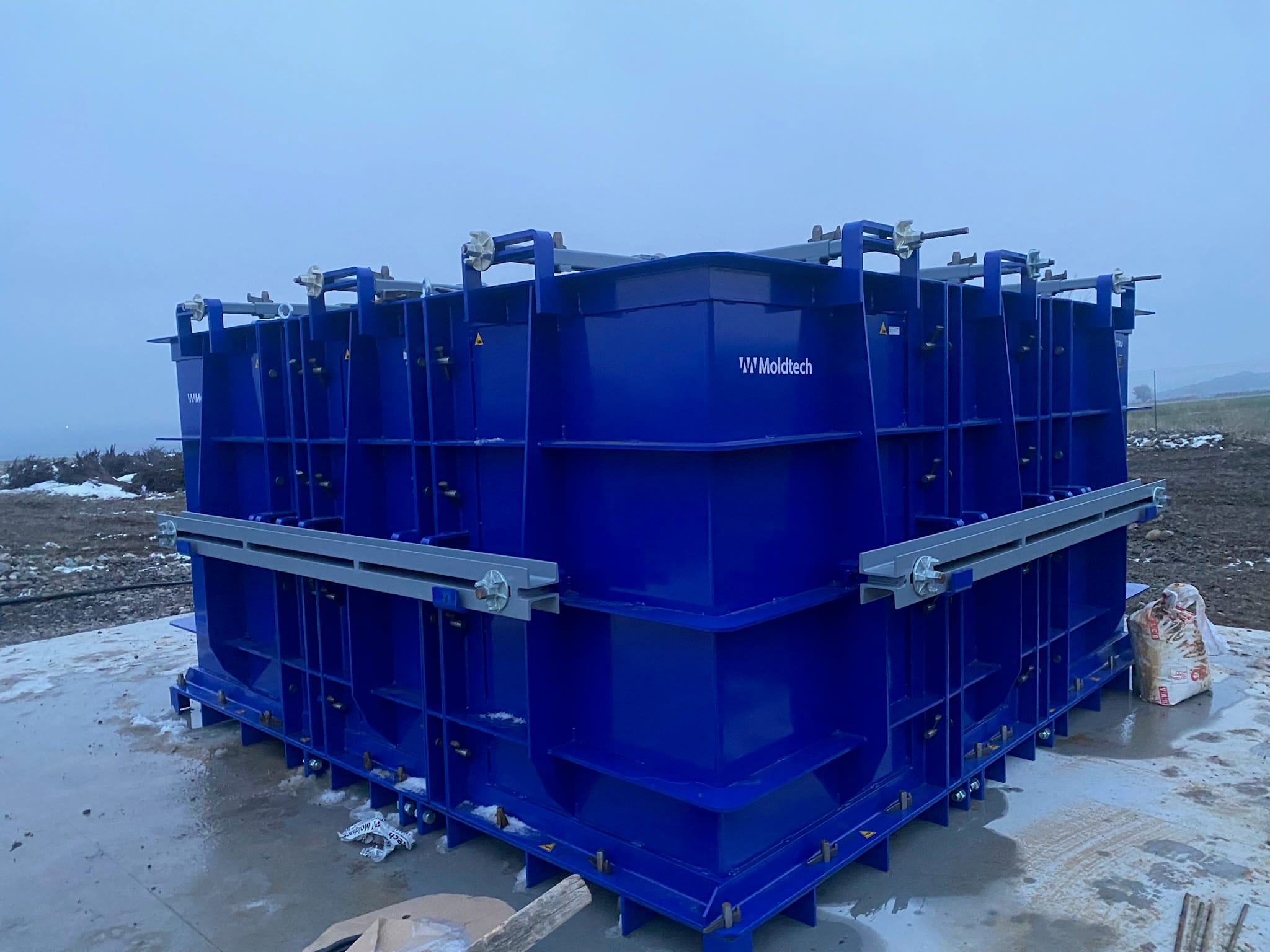
In Canada, the supply includes two 3D mould configurations for manufacturing non-prestressed concrete elements. The equipment incorporates fixed or configurable cores, interchangeable bases, hydraulically operated external sides, geometry adjustment systems and pneumatic vibration. This configuration will allow production to be adapted to different dimensions and geometries, including elements with cantilevers and balconies.
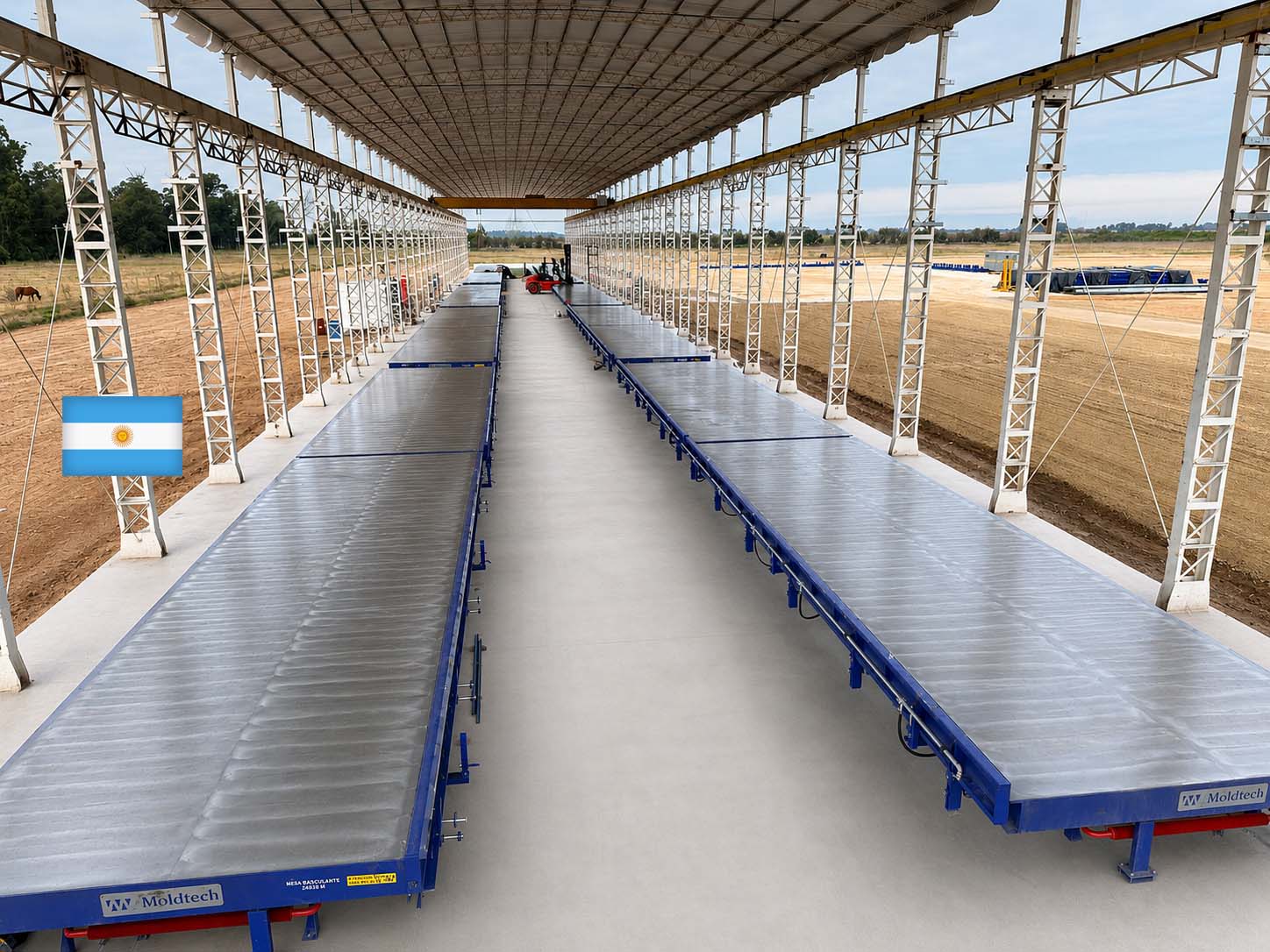
In Argentina, Moldtech will install a tilting table comprising two modules, each measuring 12 metres in length and 3.5 metres in width. Together, they will form a 24-metre-long production line. The equipment will manufacture panels with variable thicknesses ranging from 100 to 300 millimetres and will incorporate pneumatic vibration and pre-installation for a heating system to support and control the curing process.
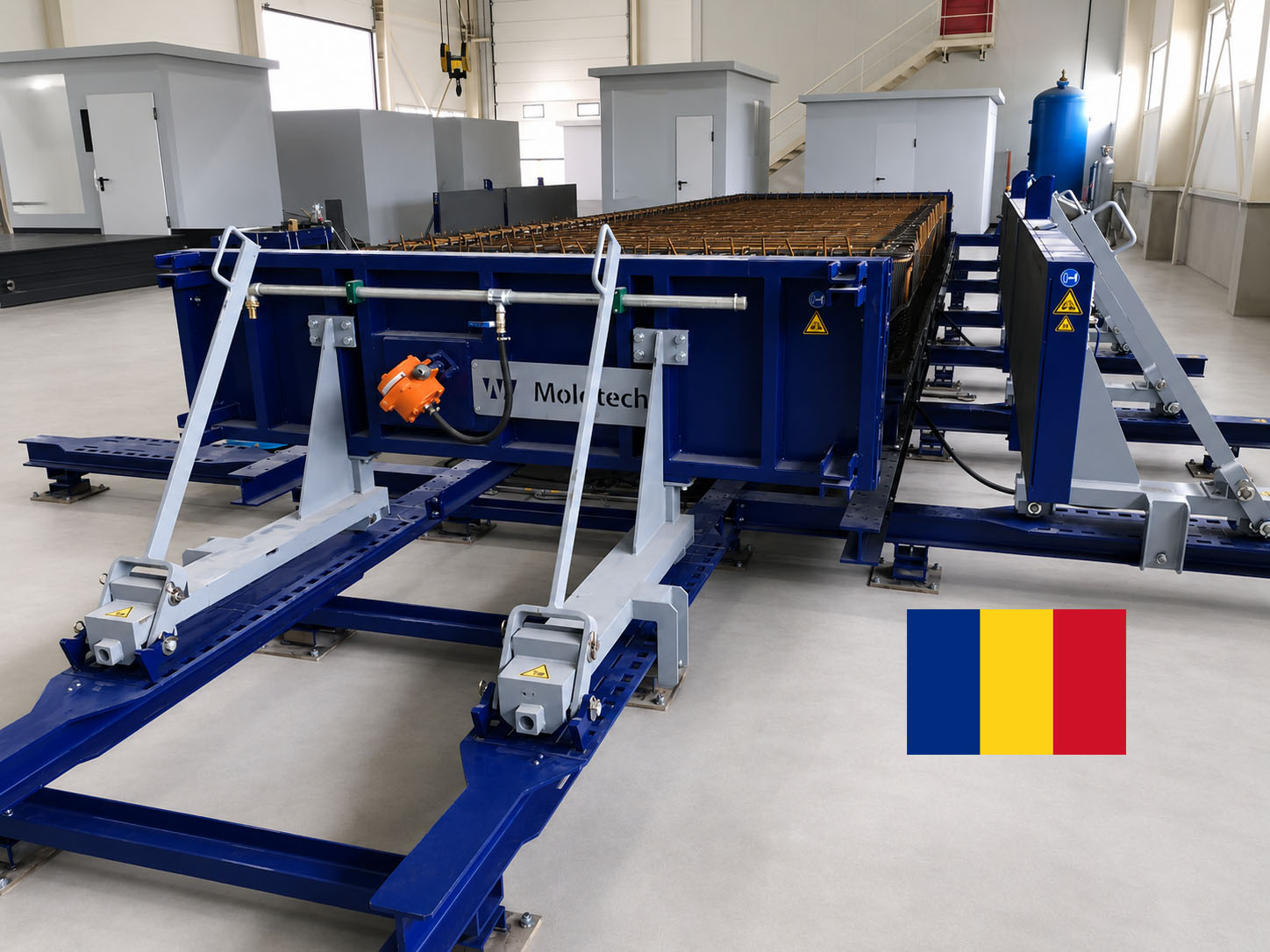
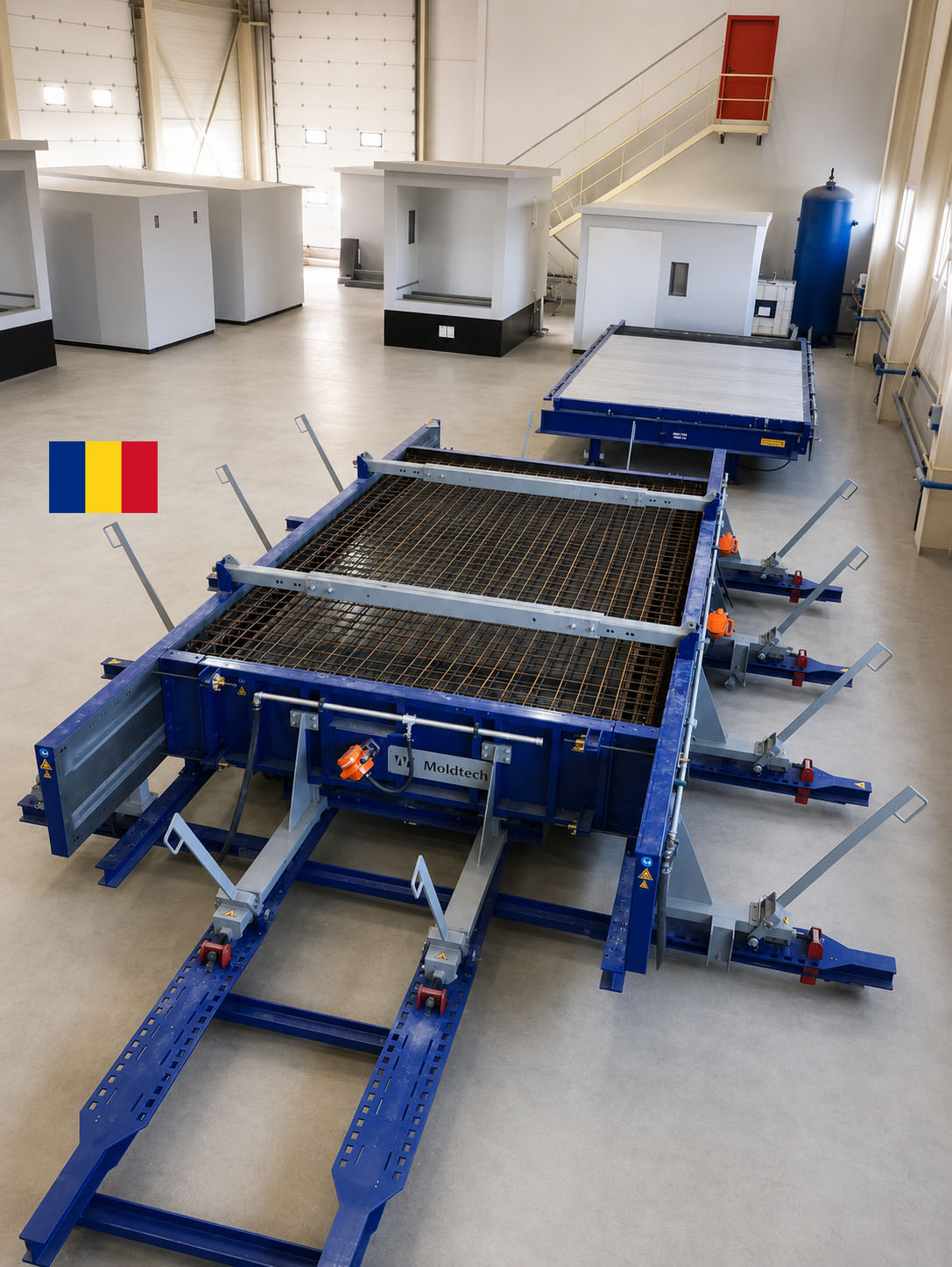
Romania accounts for three of the nine projects. The first consists of a configurable 3D mould for manufacturing monolithic precast concrete transformer substations, including both the walls and the base slab in a single element.
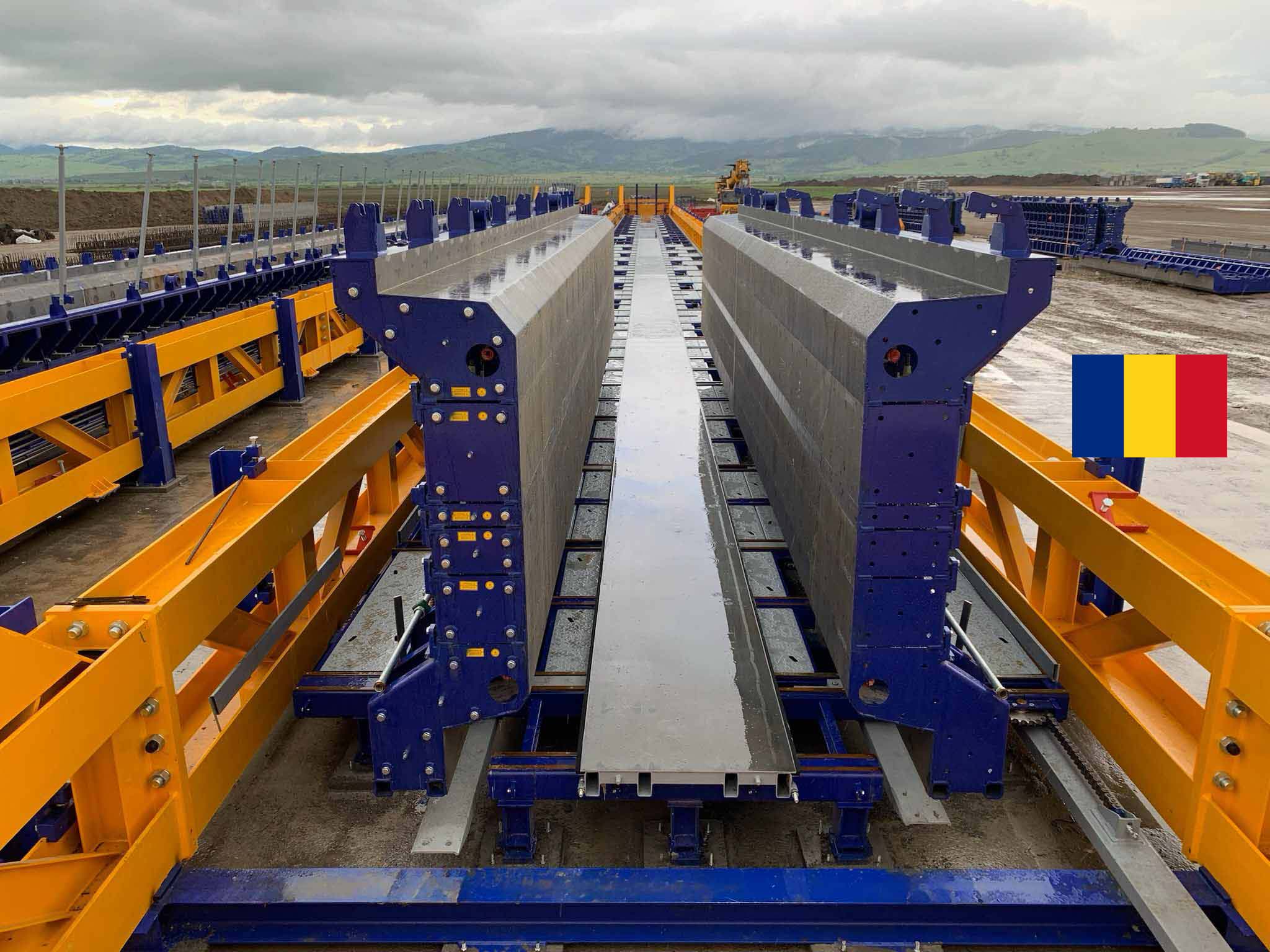
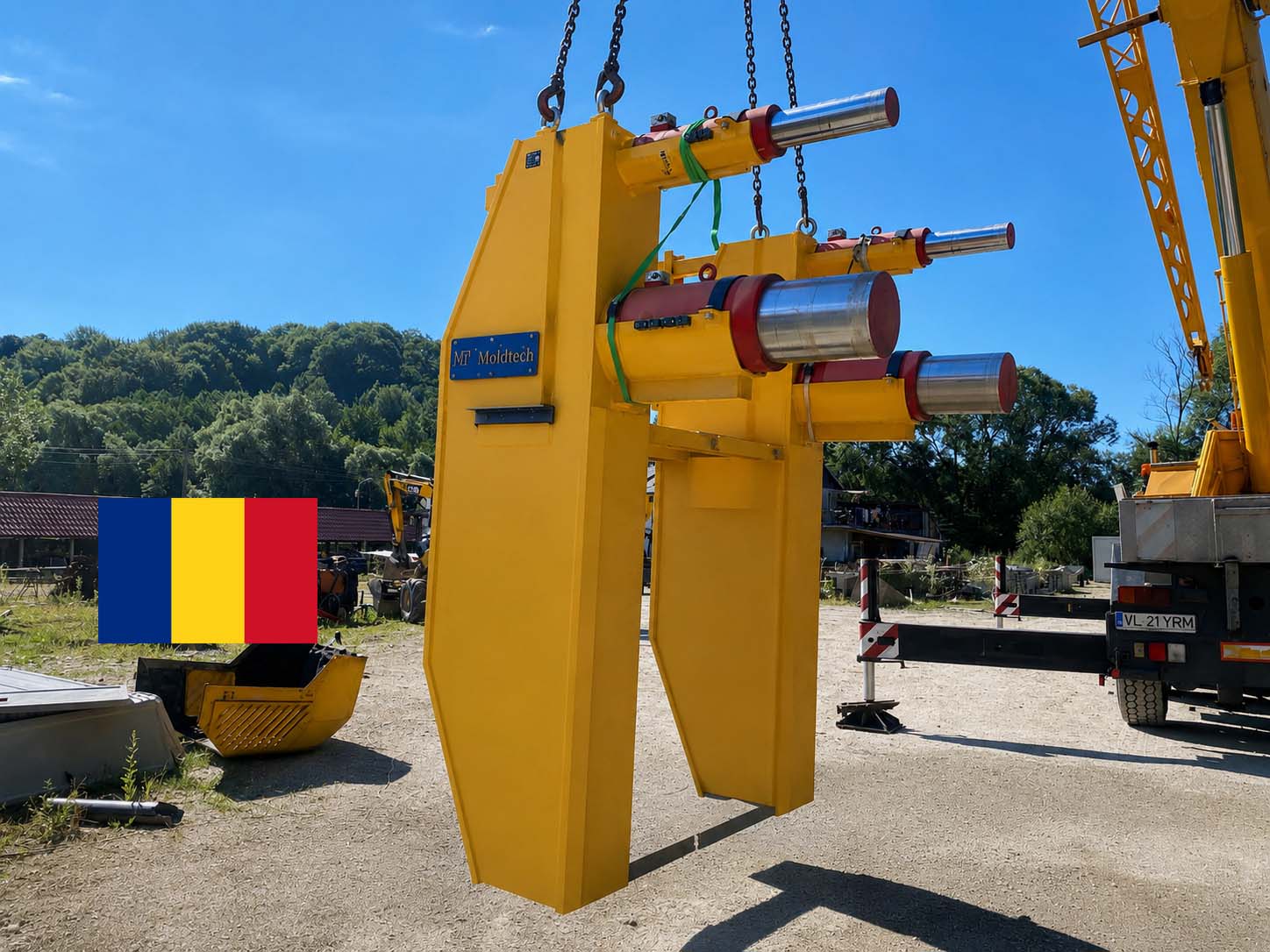
The second is a 1,500-tonne self-supporting prestressing bed designed to manufacture beams on a hydraulic production track measuring 125 metres in length and 3.8 metres in width. The installation incorporates active and passive stressing heads, configurable side forms, base moulds, a service walkway, a hydraulic detensioning unit, pneumatic vibration and pre-installation for a heating system.
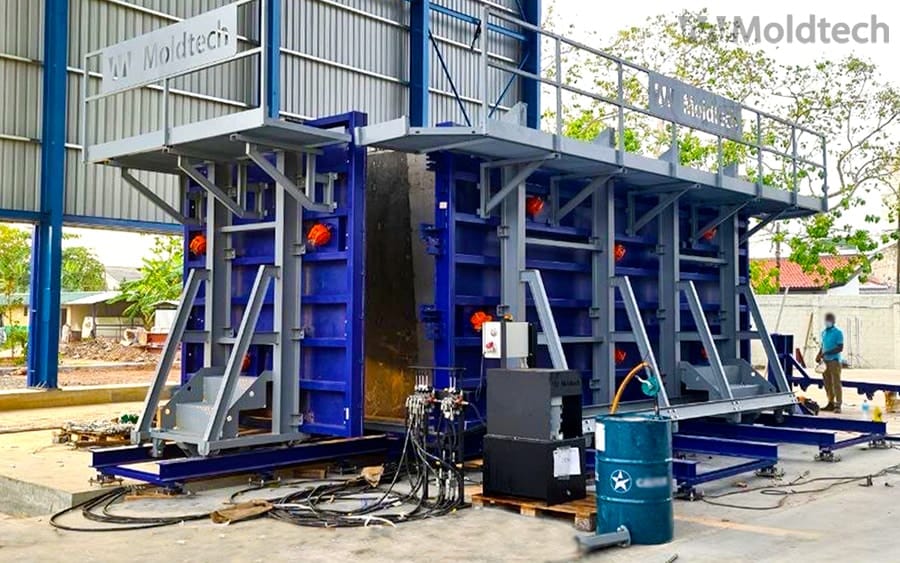
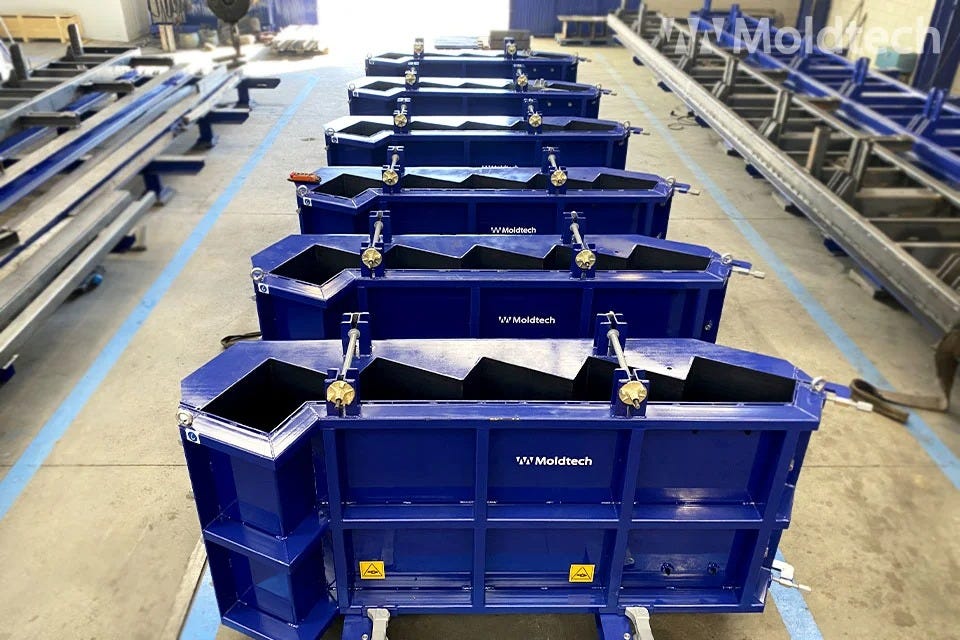
The third project in Romania consists of a double mould for manufacturing Timpan elements. A single solution will make it possible to produce three different geometries by repositioning the transverse separators, providing greater production flexibility without the need for three independent moulds.
In Ghana, Moldtech will supply a mould comprising two 19-metre side forms and three interchangeable bases for widths of 300, 500 and 700 millimetres. The machine will have a useful moulding length of 19 metres and a useful height of 700 millimetres.
The equipment will be fitted with an integrated network of pneumatically operated vibrators, designed for connection to a pressurised air supply and intended to support effective concrete compaction during production.
The supply will also include a base support structure for the three available widths, reinforcement cages for brackets and end closures, as well as height-adjustable support legs. This configuration will allow the mould to be adapted to different geometries and production requirements within a single solution.
Technical Coordination and Deployment of Resources
The parallel development of these projects requires the coordination of installation crews, supervisors, hydraulic technicians, electrical specialists and commissioning engineers. Each installation requires personnel with experience in the operation of the equipment and the ability to adapt to the actual conditions of the plant or construction site.
Planning must take into account the availability of specialists, transport schedules, foundation progress, preparation of auxiliary services and the arrival sequence of the different components.
This level of coordination becomes especially important when several installations overlap across different countries and continents. Any logistical, documentary or technical deviation can affect the overall schedule, making prior preparation and constant communication between departments critical.
The ability to deploy resources simultaneously allows Moldtech to support its customers throughout the most important stages of each project, from unloading and assembly to functional testing and operator training.
Growth Supported by Industrial Capacity
The simultaneous execution of these nine projects represents an important step in Moldtech’s development. The company’s growth is not limited to the number of machines manufactured, but is supported by its increasing capacity to manage complex projects, serve international markets and provide solutions for different areas of the precast concrete industry.
The diversity of these supplies shows that the industrialisation of construction is advancing in multiple directions. While some customers need to increase their capacity to manufacture residential panels, others require systems for infrastructure beams, industrial columns, three-dimensional modules or special precast elements.
Meeting these requirements demands specialised engineering, flexible manufacturing capabilities and an organisational structure capable of managing several international projects without losing technical control over any individual installation.
Moldtech and Its International Experience
As a manufacturer of moulds and equipment for the precast concrete industry, Moldtech designs and manufactures solutions in Spain that are adapted to the production requirements of each customer.
The coordination of nine simultaneous installations across six countries and three continents demonstrates the international experience accumulated by the company and its ability to deliver projects in different industrial, regulatory and logistical environments.
Beyond the supply of machinery, each project integrates engineering, manufacturing, documentation, logistics, installation and technical support. This comprehensive approach makes it possible to transform a production requirement into an installation prepared to operate accurately, safely and efficiently.
With these nine projects being developed simultaneously, Moldtech consolidates its position as one of the European manufacturers with the greatest capacity to design, manufacture and implement comprehensive solutions for the international precast concrete industry.