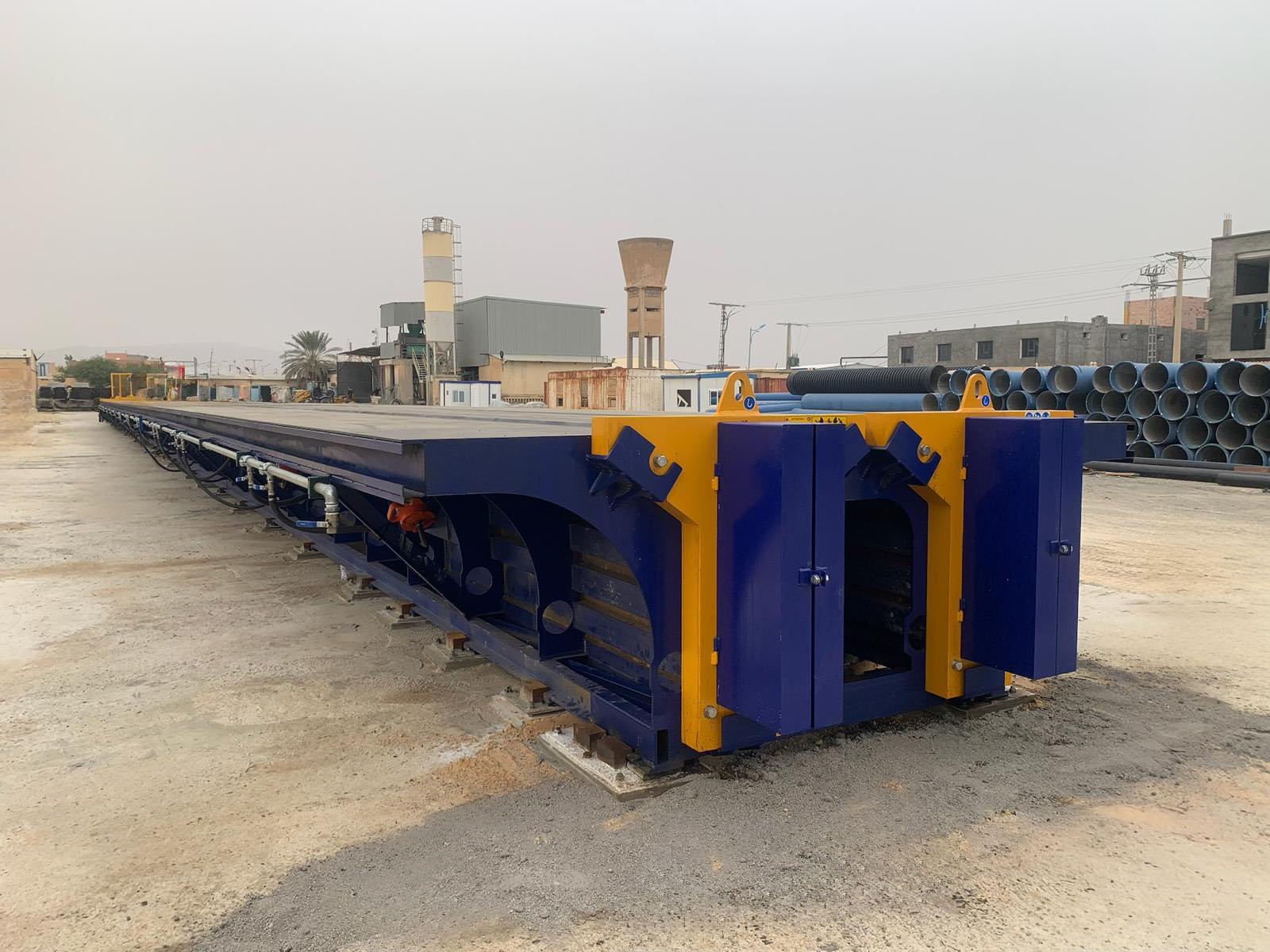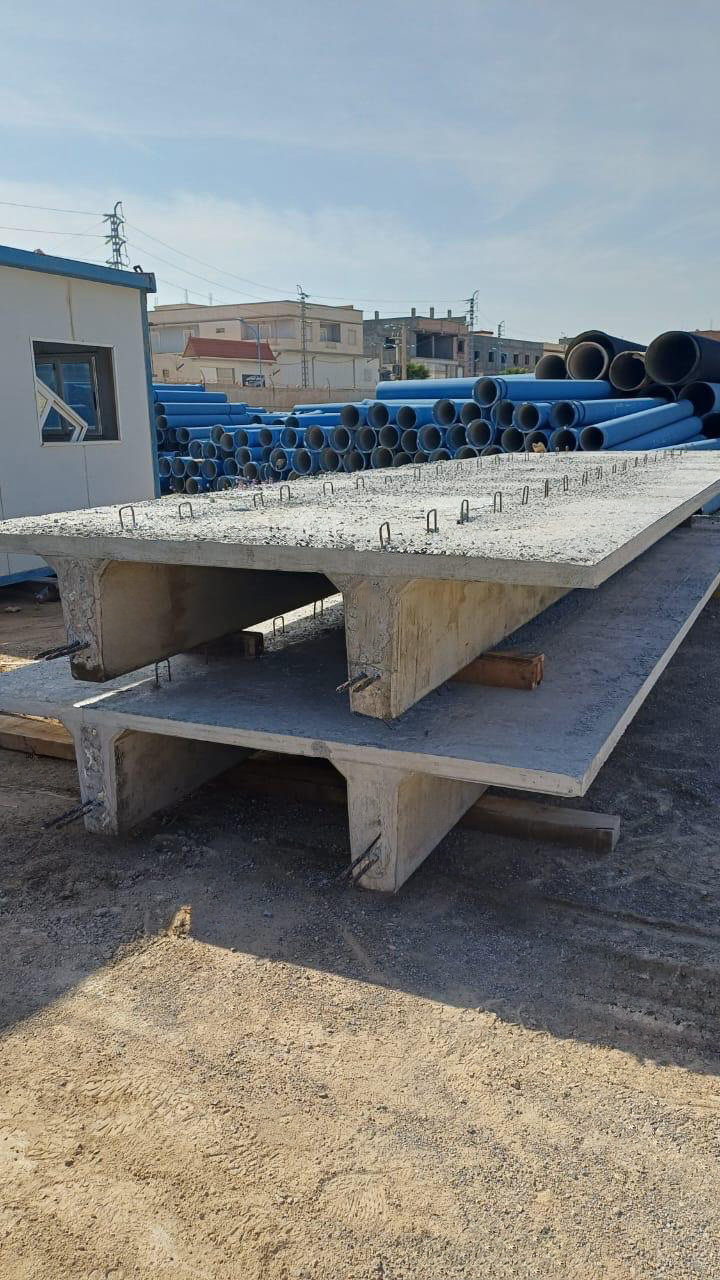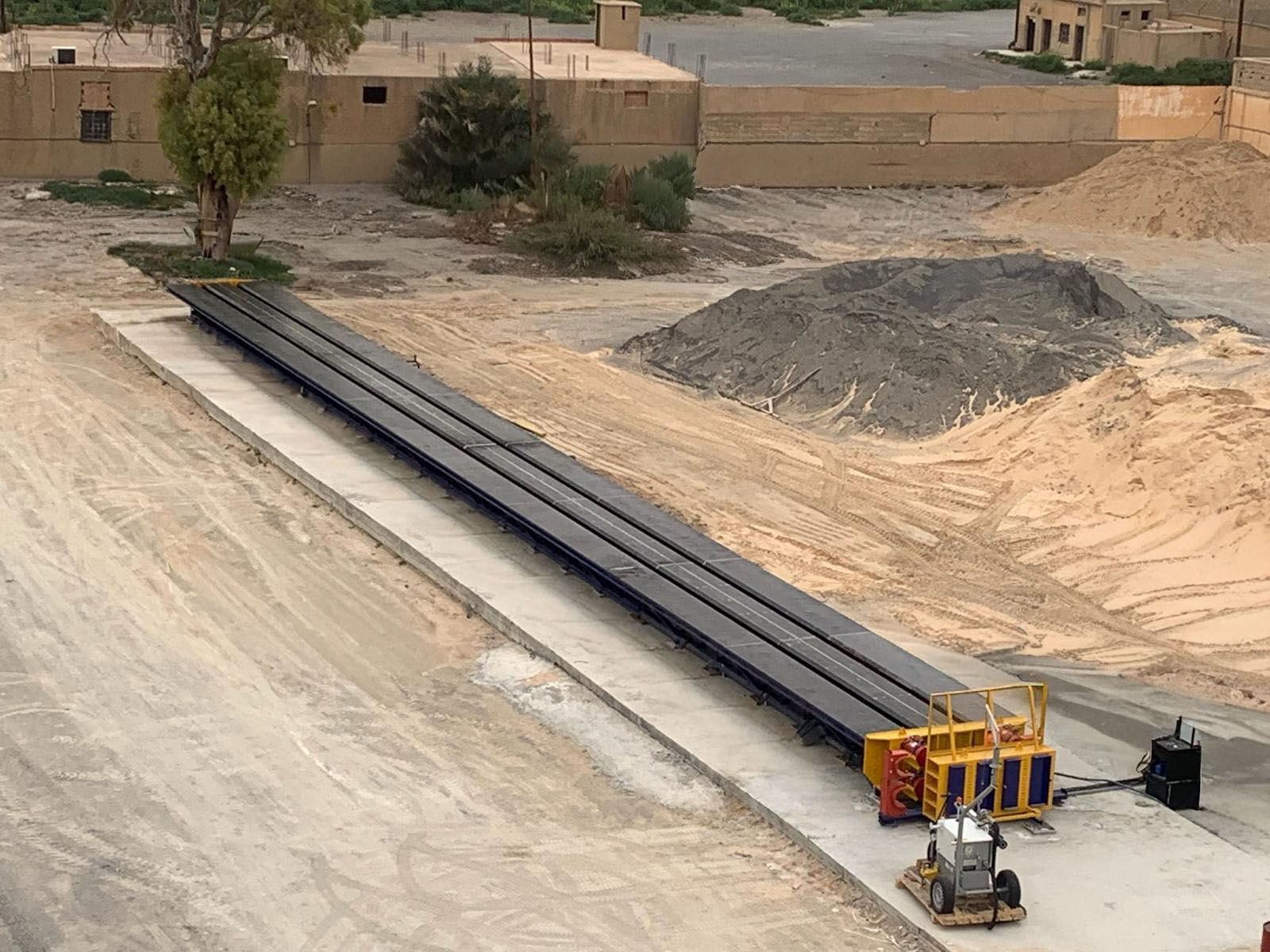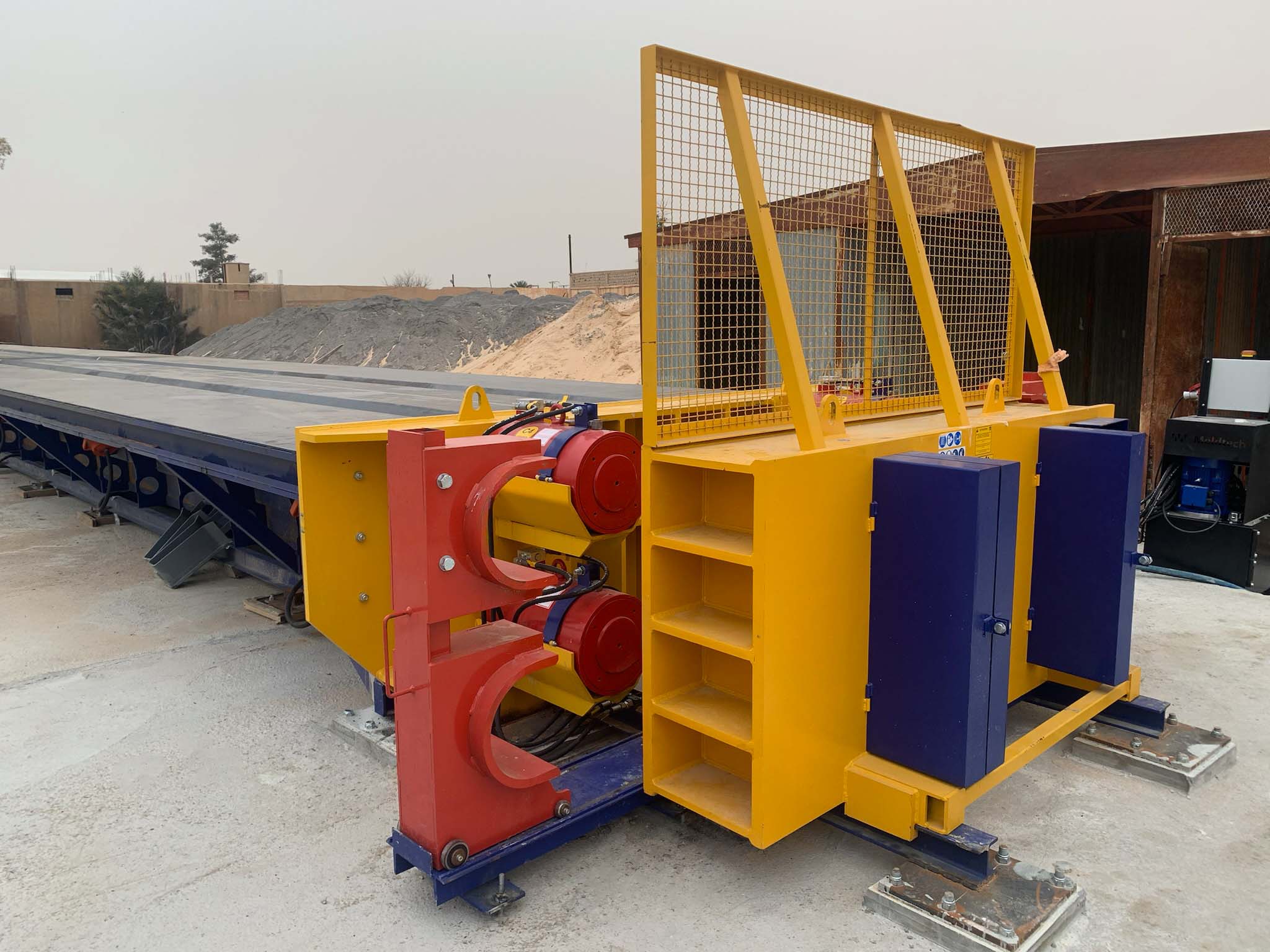


Moldtech has completed the supply and installation of a 40-metre self-supporting TT mould in Algeria, designed for the production of prestressed double-tee slabs for industrial applications, within a context of increasing industrialization of precast concrete in the country.
Precast concrete in Algeria: moving towards industrial production
The precast concrete sector in Algeria continues to evolve towards more industrialized production models, driven by the need to improve operational efficiency, process repeatability, and in-plant quality control.
The country has an active industrial network, with more than 190 companies involved in concrete product manufacturing, reflecting a growing market where the integration of advanced technological solutions is key to improving competitiveness.
In this context, the implementation of specialized production systems allows manufacturers to optimize production times, reduce operating costs, and ensure greater consistency in the manufacturing of structural elements.
Completed project: self-supporting TT mould L=40 m
Within this framework, Moldtech has completed the supply and installation of a TT 400 T L=40 m mould, designed for the production of prestressed double-tee slabs.
The system consists of four modules, forming a continuous production line with a total useful length of 40 metres, facilitating both transport and installation in industrial facilities.
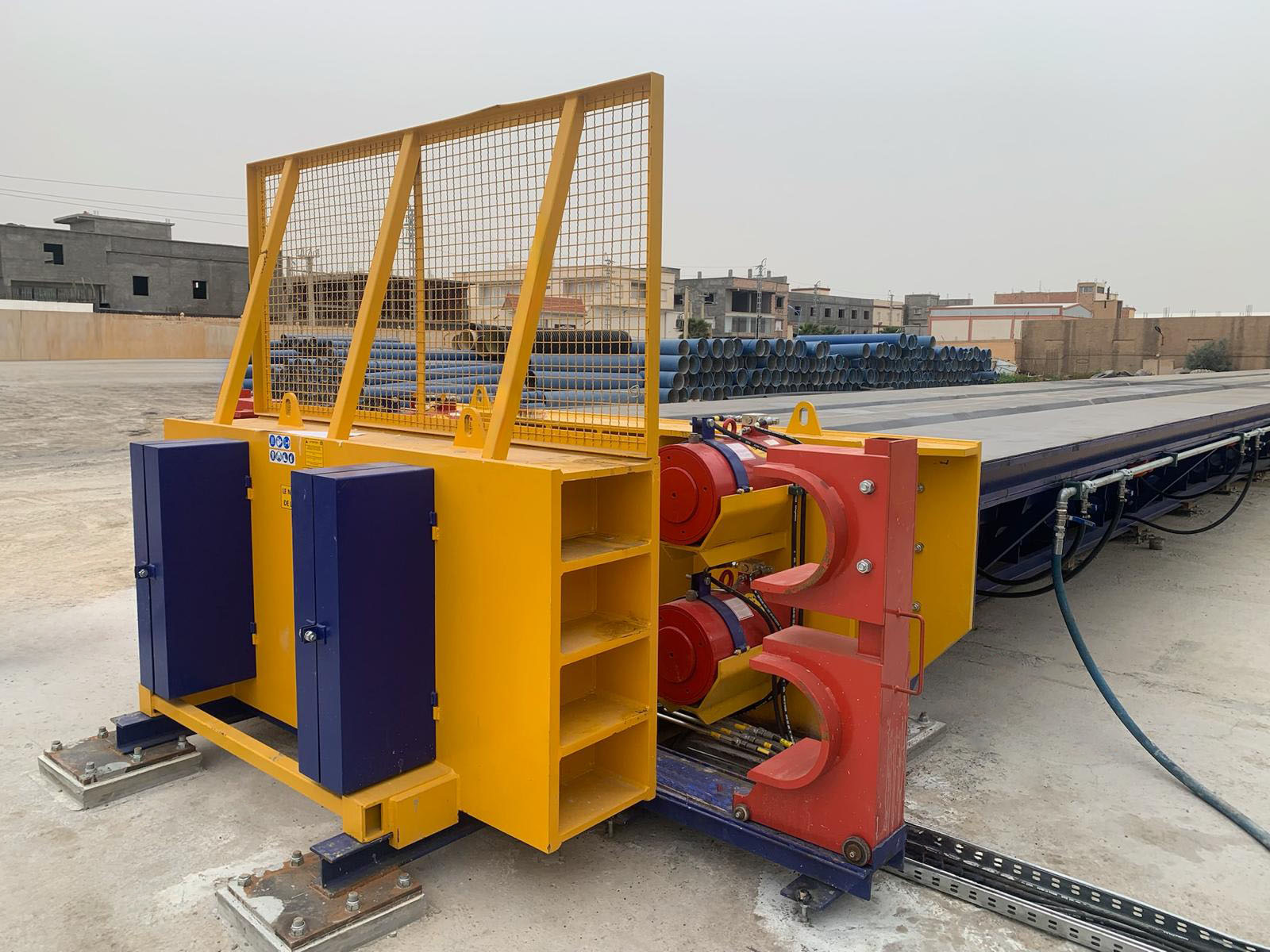
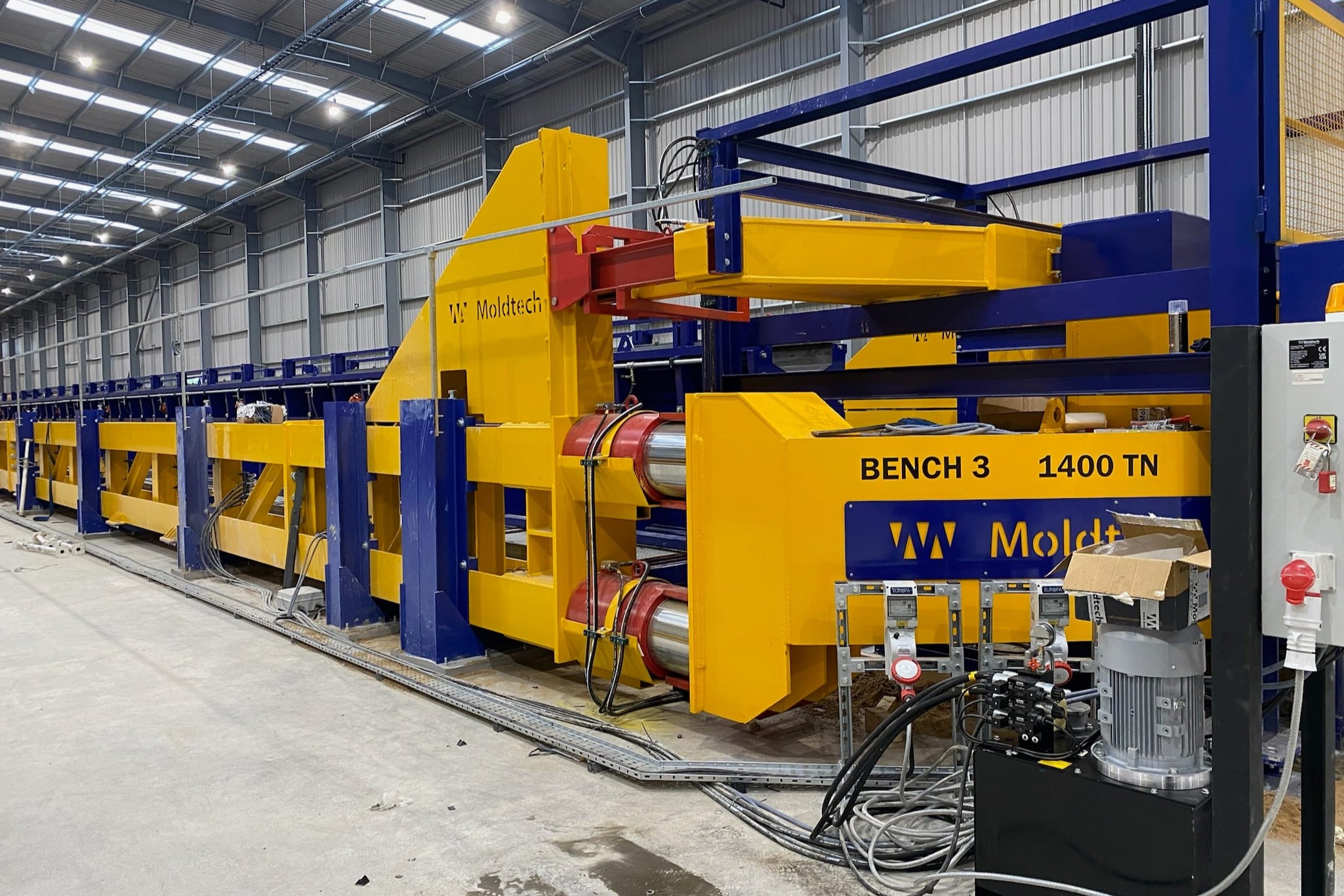
One of the key features of this system is its self-supporting design, integrating both the mould and prestressing heads into a single solution. This configuration allows it to withstand prestressing forces without the need for additional external structures, simplifying both installation and potential relocation between production sites.
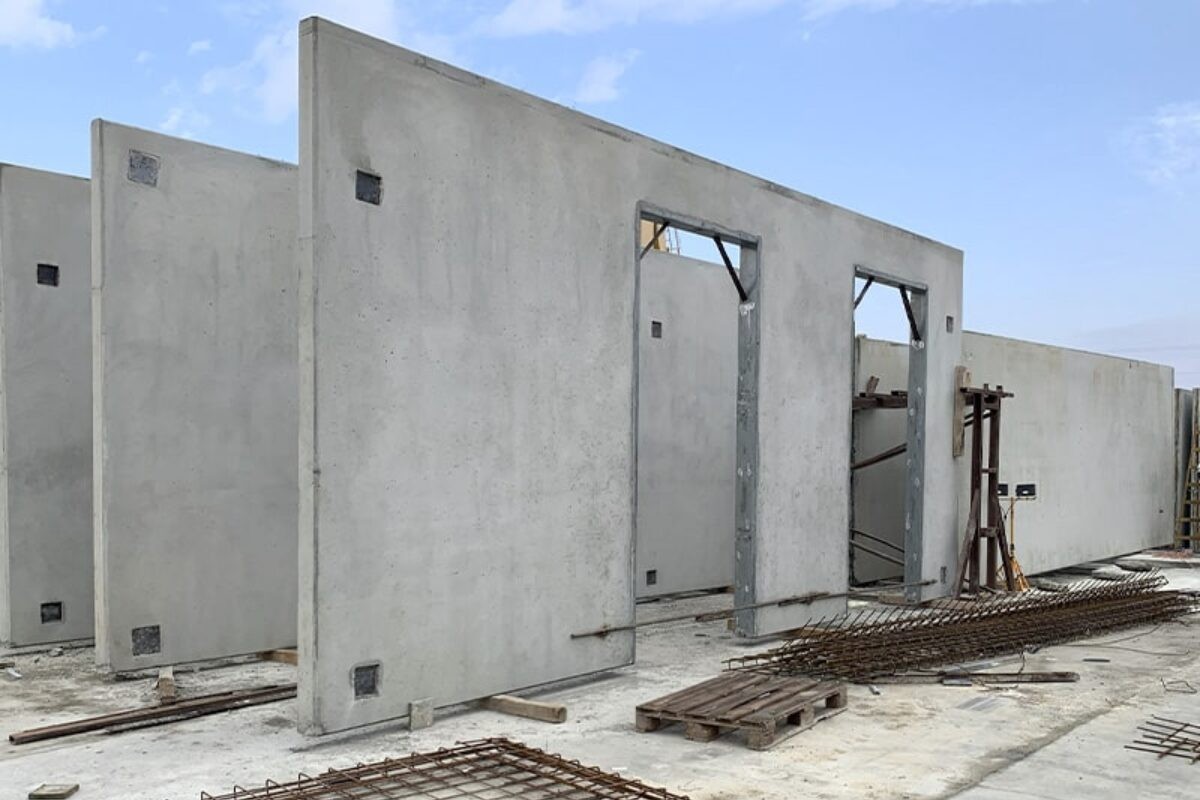
This type of precast element is widely used as:
• Base for in-situ concrete slabs with projecting reinforcement
• Roofing element with embedded reinforcement
It is a common solution in industrial and commercial buildings.
Geometrical configuration
The mould allows the production of TT slabs with different configurations:
• Rib height: from 400 mm (minimum) to 800 mm (maximum)
• Slab width: from 1,750 mm to 2,600 mm
• Slab thickness: adjustable from 50 mm to 120 mm
Additionally, the system allows width adjustment through variable-position side rails, reduction of rib height using supplementary bottoms, and length configuration through transverse dividers positioned along the mould.
Structural configuration and prestressing capacity
The equipment is designed to operate with prestressing and detensioning systems, with a total capacity of 400 tonnes.
This capacity is achieved through:
• Four double-acting cylinders of 200 tonnes located in the active head
• Hydraulic detensioning unit controlling the release process
The system integrates active and passive heads, central core, as well as side and bottom elements defining the final geometry of the piece, ensuring balanced stress distribution throughout the process.
Dimensional flexibility
In addition to its geometrical capacity, the system incorporates solutions that enhance its production versatility.
The standard TT slab width is 2,400 mm, although wider slabs can be produced using adjustable side rails. Rib height can be reduced with supplementary bottoms, while slab length is defined by movable transverse dividers.
This flexibility allows adaptation to different production requirements without compromising process stability.
Integrated systems for process optimization
The line includes several auxiliary systems aimed at improving performance and final product quality:
• Pneumatic vibration system for concrete compaction
• Hydraulic detensioning unit
• Prestressing accessories compatible with system capacity
• Interchangeable bottoms for different rib configurations
• Transverse dividers for height adjustment
• Modular longitudinal formwork completing the 40 m length
Additional systems can also be integrated:
• Vibration system to improve compaction, eliminate air, and increase final strength
• Heating system based on hot water or steam with insulation tarpaulins, accelerating curing, reducing cycle times, and improving energy efficiency
Industrial production: continuity, control and performance
The use of TT moulds such as the TT 400 T enables manufacturers to operate in continuous production environments, where process stability and repeatability are key.
These solutions allow manufacturers to:
• Increase productivity
• Reduce cycle times
• Improve dimensional control
• Ensure consistent product quality
In industrial environments, where process optimization is critical, the integration of such systems enhances overall plant efficiency.
The supply and installation of the TT 400 T mould in Algeria reinforces Moldtech’s international presence as a manufacturer of moulds and equipment for the precast concrete industry.
Solutions such as this self-supporting TT mould enable manufacturers to evolve towards more stable, efficient, and adaptable production models, where process control and operational continuity become key factors for industrial competitiveness.