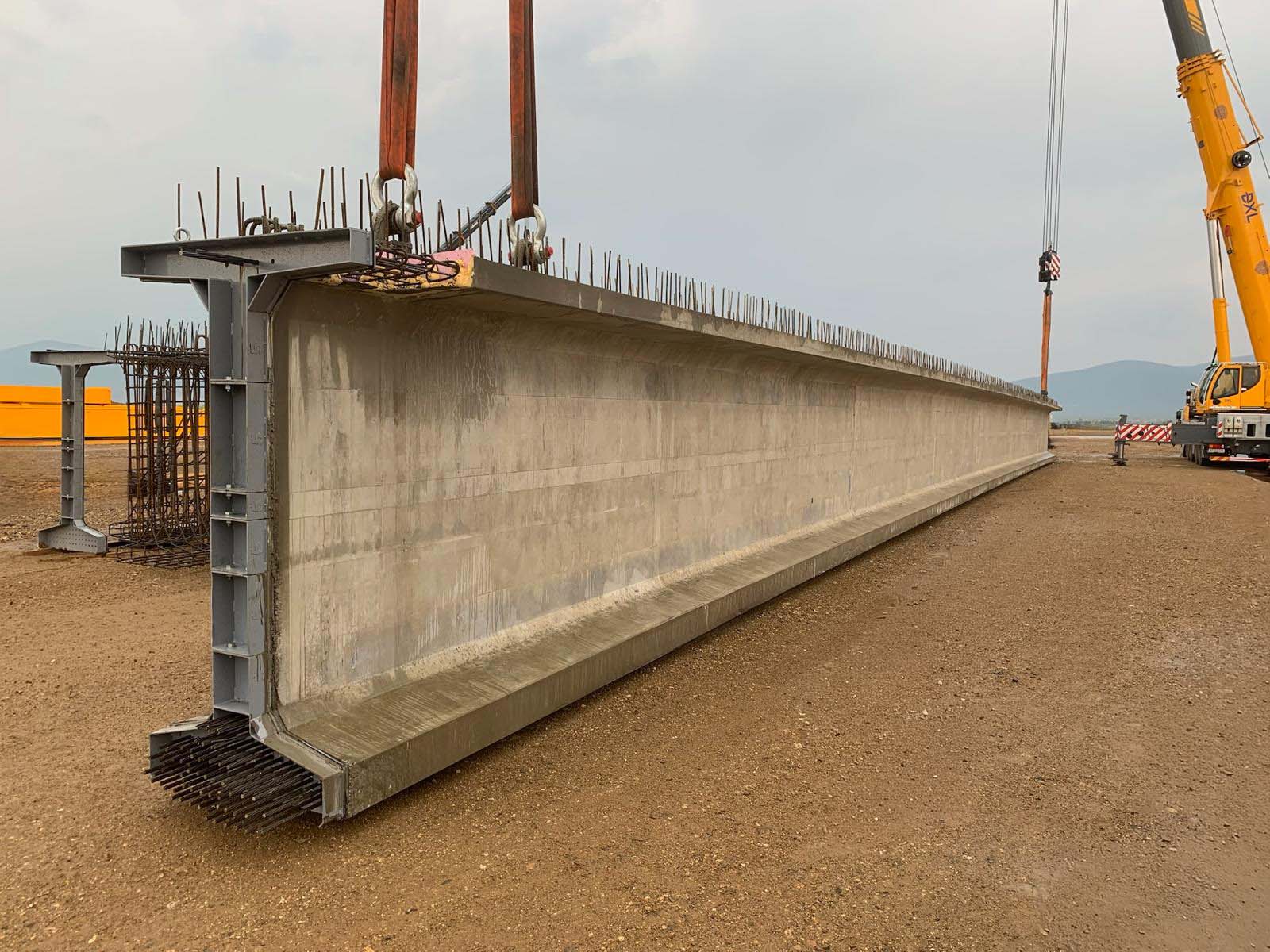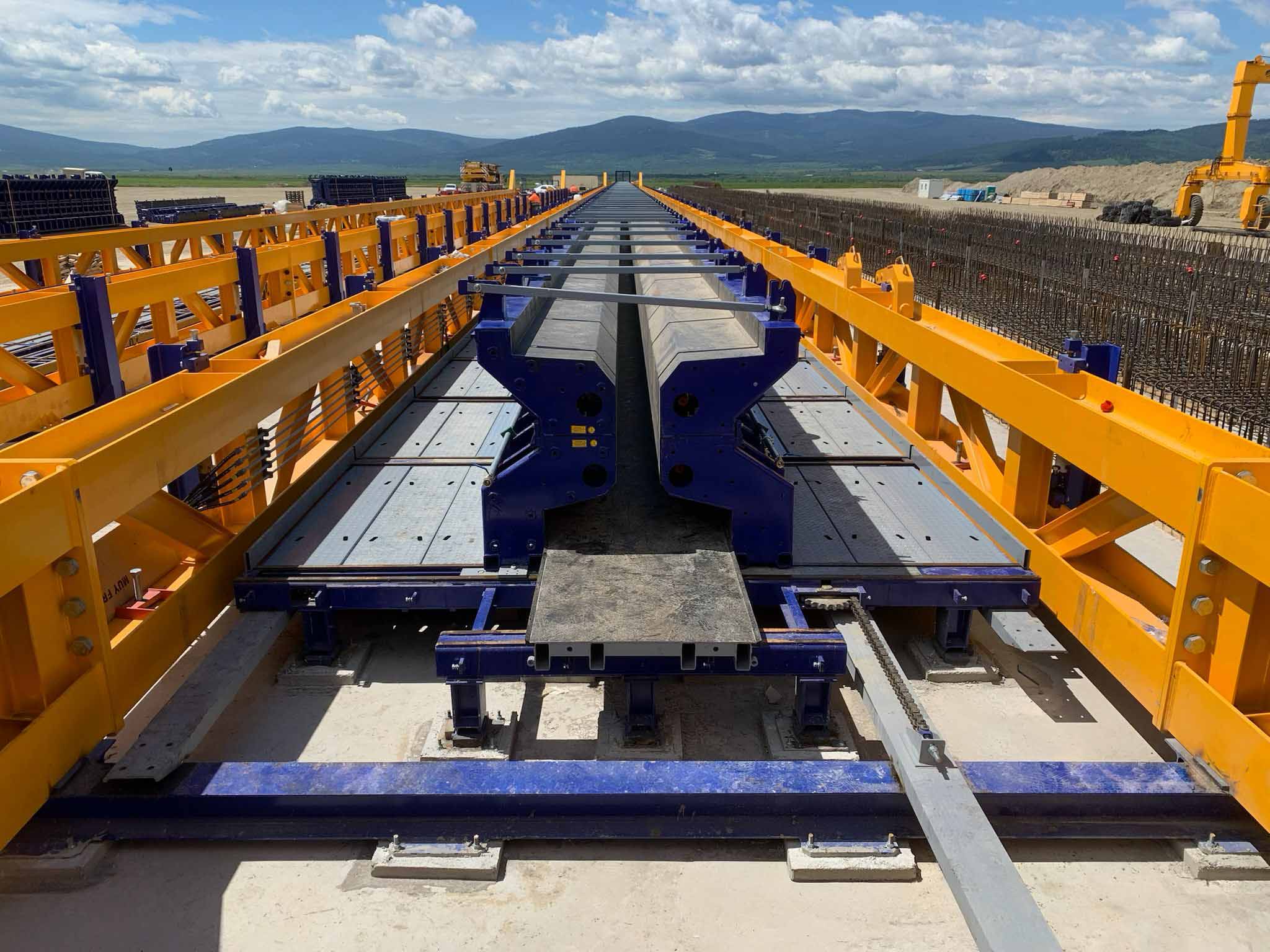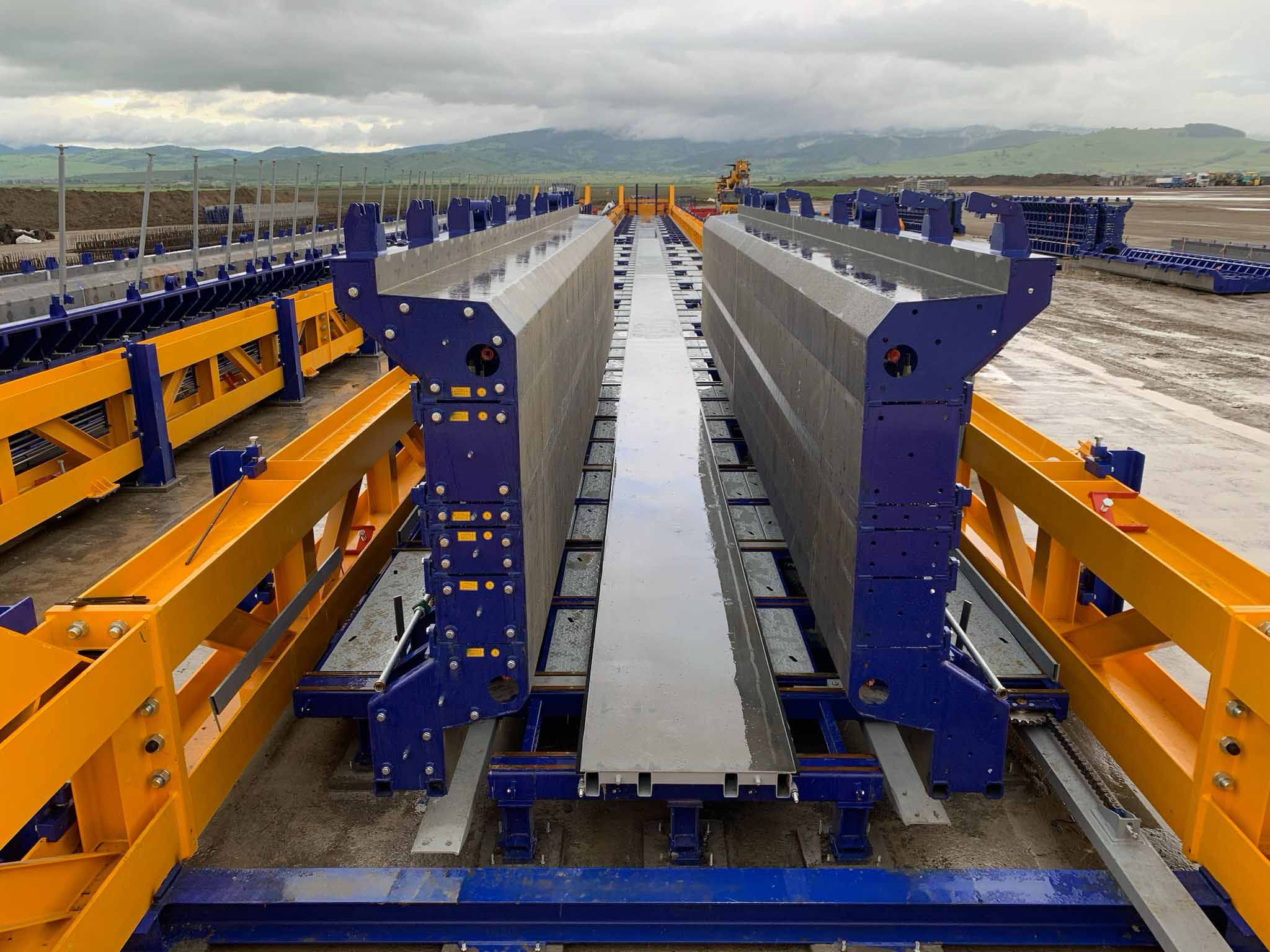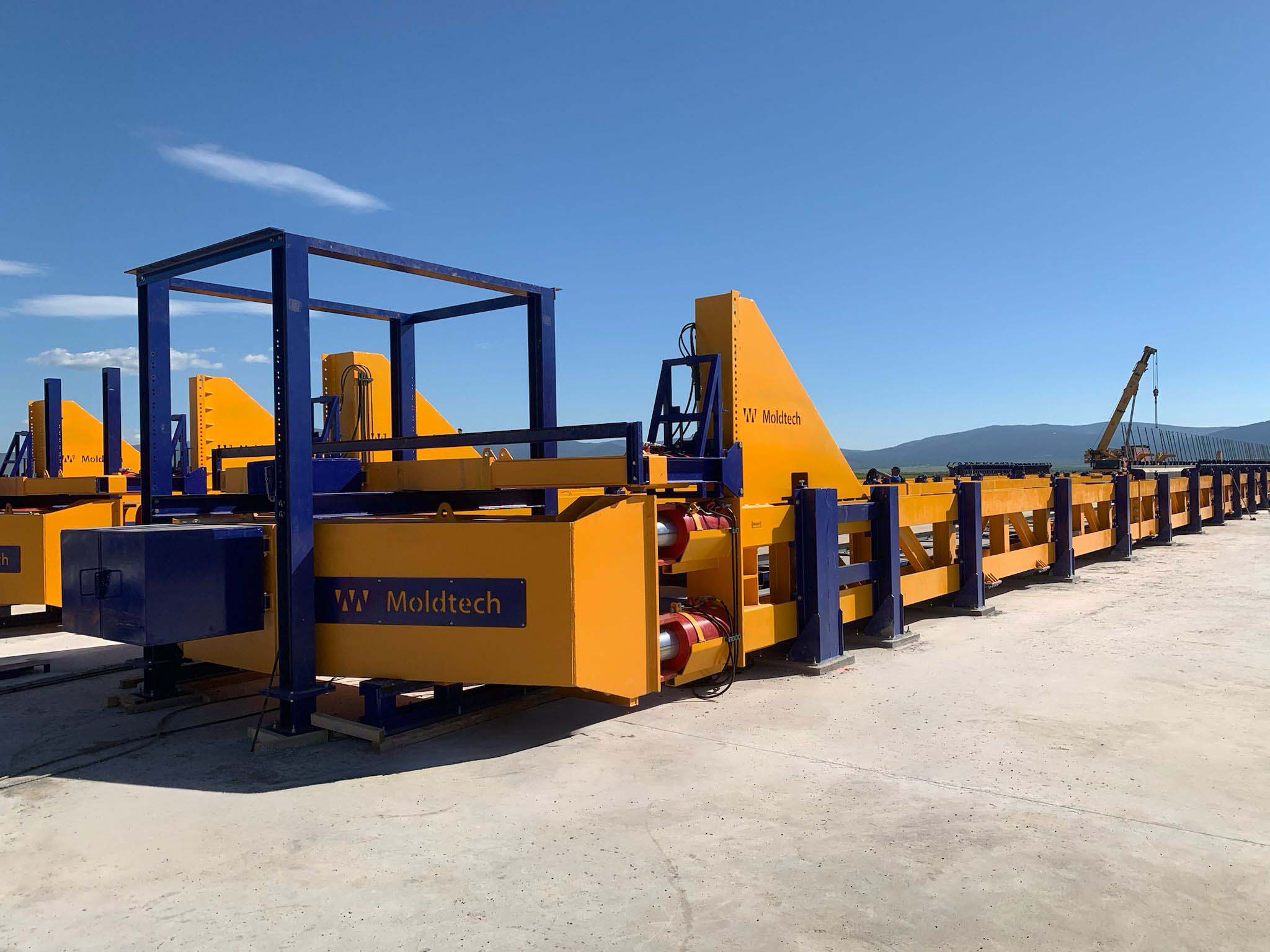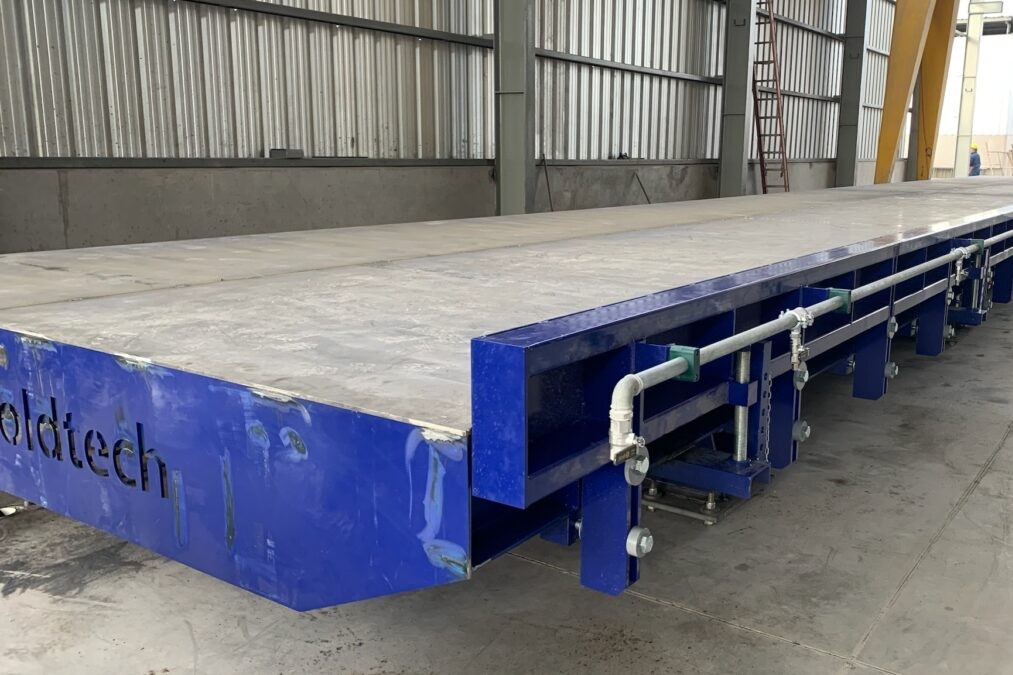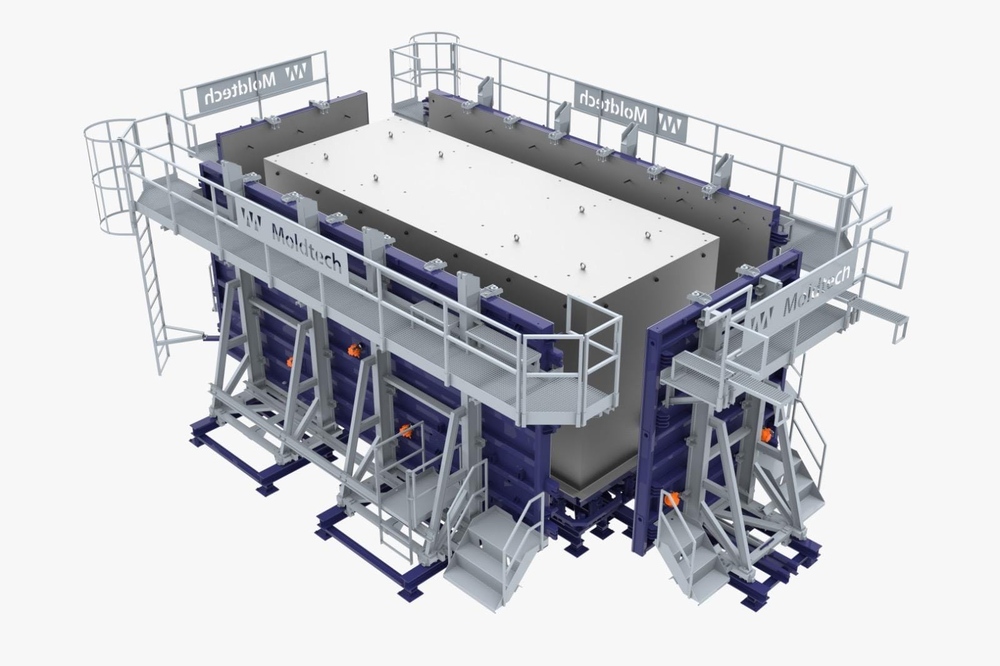


Two self-stressing beds rated at 1,500 t, measuring 125 m and 85 m, are complemented by moulds for a range of civil engineering components
A Romanian road infrastructure contractor chose Moldtech to expand its precast production capacity. Moldtech has completed the supply of equipment for manufacturing prestressed beams and other concrete components for the client’s civil engineering projects.
The two 1,500 t prestressing beds are at the heart of the installation. The supply also includes L0, L1, L2 and L3 moulds, a TIMPAN T2 battery mould, parapet beam moulds and Dalla D4 and Dalla D5 side forms.
Road projects require more than the main members that span an opening. They also call for components for underpasses, deck edges and other construction details. With equipment for several product families, a producer can plan production around the elements each structure requires. This project meets that need by combining high-capacity prestressing equipment with dedicated moulds.
The client’s operations and the scope of the project
The client builds roads and produces concrete, aggregates and asphalt mixes. It also operates transport vehicles and construction machinery.
The project expands the client’s capacity to manufacture concrete components with different geometries and production requirements. Moldtech supplied the prestressing and moulding equipment to meet those requirements. The scope of supply reflects both the client’s experience in road construction and Moldtech’s expertise in production engineering.
Moldtech’s services cover consulting, design and structural calculations, detailed engineering and manufacturing. Its involvement starts with the investment study and can extend to logistics, commissioning and after-sales support. Turnkey projects can also include production trials and staff training. This approach allows the client to select equipment as part of the design of the overall production process.
The supply brings together two prestressed beam production lines, moulds for several geometries and production accessories. The client can therefore manufacture several families of components in the same facility.
The link between structural design and production becomes particularly important when a component moves from the drawing board to the casting bed. Its external geometry, reinforcement layout and the openings needed for installation determine the mould design. In turn, the way the formwork opens, locks and is supported determines how the component is prepared and demoulded. Moldtech and the client defined the scope of supply around these requirements.
Two self-stressing beds for prestressed beams
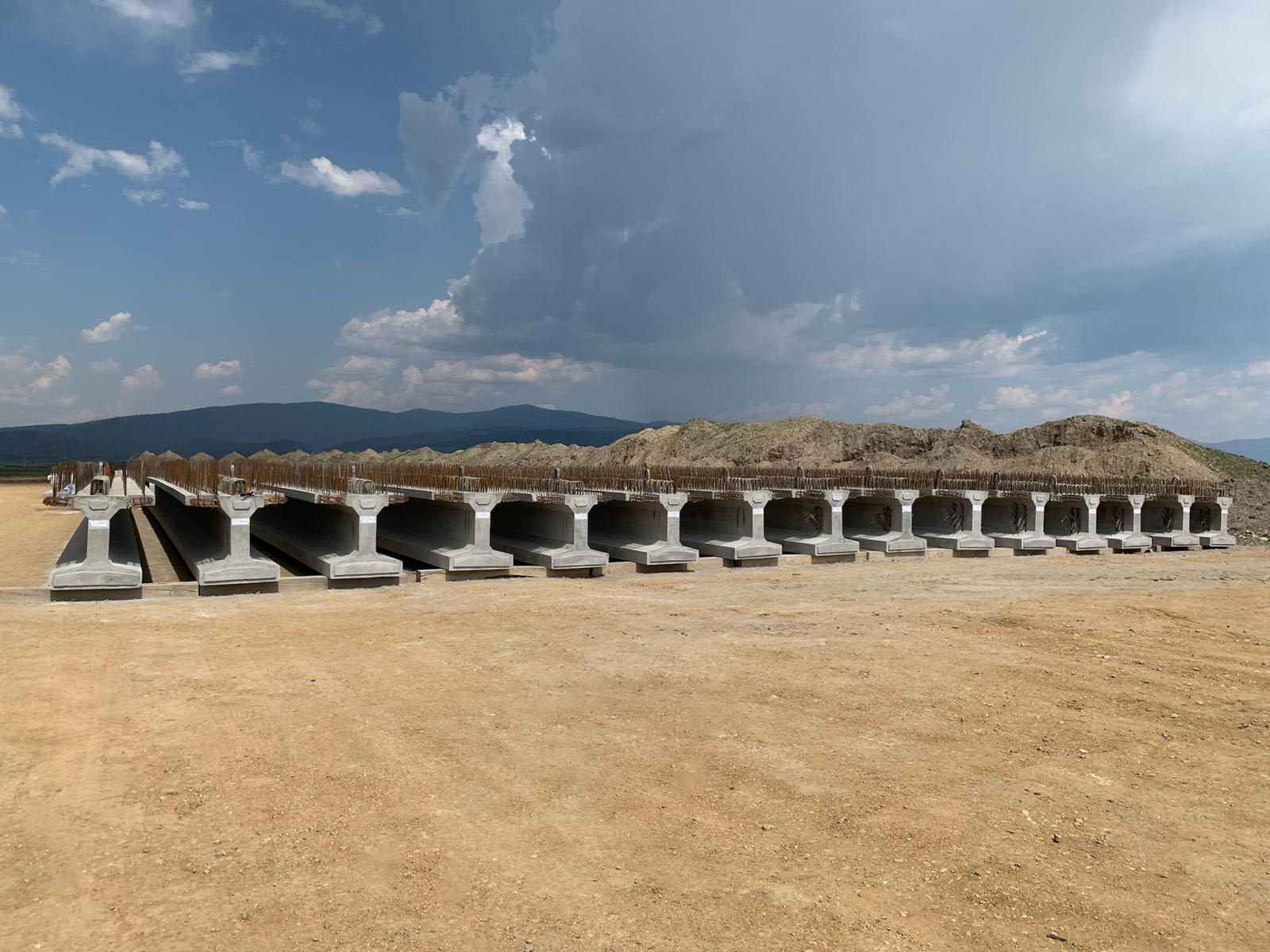
The two self-stressing beds are 125 m and 85 m long. Each has a maximum prestressing capacity of 1,500 t and is equipped with an active and a passive stressing head. The hydraulic casting bed is 3.8 m wide. The soffit forms are 950 mm wide. The side forms can be configured in height and length to cast I-beams with a 940 mm wide bottom flange.
The prestressing capacity and the dimensions of a bed serve different purposes. The stressing heads and the frame must withstand the force applied to the tendons, while the casting bed and side forms define the casting space and its geometry. Together, these systems allow the producer to cast elements with the cross-section and steel layout specified in the structural design.
In a self-stressing bed, the frame itself carries the forces generated during prestressing. Depending on the installation conditions, this arrangement can simplify the civil works required for the anchorages. The stressing heads and hydraulic detensioning unit are part of the system that controls the release of the prestressing force.
Prestressing introduces compression into the concrete by transferring force from the tendons. In pretensioned production, the steel is tensioned before casting and remains anchored while the concrete hardens. Once the concrete reaches the specified transfer strength, the tendons are released and their force is transferred to the member. Equipment operation is thus tied to the strength development of the concrete.
The hydraulic unit operates the release cylinders to control this stage. It works as part of a production sequence that also includes preparing the steel, casting and curing. The capacity of each bed sets the operating limit of the prestressing system. The design of the components determines the force applied for each production run.
The supply includes working platforms, a strand payoff reel and a pneumatic vibration system for compacting the concrete. The equipment also has provision for hot-water or steam heating during curing.
Mould preparation and production control
Production starts with preparing the casting surfaces and setting out the components that give the finished element its shape. The positions of the soffit forms, side forms and closures determine its dimensions. The reinforcement and tendons must follow the production drawing. On a long bed, the same dimensional references must be maintained throughout the casting area.
After placing, the concrete must be compacted so that it fills the cross-section and surrounds the reinforcement. The pneumatic vibration system supplied with the equipment performs this task. During curing, the concrete develops the strength required for the next stages. For prestressed elements, release of the prestressing force and removal of the component are governed by the specified transfer and demoulding conditions.
The provision for heating allows heat to be introduced during curing. Its use must be coordinated with the concrete mix design and production schedule. Compaction, strength development and mould availability all affect how prestressed production is scheduled.
L0 to L3 moulds for civil engineering components
The supply includes three sets of moulds for producing non-prestressed concrete elements in four configurations. The vertical dimension shown on the component drawings is 2,000 mm for L0, 2,400 mm for L1, 2,800 mm for L2 and 3,200 mm for L3. The base of the component is 1,500 mm wide in all four configurations.
Each set includes side forms, bases, stop ends, closure panels and void formers for holes. Mechanical linkages allow the moulds to be opened and closed manually. The formwork components define the geometry and openings of the precast element for each mould configuration.
The stop ends define the ends of the casting, while the void formers create the specified openings. Each component must be positioned to match the details of the finished element. Setting them out before pouring forms the openings and profiles directly in the concrete, as shown on the production drawing.
TIMPAN T2 battery mould and parapet beams
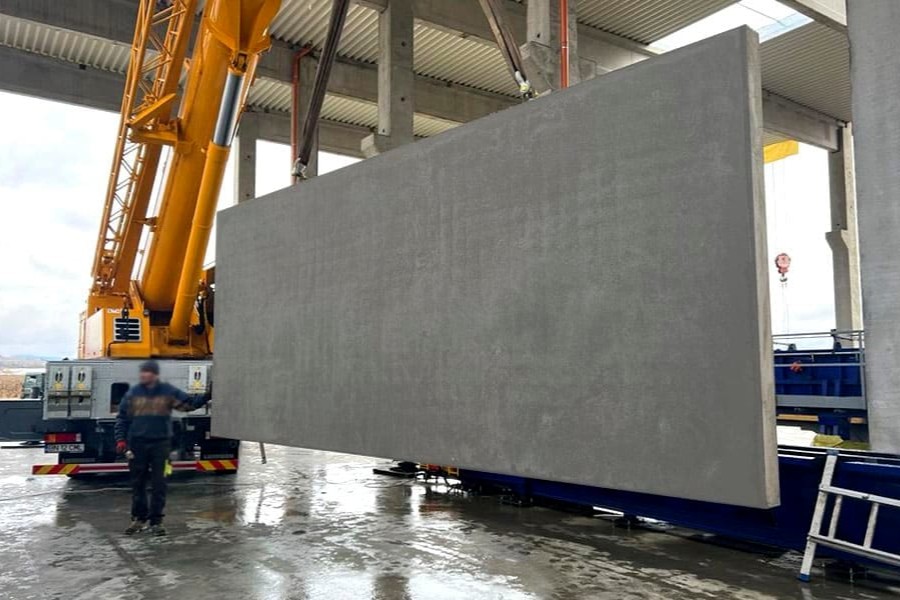
The TIMPAN T2 battery mould produces non-prestressed elements. It has two movable doors, a casting base, simple stop ends, side ties, top closures and form ties. Magnets hold the stop ends in place.
The movable doors provide access to the casting space and open to give the clearance needed to strip the element. The ties and closures hold the formwork in position during filling. They maintain the specified geometry under the pressure of the fresh concrete and allow the assembly to be opened afterwards.
The project also includes six parapet beam moulds in three cross-sections. Two produce a 710 × 700 mm section, two a 990 × 700 mm section and two a 510 × 600 mm section. All are equipped with pneumatic vibration for concrete compaction.
These moulds form part of the equipment range for edge elements on bridges and similar structures. The choice of sections accommodates different project geometries. The design of each structure determines the function of the component and how it is connected.
For edge components, installation depends on how the geometry of the precast element fits the supporting structure. Interfaces, connecting reinforcement and any accessories required by the design must be resolved when the element is detailed. Each parapet mould section therefore corresponds to a geometry that must be maintained through production and installation.
Dalla D4 and Dalla D5 side forms
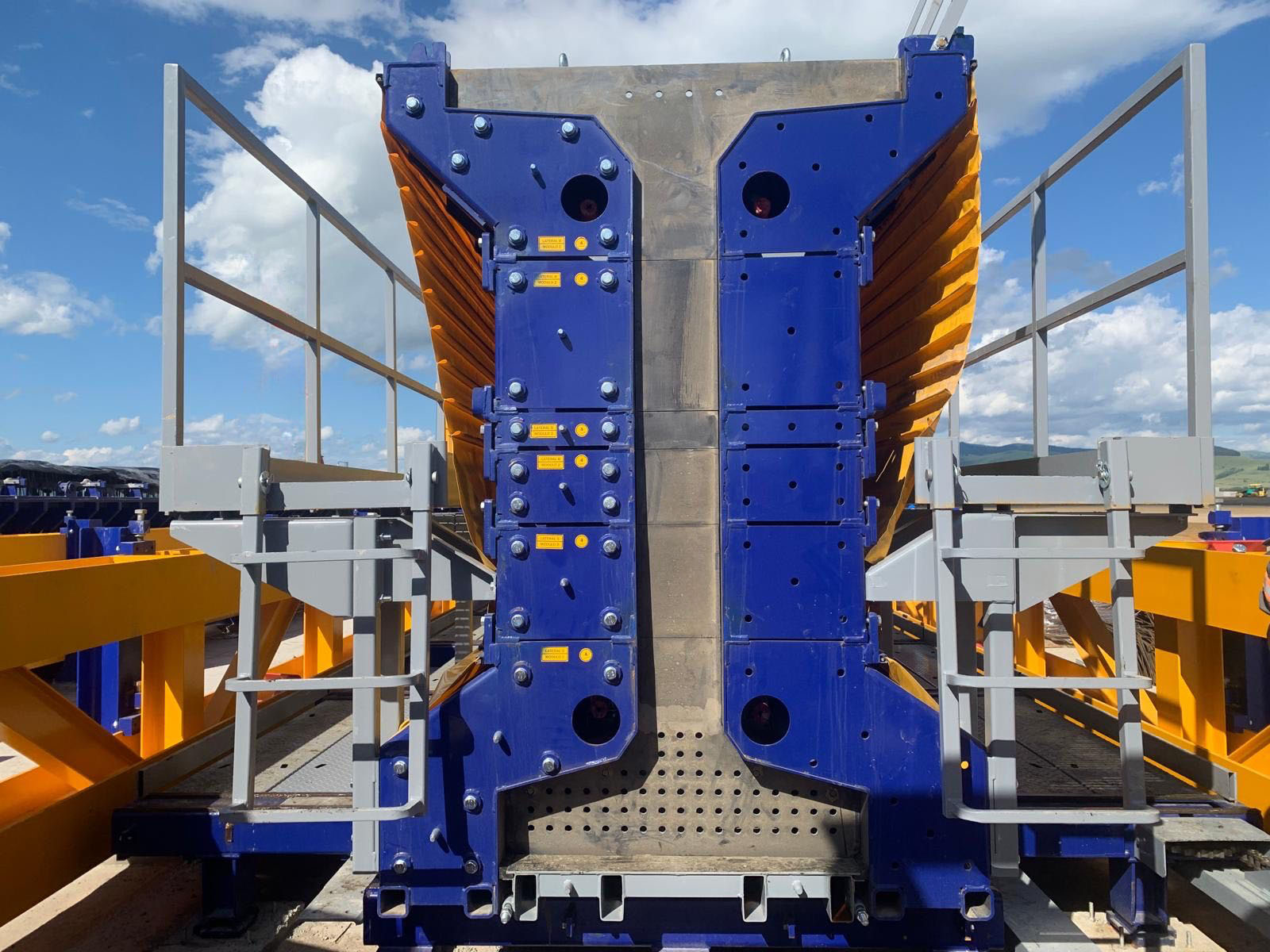
Moldtech supplied two models of side form for concrete beam production. The Dalla D4 side forms are 25 m long and the Dalla D5 forms are 6.5 m long. Both models feature support arms, clamping claws and top closures with a wing nut and a Dywidag threaded bar.
Both models are equipped with pneumatic vibration. The support and adjustment components position the formwork, while the closures hold it in place during casting.
Road and bridge applications
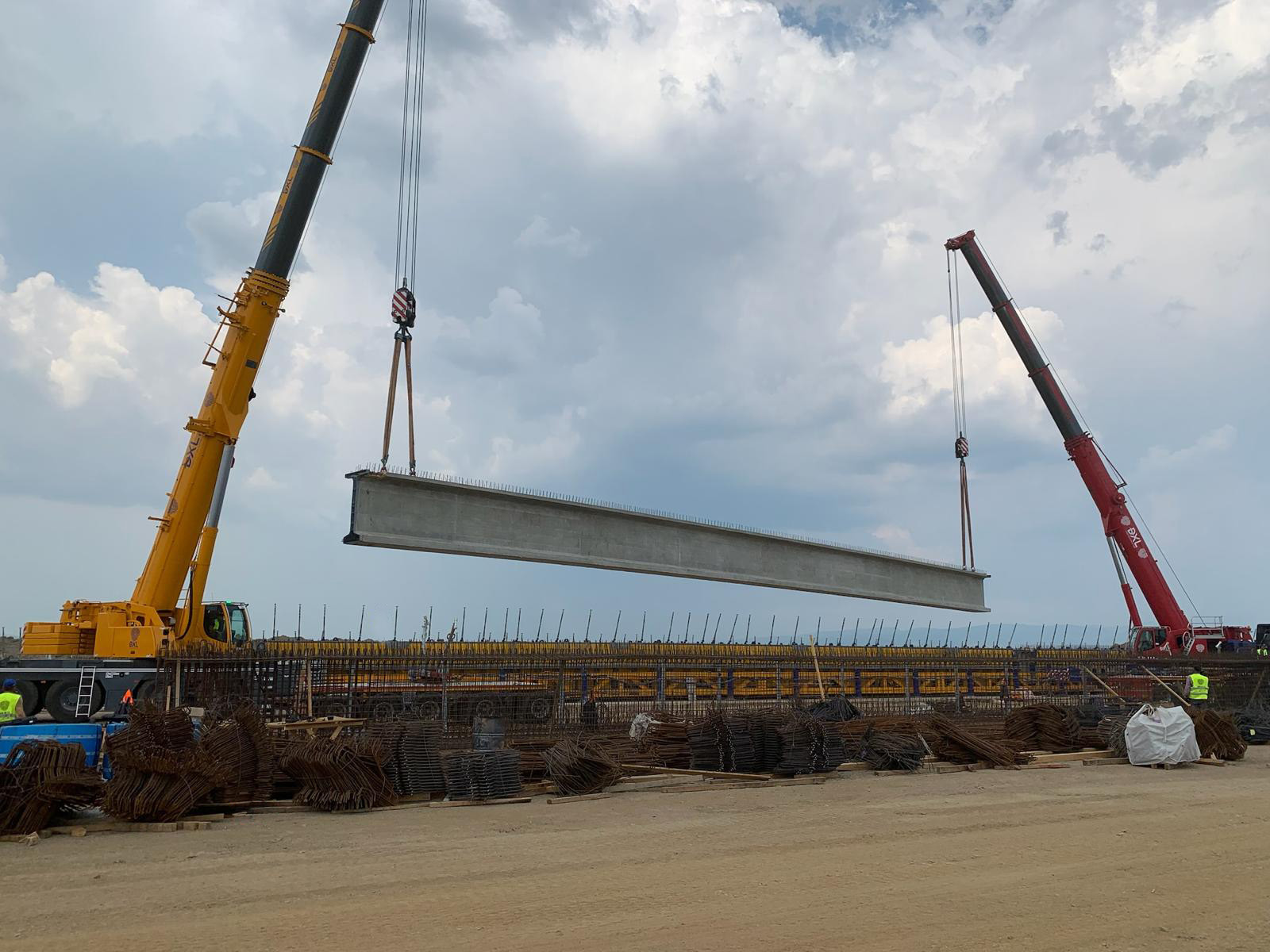
Prestressed I-beams are used in bridges and viaducts. L0 to L3 elements are used in crossing structures. The Dalla D4 and Dalla D5 side forms can produce beams of different lengths. Parapet beams form edge elements.
Each product family has its own requirements for geometry, reinforcement, compaction and demoulding. Combining prestressing equipment with dedicated moulds allows the producer to meet these requirements with equipment suited to each product. This gives the client more options when planning its civil engineering projects.
In bridges built with precast beams, the longitudinal members form part of the system supporting the deck. Their manufacture requires the structural cross-section and prestressing to be coordinated with transport, lifting and bearing conditions. Edge components and underpass elements have different shapes and functions, requiring their own moulds and reinforcement details. These differences explain the range of moulding equipment in the supply.
Factory production also links component preparation to the order in which elements are delivered to site. Scheduling must take account of mould occupancy, stripping conditions and the equipment available for handling the components. The relationship between production and installation underlies the choice of equipment and must be worked out for each precast product family.
Industrial production for Romania’s growing infrastructure needs
The modernisation of Romania’s infrastructure is increasing demand for industrial production methods that deliver the required capacity, quality control and efficiency on site. For companies involved in large-scale projects, specialist precast production equipment is an important part of meeting these demands.
Combining high-capacity prestressing systems with moulds for different components allows the client to plan production to suit each project.
Moldtech’s international experience
With this latest delivery in Romania, Moldtech continues to expand its international presence as a manufacturer of precast concrete moulds and equipment. The company supplies the civil engineering, infrastructure and industrial building sectors worldwide, combining engineering, specialist manufacturing and technology tailored to each client’s requirements.
The collaboration between Moldtech and the client strengthens the Romanian company’s capacity to produce precast components for its infrastructure projects.