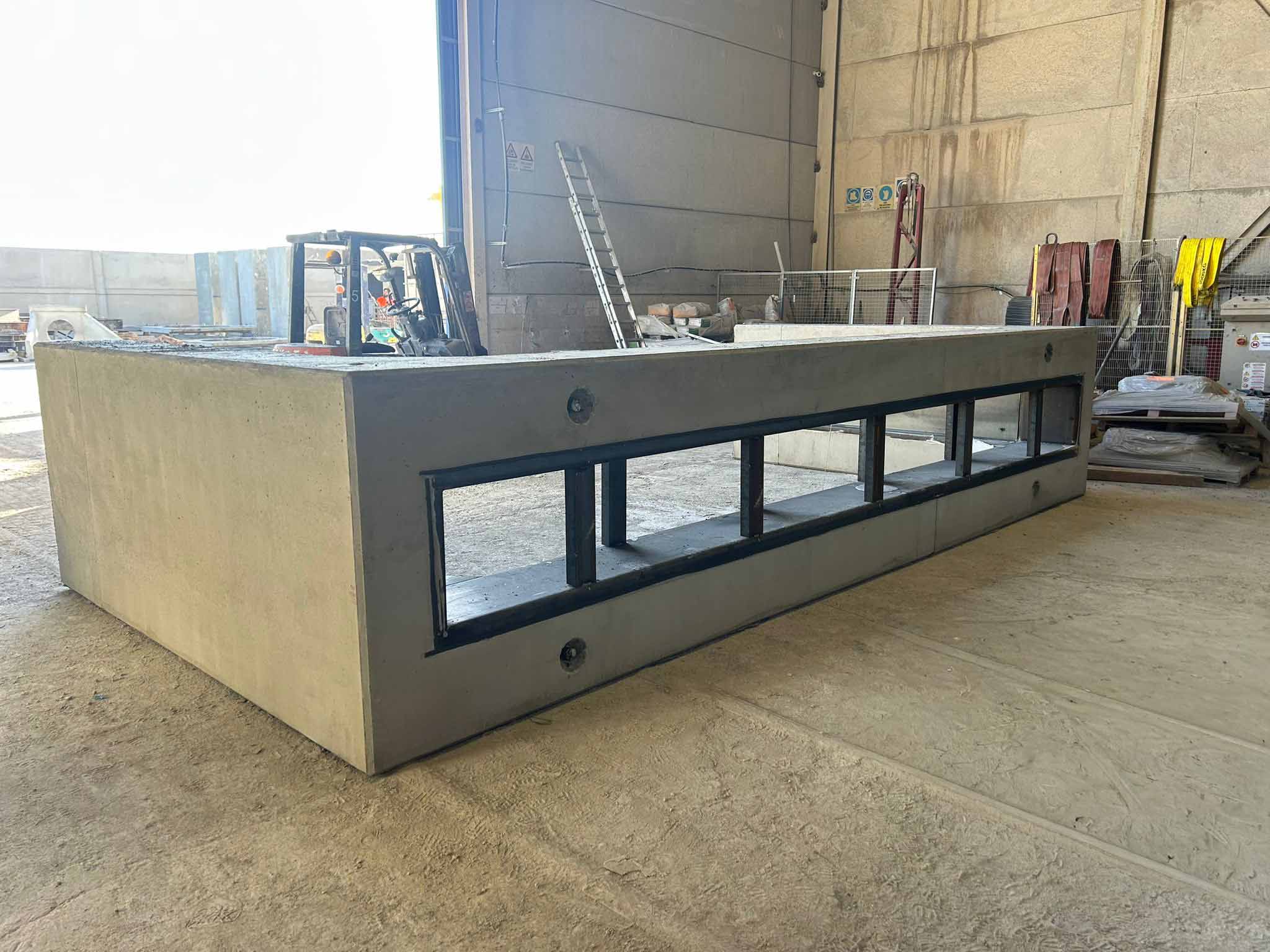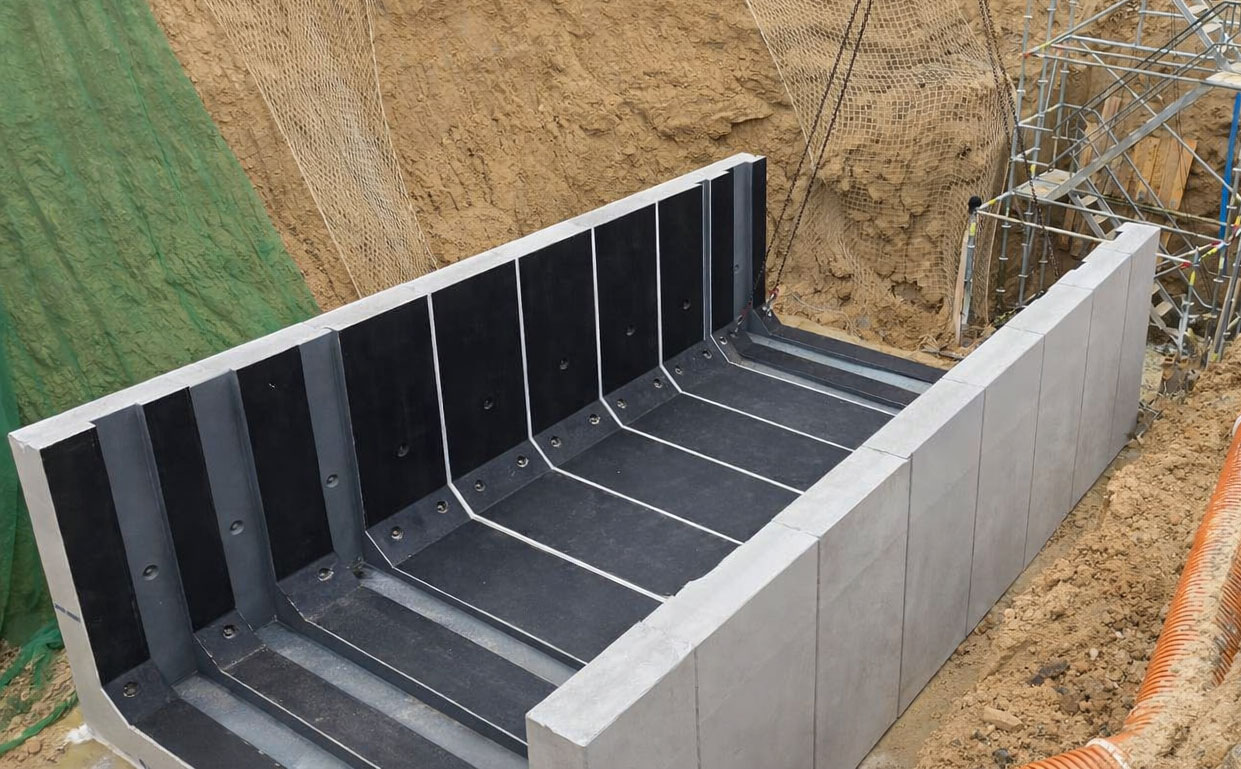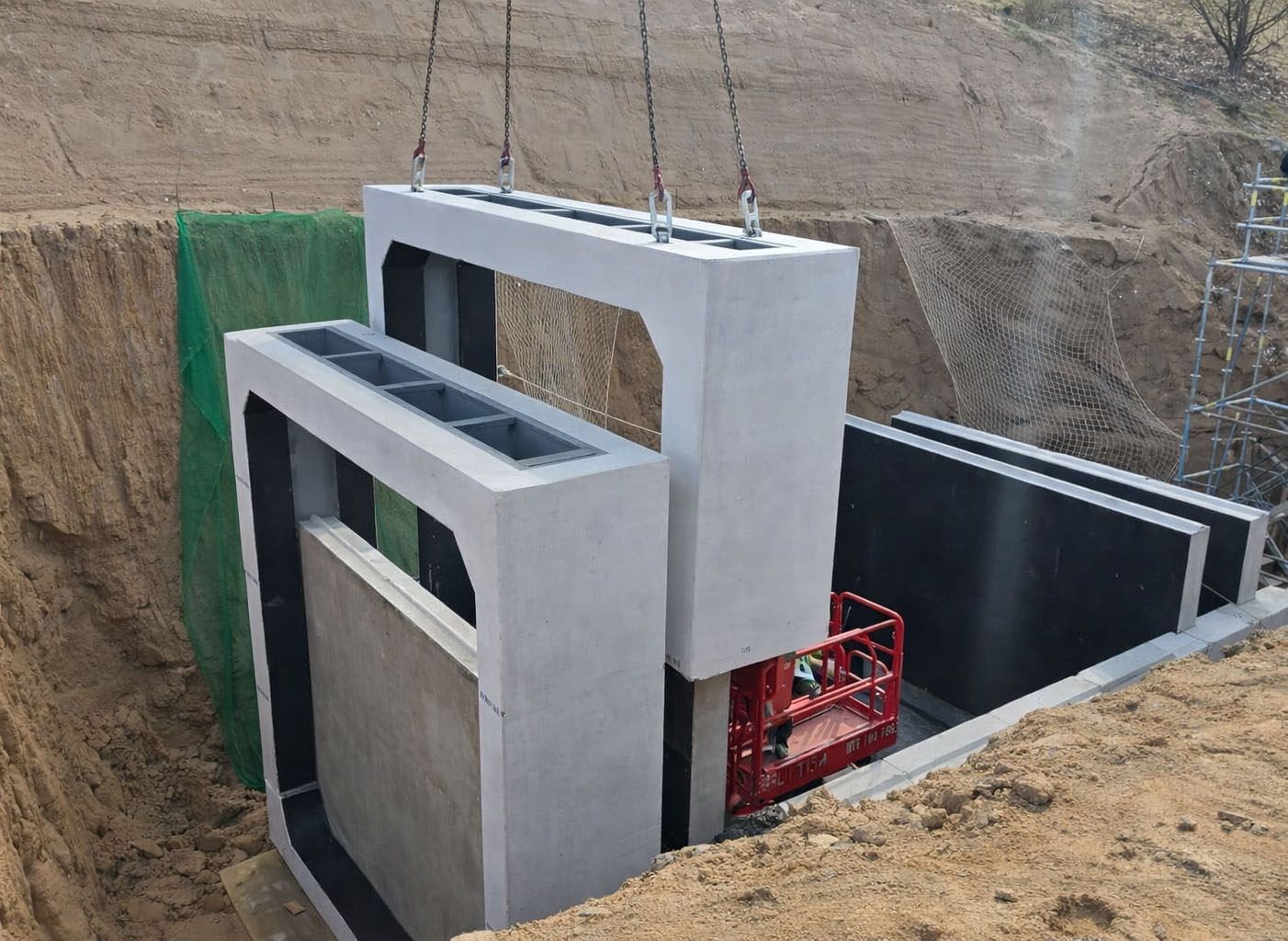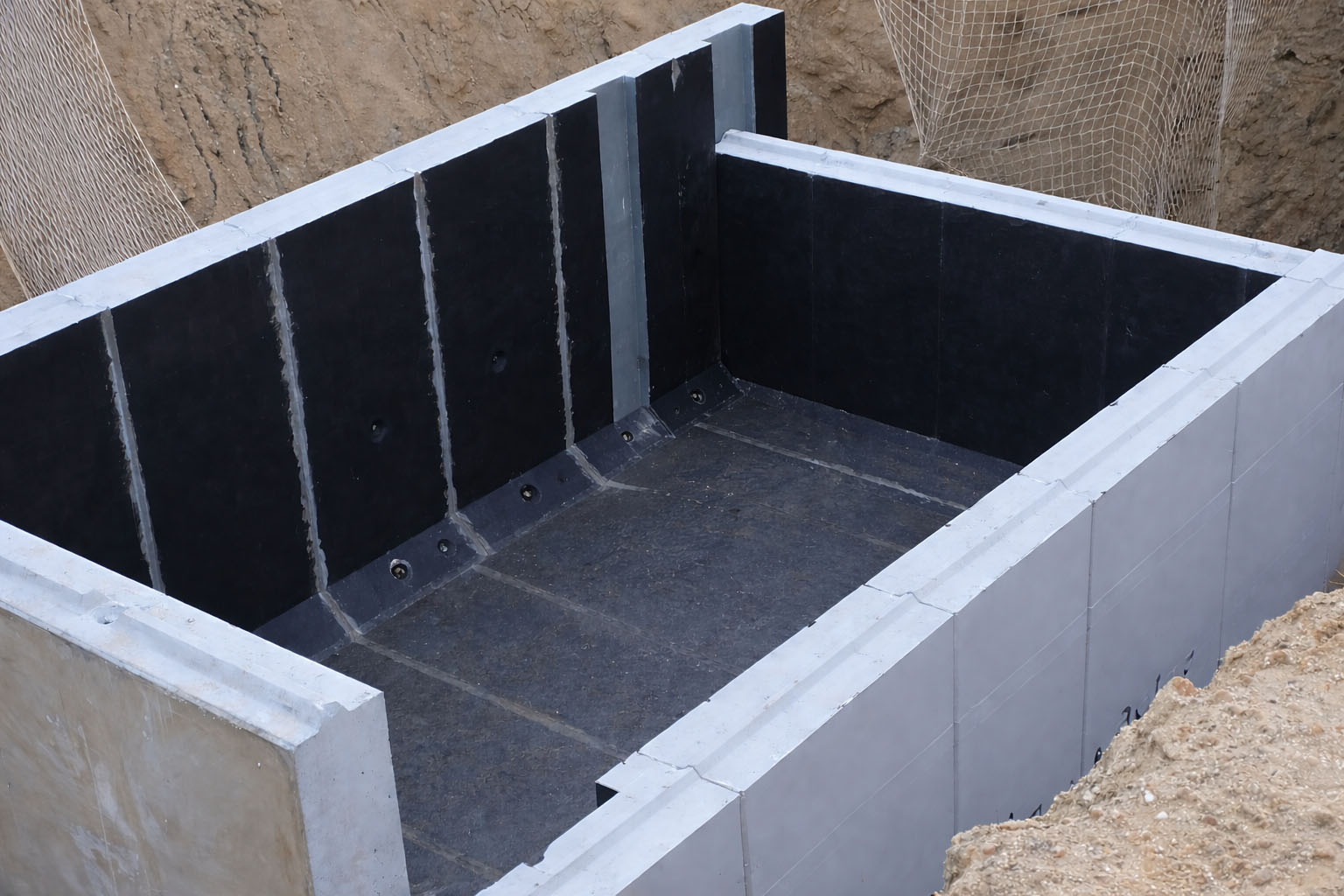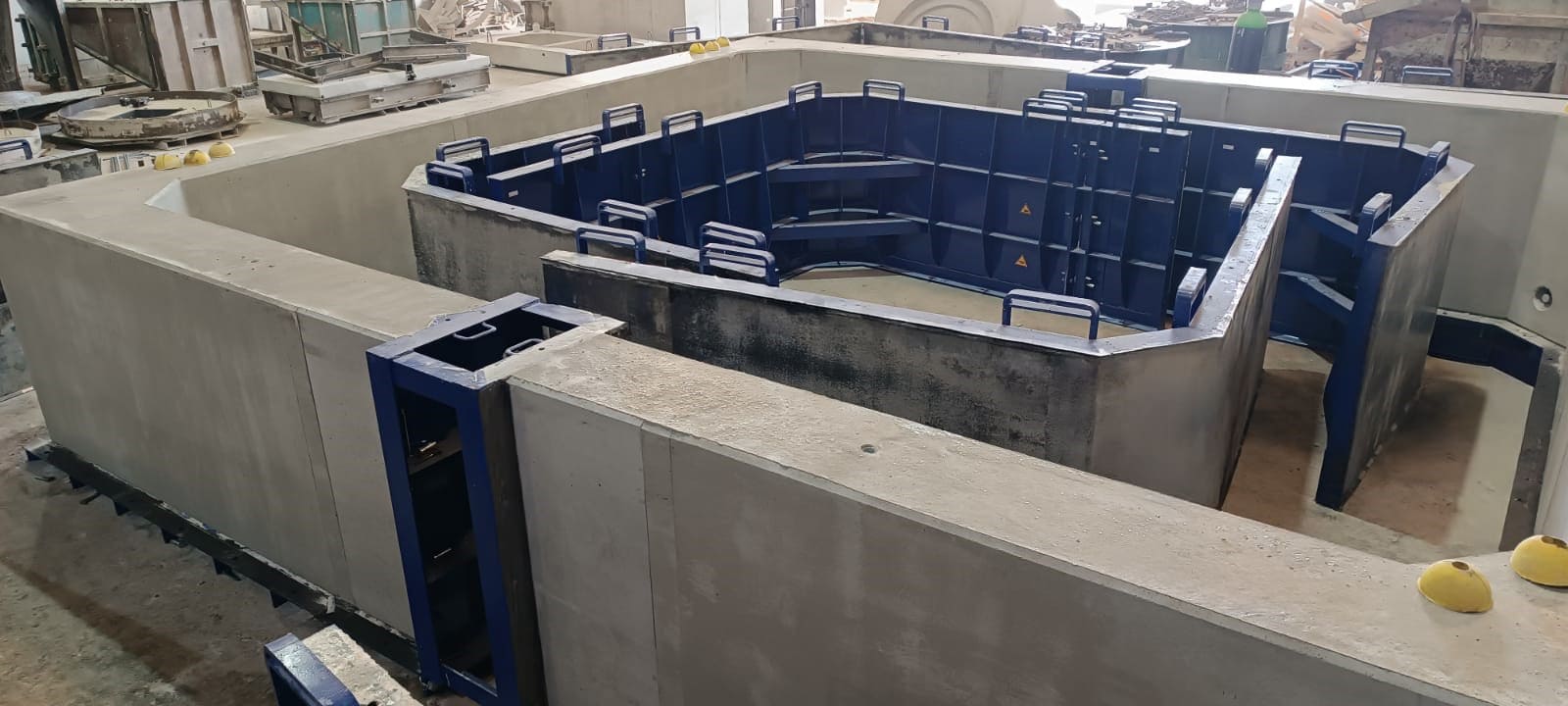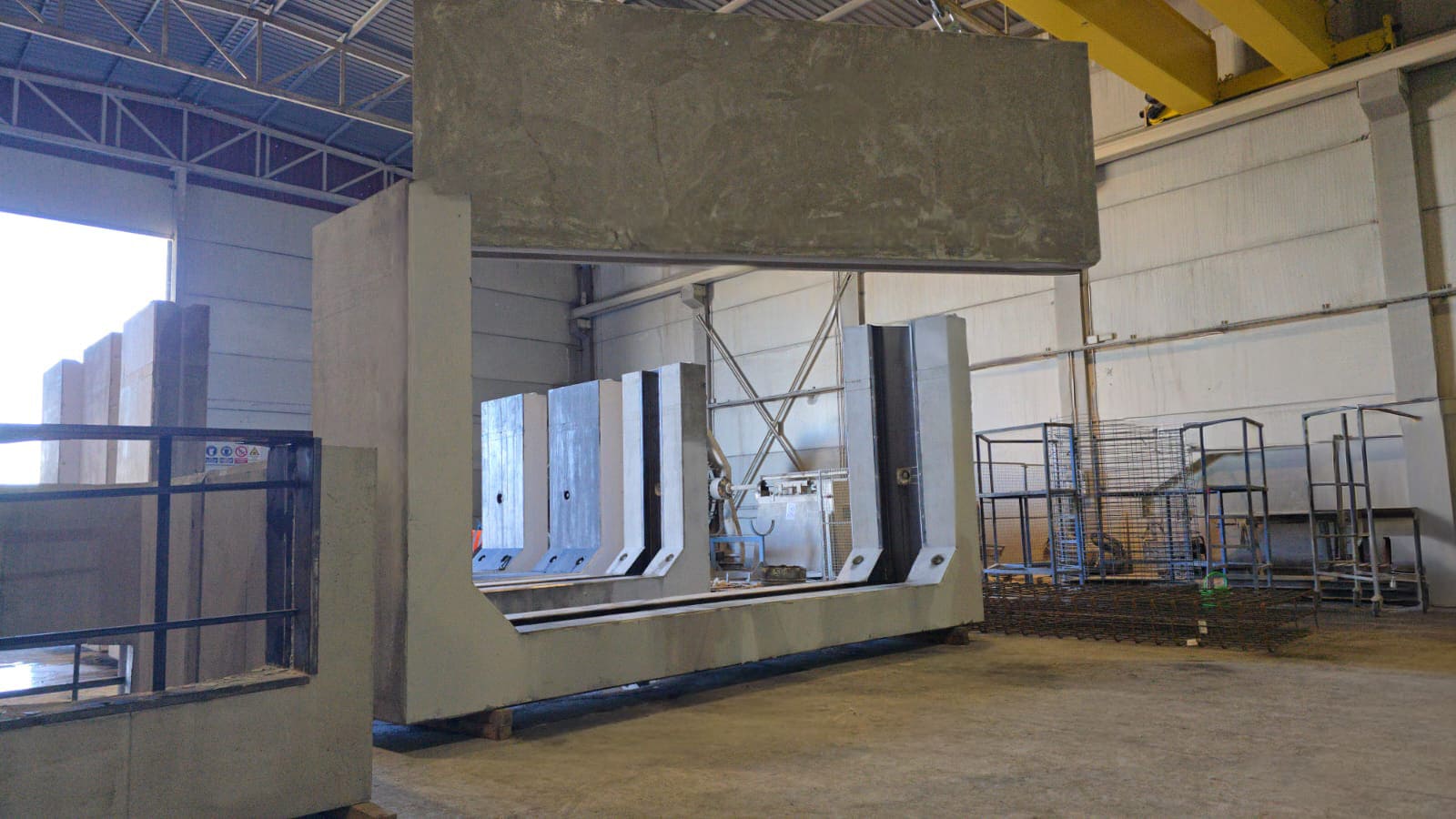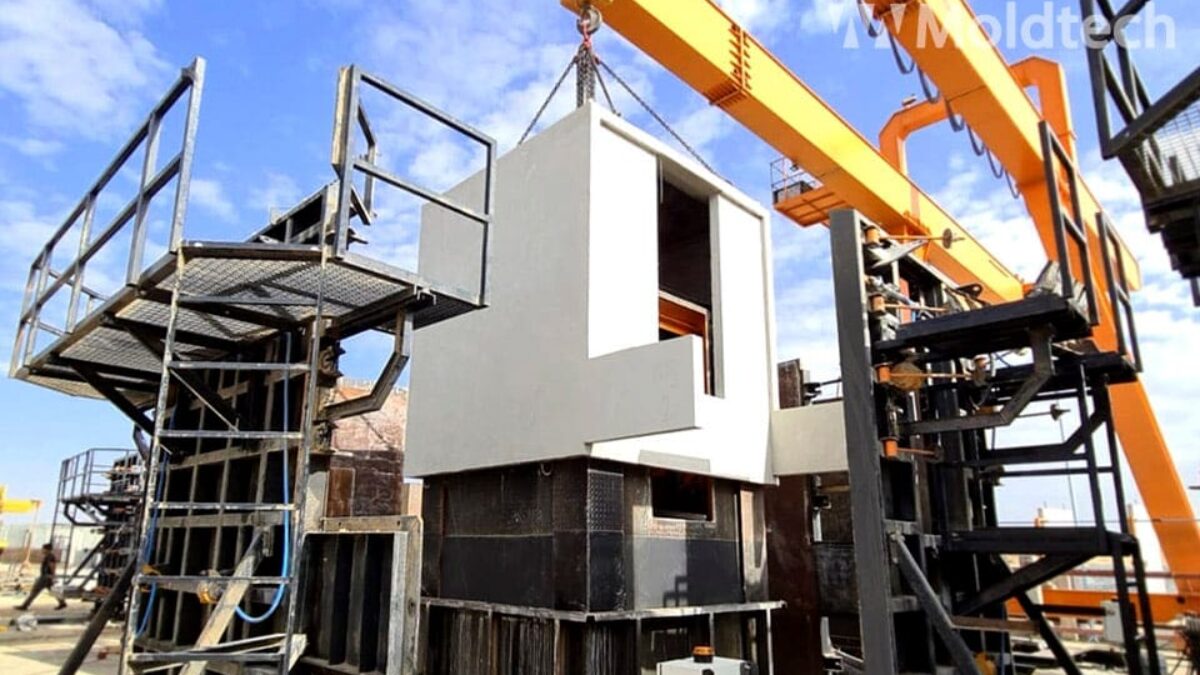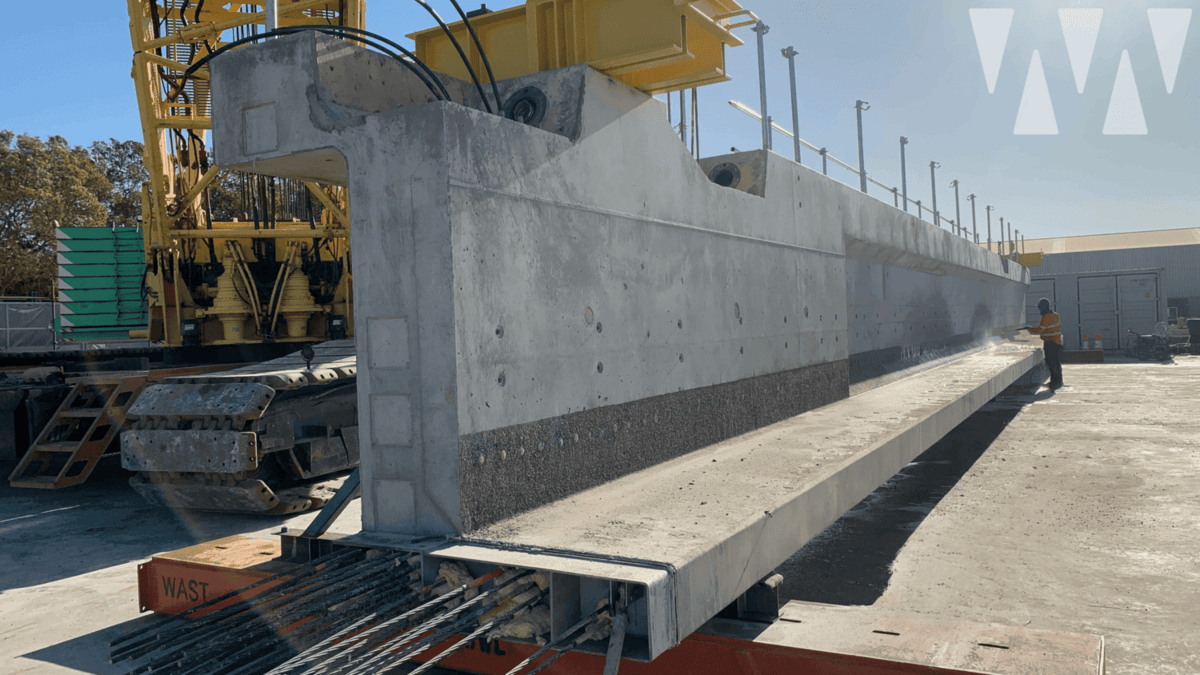


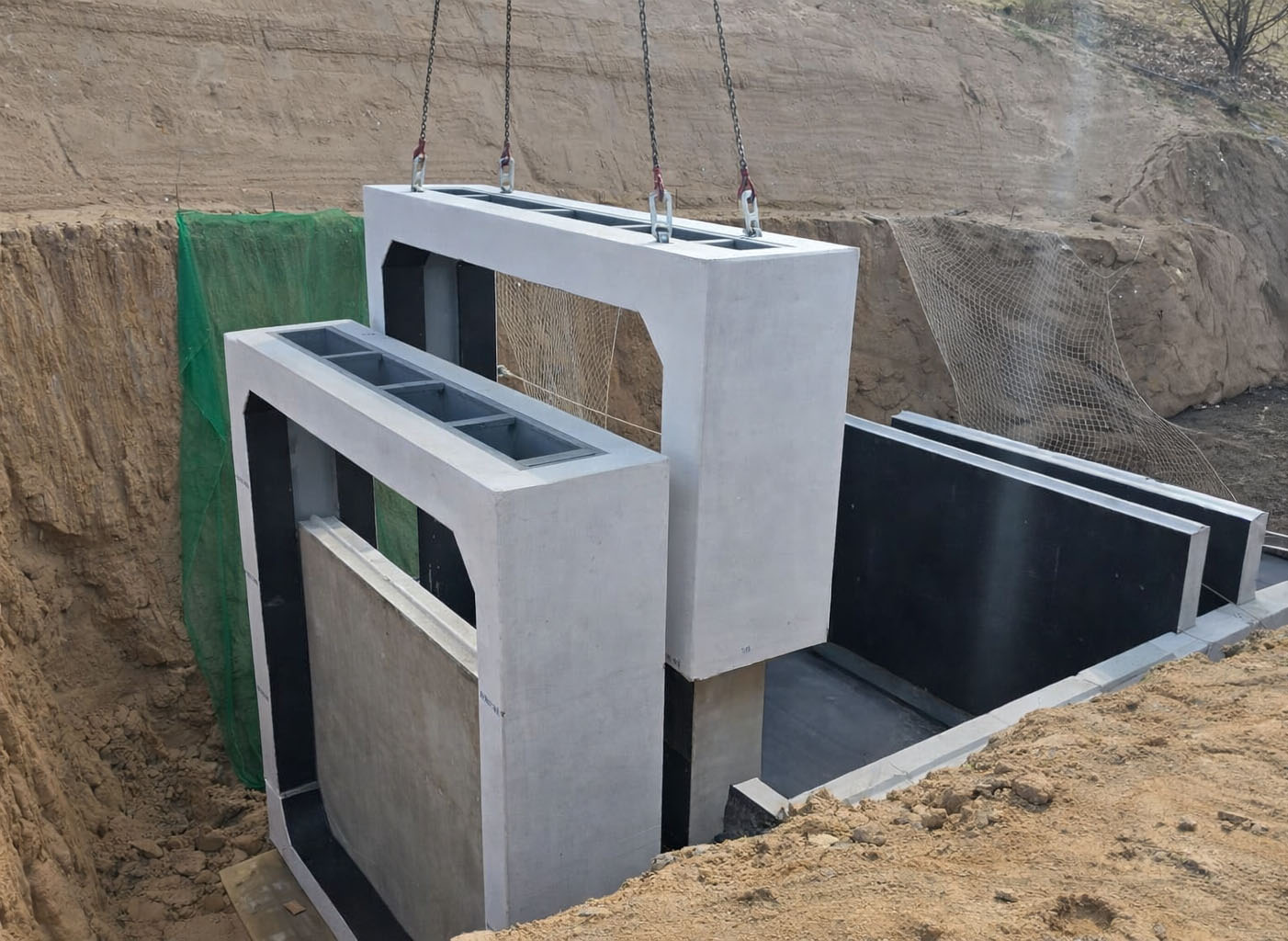
Moldtech S.L., a Spanish company specializing in the design and manufacture of moulds and equipment for precast concrete, has supplied Adymar with a set of moulds specifically developed for the production of precast concrete 3-sided box culverts, intended for the manufacture of watertight tanks for separating grease and hydrocarbons integrated into a civil engineering project on a high-traffic road.
Adymar S.L. is a company with a long and established track record in the precast concrete sector for civil engineering projects, boasting over three decades of experience in the development, manufacturing, and supply of technical solutions for transportation, sanitation, and urban infrastructure. The company has its own production facilities in the province of Seville, from where it manages the manufacture of a wide range of precast elements, combining industrial capacity, quality control, and technical adaptation to the specific needs of each project.
Thanks to its industrial approach, technical expertise, and commitment to innovation, quality, and regulatory compliance, Adymar participates in projects with highly demanding technical requirements, supplying solutions both nationally and internationally, and regularly collaborating with public administrations and construction companies on the development of major infrastructure projects.
These types of tanks are part of the environmental measures increasingly being incorporated into modern road infrastructure to mitigate the impact of potential accidental spills of oily or polluting substances, especially in sensitive areas such as tunnels, interchanges, and drainage systems. The precast 3-sided box culverts act as structural elements of the tanks, ensuring their watertightness and mechanical strength, and facilitating quick and safe on-site installation.
Watertight tanks as an environmental protection measure
Grease and oil separators are systems designed to intercept and retain oils, fuels, and other light substances present in wastewater, based on the physical principle of these contaminants floating on water. In the field of civil engineering and road safety, their function is crucial to preventing accidental spills from reaching the drainage system or the environment, thus minimizing the risk of contamination. Thanks to the use of precast solutions, such as Moldtech moulds, the construction process is optimized, reducing execution times, improving quality control, and increasing the durability of the final structures. This approach responds to current technical and environmental demands, which require more resilient and environmentally friendly infrastructure.
An approach aligned with current regulations and practices
European legislation establishes general frameworks for preventing environmental damage, without prescribing specific technical solutions for road infrastructure, delegating their application to national regulations, environmental assessments, and sectoral technical criteria.
In this context, there are European directives and principles aimed at preventing, avoiding, and remediating environmental damage, which directly influence the design and construction of transport infrastructure and can promote the incorporation of containment and treatment systems for accidental spills.
In Spain, environmental and water protection regulations require measures to control and treat pollutants, such as hydrocarbons and grease, especially in sensitive facilities and infrastructure. These requirements are typically implemented through runoff retention and treatment systems, supported by technical standards and best practices in the sector.
Application in major road infrastructure
In major road infrastructure projects, those responsible for the planning, design and management of transport networks have been incorporating contaminated runoff management measures for several years as part of broader environmental protection strategies.
In particularly sensitive sections, these measures include precast watertight tanks, grease and hydrocarbon separators, and sedimentation and pollutant retention systems. In this context, it is both logical and common for such solutions to be implemented using precast concrete elements, such as half-frames, due to their structural reliability, quality control and high level of watertightness.
Following these initial implementations, the progressive extension of this type of solution to other sections of the road network is envisaged, especially in high-capacity infrastructure and areas with greater environmental sensitivity.
Technical characteristics of the Moldtech supply
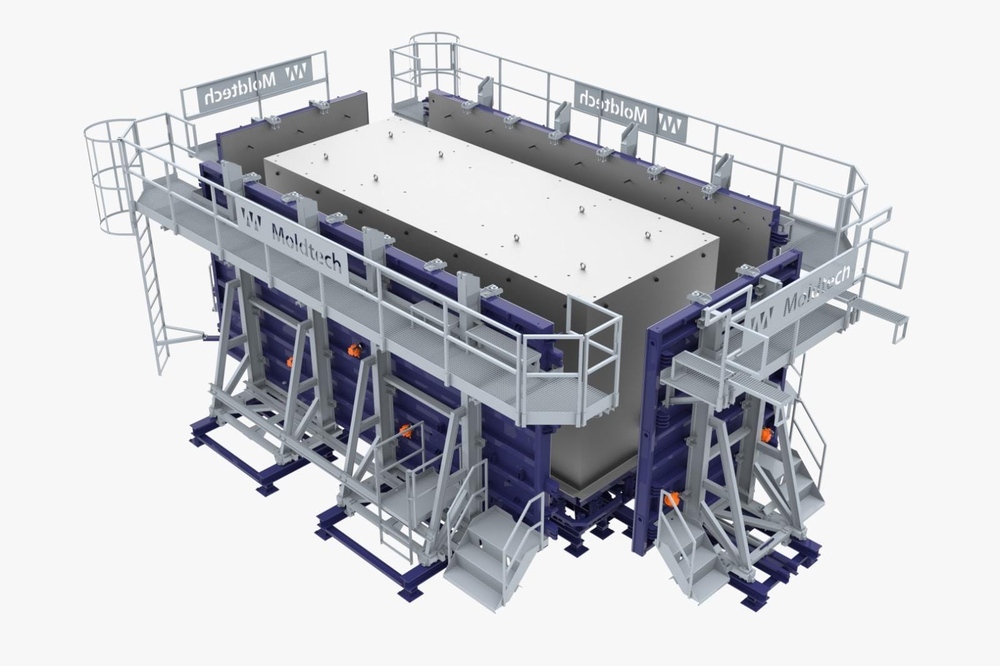
The set of equipment provided by Moldtech includes a mould for box culverts wet-cast up to 6 × 6 m, designed for the manufacture of non-prestressed precast concrete elements with wall thicknesses of 300 and 400 mm and a piece height of 1,200 mm.
The system allows for the manufacture of box-culverts with internal dimensions between 4,000 × 4,000 mm and 5,000 × 5,000 mm, thanks to a modular configuration that incorporates internal and external corners, straight panels of varying lengths, and specific panels for varying thicknesses. The assembly is completed with special separators for the manufacture of 3-sided box culverts, as well as two complete sets of adaptable bases and additional bottoms that enable serial production.
Contribution for sustainable civil engineering
This project highlights the collaboration between Adymar and Moldtech in the development of technical solutions geared towards civil engineering and environmental protection, emphasizing the role of precast concrete technology as a key tool to address current challenges of sustainability, safety and durability in road infrastructure.