



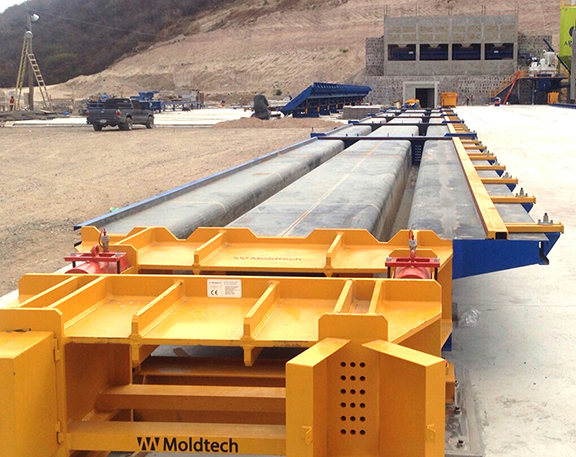
In the world of structural engineering, stability and strength are paramount. Precast concrete piers serve as a fundamental component in a vast array of construction projects, providing robust support for everything from bridges and buildings to elevated roadways and marine structures. Manufactured off-site in a controlled environment, these elements offer a superior alternative to traditional cast-in-place methods, ensuring higher quality, faster installation, and long-term durability.
This article delves into the world of precast concrete piers, exploring their benefits, applications, and the advanced manufacturing solutions provided by Moldtech that make their production efficient and reliable.
What Are Precast Concrete Piers?
A precast concrete pier is a vertical structural element that transfers loads from a superstructure (like a bridge deck or building frame) down to the foundation. These piers are cast in a factory setting using high-strength concrete and reinforced steel, resulting in a dense, durable, and precisely engineered product. By prefabricating these components, constructors can overcome many of the challenges associated with on-site casting, such as weather delays, quality control issues, and extended construction schedules.
Precast piers can be designed in a variety of shapes and sizes to meet specific engineering and aesthetic requirements, from simple cylindrical columns to complex, architecturally elaborate forms. The key is the use of high-quality steel molds that ensure every unit is produced to exact specifications.
The Unmatched Advantages of Precasting
The move toward precast piers in modern construction is driven by clear and compelling advantages:
- Exceptional Quality and Consistency: Factory production allows for meticulous control over concrete mixing, placement, and curing. This results in a product with superior strength, density, and finish compared to what can be achieved on-site.
- Accelerated Construction Schedules: Precast piers are manufactured while site preparation and foundation work are underway. Once the site is ready, the piers can be transported and erected in a fraction of the time, significantly shortening the overall project timeline.
- Enhanced Durability: The high-quality, dense concrete used in precasting provides excellent resistance to harsh environmental conditions, chemical exposure, and freeze-thaw cycles, ensuring a long and low-maintenance service life.
- Cost-Effectiveness: While precast components may have a higher upfront cost, the total installed cost is often lower due to reduced on-site labor, faster construction, and minimal material waste.
- Improved Safety: Manufacturing in a controlled factory environment is inherently safer than on-site casting. Furthermore, reducing on-site construction time and complexity minimizes the risk of accidents.
Moldtech: Engineering the Molds for Strong Foundations
Producing high-quality precast concrete piers requires equally high-quality formwork. Moldtech specializes in the design and fabrication of advanced steel molds for a wide range of precast elements, including piers, columns, and other vertical structures. Our solutions are engineered for precision, durability, and operational efficiency.
For the production of piers and columns, we offer versatile systems like our hydraulic single-line mold for columns. This type of equipment is designed for high productivity and allows for adjustments in size, making it a flexible asset for any precast plant. The robust construction of our molds ensures they can withstand the rigors of daily production while maintaining the tight tolerances required for structural components.
As seen in this detailed video of a 26-meter hydraulic mould for columns and beams, our technology is built to handle large-scale and demanding projects, providing our clients with the reliability they need to succeed.
Diverse Applications
The strength and versatility of precast concrete piers make them suitable for a wide range of applications:
- Bridges and Overpasses: As the primary support for bridge decks.
- Building Construction: Forming the structural frame of multi-story buildings.
- Marine Structures: Used in the construction of wharves, jetties, and port facilities.
- Industrial Facilities: Supporting heavy equipment and pipe racks.
Conclusion: Building on a Solid Foundation
Precast concrete piers are a testament to the advantages of industrialized construction—offering a faster, safer, and higher-quality solution for building the essential foundations of our infrastructure. They are a critical element in creating resilient and long-lasting structures.
Moldtech is committed to providing the precast industry with the most advanced and reliable manufacturing technology. Our state-of-the-art molds and equipment empower our clients to produce the high-quality structural components that modern construction demands. Contact us to explore how our engineering expertise can support your next project.
