

Why mold durability and lifespan are a strategic lever in precast plants
When we talk about mold durability and lifespan in precast concrete production, we’re really talking about cost per unit, production reliability, and return on investment. A mold that loses geometry after a few hundred cycles, or that needs constant welding repairs, doesn’t just create a maintenance headache; it generates scrap, rework, and unplanned downtime.
From our point of view at Moldtech, mold durability and lifespan are not a line item in the budget. It’s a strategic asset. The plants that treat their precast concrete molds as long-term production tools, with the right design, materials, and maintenance, end up with more predictable output and a lower total cost per piece.
What really determines mold durability and lifespan in precast production
Key technical factors that affect mold life
Mold lifespan is not random; it’s engineered. The key factors we repeatedly encounter are:
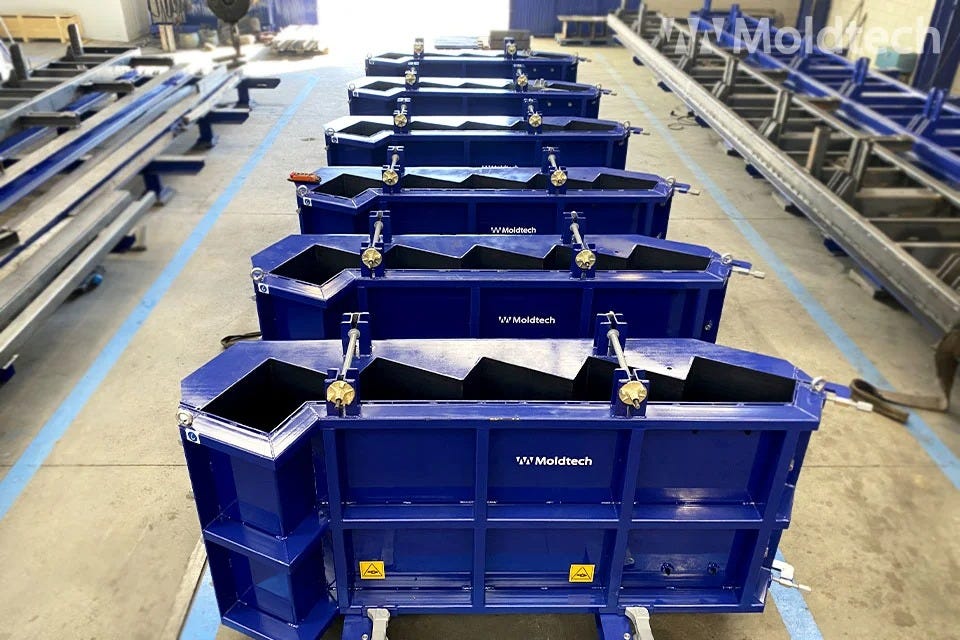
- Steel quality and thickness: Low-grade steel or undersized plates deform under repeated loading and vibration. In our heavy-duty molds for TT slabs in Central America, for example, the 400‑ton TT mold was engineered with extra plate thickness and reinforcement to withstand thousands of cycles under pretensioning forces without distortion.
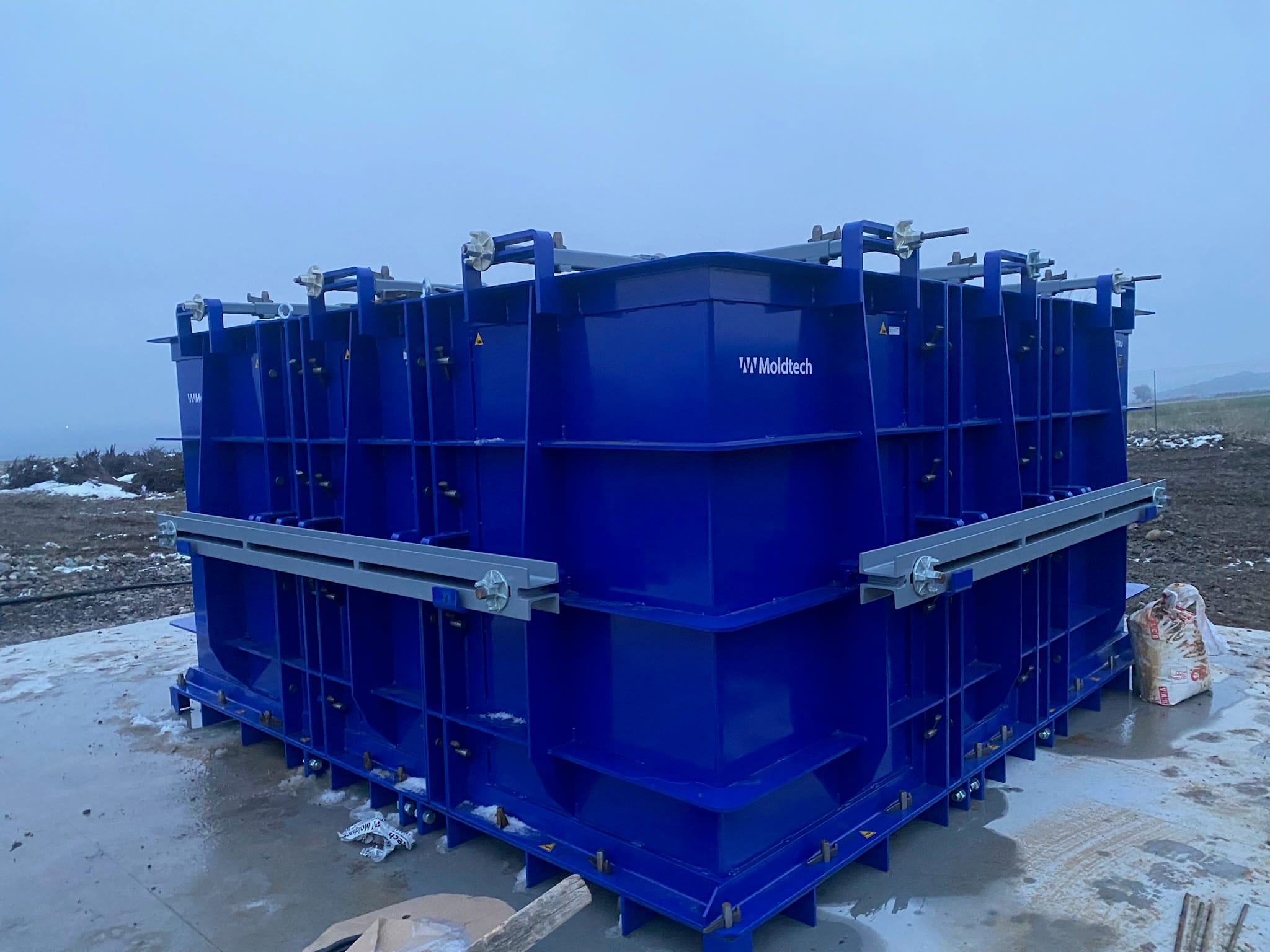
- Welding quality and structural design: Poor welding or weak joints are usually the first failure point. On our Double Column Mold for Mexico, we combined high-quality welds with a robust internal frame to avoid micro-cracking around inserts and lifting points during intensive production.
- Surface treatment and corrosion protection: Without proper surface preparation and anti-corrosion systems, even a well-designed mold starts to degrade quickly, especially in aggressive or coastal environments. Our H‑channel beam mold in Mexico was specified with enhanced surface treatment to resist abrasion from repetitive casting and cleaning.
- Type and frequency of production cycles: Rapid, high-frequency production with aggressive vibration stresses the structure much more than occasional casting. Expectations for customized molds for precast elements working three shifts per day must be very different from standard molds used occasionally.
When one of these elements fails, the same issues appear: dimensional deviations, misalignment of joints, and excessive shimming on site. That’s why we insist on aligning mold design for precast with the real production plan, not with an idealized one.
Operational and maintenance influences
Technical design is only half of the story. Daily operations and maintenance can easily add or remove years from a mold’s lifespan.
Key influences include:
- Cleaning methods and tools (too aggressive and you damage the surface, too soft and concrete buildup appears).
- Choice and application of form-release agents.
- Vibration systems and settings (over-vibration can crack welds and loosen connections).
- Handling, lifting, and storage when the mold is idle.
A common mistake we see is using hammers or inadequate tools for cleaning, damaging flanges and edges. In a project with 3D bathroom molds in Miami, we realized that training the operator team on correct demolding, cleaning, and protective products dramatically extended the service life in a humid, saline environment. The mold itself was designed with corrosion protection, but it was the combination of design plus disciplined maintenance that kept tolerances within spec after many production cycles.
In short, even the best heavy-duty molds will suffer if daily procedures are not aligned with durability goals.
How to maximize mold service life without compromising quality
Design decisions that extend lifespan
From our experience, good engineering is the first “maintenance action.” When we design a mold, we pay special attention to:
- Reinforcements and stiffeners located based on real load paths, not just “symmetrical” layouts.
- Adjustable parts that can be fine-tuned over time instead of forcing operators to improvise on-site.
- Robust tolerances that anticipate thermal expansion, vibration, and repeated clamping.
Looking back at some of our older designs, areas for improvement are clear. For instance, in early TT slab molds, we sometimes underestimated how local vibration would concentrate stress in specific areas. The current TT slab mold for Canada was redesigned with improved stiffeners and anchoring points, precisely to cope with harsh climate conditions and intensive production, reducing the need for corrective welding. That evolution comes directly from watching how molds behave after thousands of cycles in real plants.
Best practices in use and maintenance
Good design needs to be matched with smart day-to-day practices. Examples include:
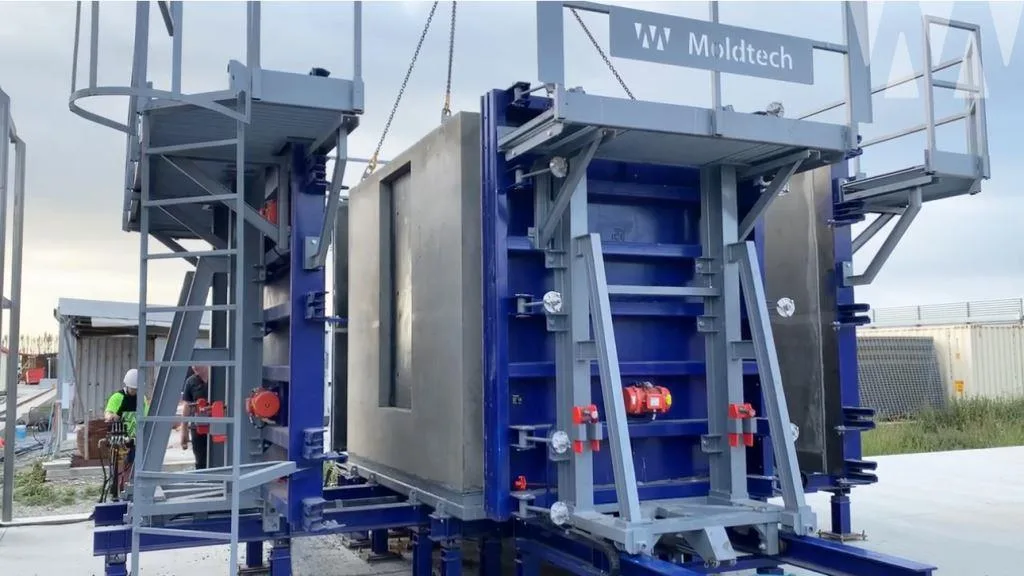
- Controlled demolding: Avoid shock loads; use hydraulic or mechanical systems as intended, not as levers to pry pieces off.
- Regular inspection points: Check critical welds, adjustment mechanisms, and bearing surfaces on a defined schedule, not only when something breaks.
- Preventive repair: Small cracks, misalignments or seal failures are much cheaper to fix early than after they affect product geometry.
- Proper storage: Support the mold on designed points, protected from standing water and aggressive environments.
In our turnkey projects, we provide training, operating manuals, and after-sales support focused on preventive maintenance. Our clients often report years later: “The molds are still within tolerance, and unplanned stops are rare.” This is where production optimization truly begins – with stable equipment.
Mold durability, lifecycle cost, and smarter investment decisions
This is where numbers matter. Two molds can have very different purchase prices, but what really matters is the lifecycle cost per piece.
We often see this scenario: a cheaper mold, with limited durability, requires frequent repairs, generates non-conforming products, and must be replaced much sooner. On paper, the initial investment looks attractive; in practice, the cost per unit produced is significantly higher.
When we advise clients on new equipment – whether for beams, columns, TT slabs, panels, or 3D modules – we model expected mold durability and lifespan against planned production volume and working conditions. For example, the Double Column Mold for Mexico and our Mold for H‑Channel Beam in Mexico were specified from the beginning as intensive-use solutions to ensure a solid return on investment over many years of production.
This lifecycle view is now a key part of precast plant planning for our international clients.
Turning mold durability into a competitive advantage with Moldtech
What’s interesting is that mold durability and lifespan are not only a technical metric; it’s a competitive advantage. Plants that invest in robust mold design, quality materials, and disciplined preventive maintenance achieve more stable quality, higher productivity, and better profitability.
At Moldtech, we combine customized mold design for precast, heavy-duty construction and practical training so that our clients get long-lasting molds that fit their real production environment, from large TT molds in Central America to corrosion-protected 3D bathroom molds in Miami.
If you are evaluating new molds or planning a precast plant, we can help you analyse expected mold lifespan, optimize your investment, and adapt the equipment to your specific production needs. Our team is ready to support you with turnkey solutions and customized molds that turn durability into tangible business results.