

What is Lean Construction in the precast industry?
Redefining efficiency in precast concrete
If you run a precast plant, you know the pain: casting beds stopped by missing reinforcement, mould changeovers that eat half a shift, and rework due to small dimensional errors. That is where Lean Construction stops being a buzzword and becomes a survival strategy for the precast industry and for any serious industrialised construction project.
From our work with precast factories across Europe, Latin America and North Africa, we see Lean as one of the most effective levers to keep a precast business competitive, especially when margins are tight and deadlines are non‑negotiable.
What does it really mean for precast plants?
When we talk about Lean Construction in the precast concrete industry, we are not thinking about a theoretical framework. We are talking about organising the whole chain design, moulds, production and logistics to maximise value for the client and ensure continuous flow on the casting beds.
Instead of “keeping every machine busy”, Lean asks a different question: how do we produce exactly what the project needs, with the least possible waiting time, transport and rework?
From our experience visiting plants in very different markets, the level of lean manufacturing in construction varies a lot. Some plants only apply basic housekeeping; others work with detailed process optimisation and waste reduction plans. Interestingly, even very simple Lean actions often unlock visible gains within weeks.
Main Lean principles applied to Lean Construction
Lean in precast only works when it reaches the shop floor. Verás, the key is to translate big principles into very concrete habits and equipment decisions.
Eliminating waste on the casting beds
On casting beds, “waste” is not abstract. It is:
- Hours lost waiting for steel cages or inserts
- Overproduction of elements that will stay in stock for months
- Unnecessary forklift movements to reposition formwork or accessories
- Long changeover times every time the product changes
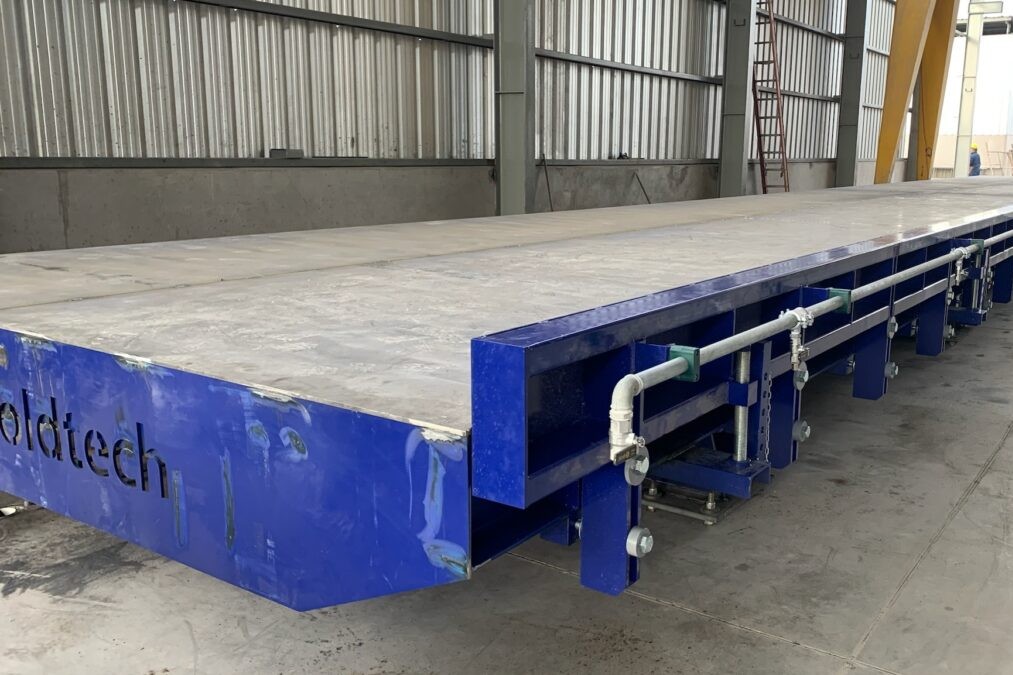
A common error we see is investing in high‑capacity beds but keeping rigid moulds that force slow, manual reconfigurations. With flexible mould systems, we can cut setup times drastically. We confirmed this when re‑engineering mould concepts for mixed‑product lines, where changeover used to dominate the entire shift.
Standardising and stabilising processes
Another Lean construction pillar is standardised processes. In precast, that means defining clear, repeatable procedures for:
- Pouring and vibration
- Curing cycles
- Demoulding and handling
- Cleaning and preventive maintenance
What would we do differently today in some plants we saw a decade ago? Start standardisation from the very beginning: in the design of the plant layout, the selection of moulds and the definition of product families. When mould dimensions, inserts and lifting points follow a logic, production stabilises, and operators gain speed almost naturally.
Continuous improvement and visual control
Lean principles also involve a culture of small, frequent improvements. In a precast context, that looks like:
- Daily checks at the lines with simple visual boards
- Clear labels and colour codes on moulds, accessories and storage areas
- A handful of key indicators: cycle time per element, defects per batch, rework hours
Our equipment is designed with this in mind: access points for inspection, easy‑to‑clean surfaces and visible adjustment systems that make deviations obvious. That type of design detail is what really enables continuous improvement and better productivity in precast.
How Lean Construction impacts precast plant performance
When it is applied seriously, the impact on efficiency in precast plants is very tangible:
- Higher productivity: more elements per day with the same number of people and the same number of beds.
- Better quality control: fewer dimensional deviations, fewer surface defects and less on‑site repair.
- More reliable production planning: fewer emergencies, fewer last‑minute changes and more predictable deliveries.
From our experience, plants that rethink their line layout and mould usage often cut lead times significantly. One client went from chronic delays to stable weekly outputs simply by reorganising flows and limiting product variability per line. The method matters, but the real shift is how engineering, production and maintenance start working as one team around shared targets.
Lean-friendly equipment: how Moldtech supports Lean Construction
Now, how do we connect all this Lean theory with real equipment decisions? Mira, this is where we see the biggest gap between intention and reality.
At Moldtech, we design precast concrete equipment to support Lean from day one:
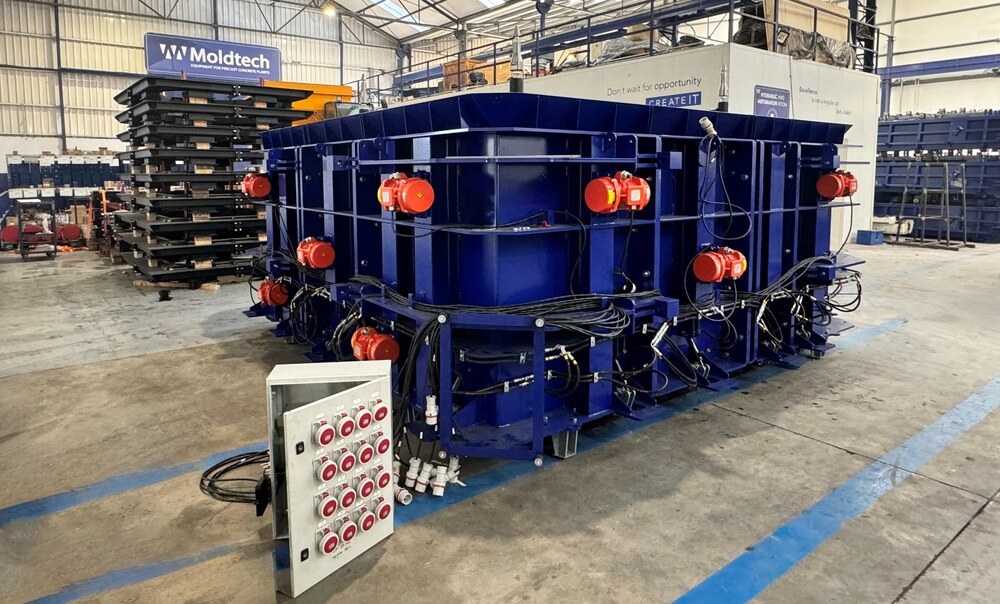
- Custom-made moulds that minimise unnecessary handling and reduce the risk of rework by integrating lifting systems, embedded parts and dimensional adjustments.
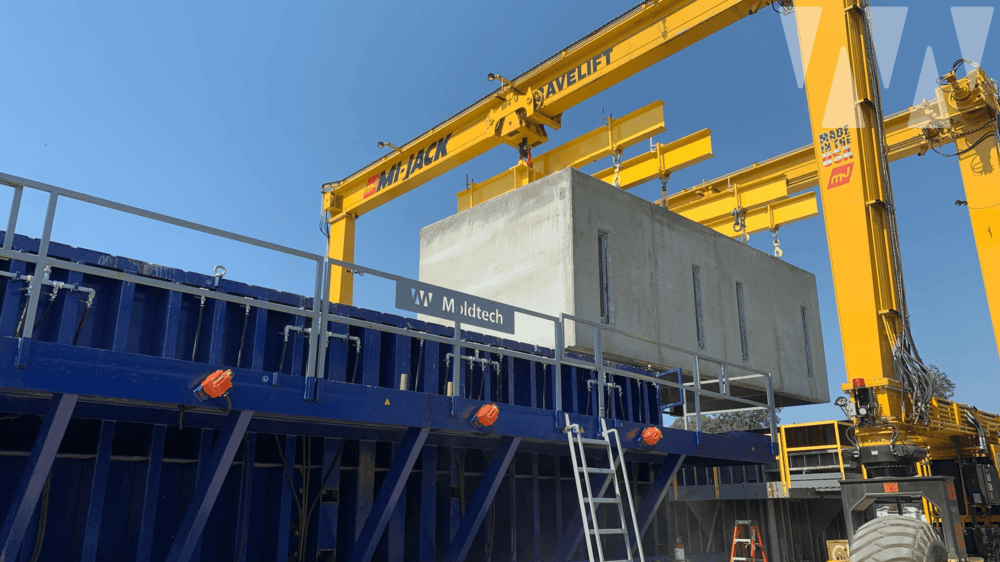
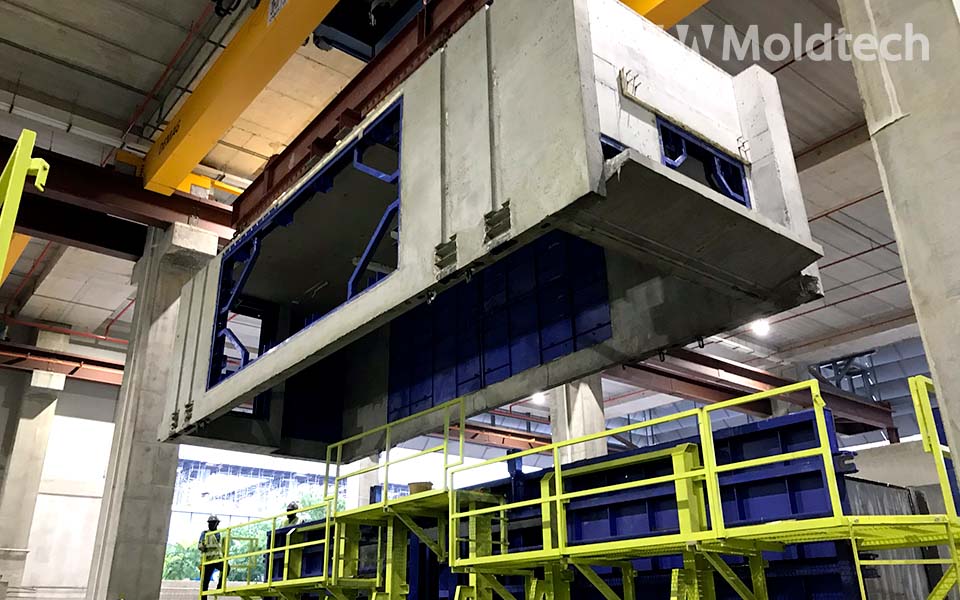
- 3D moulds and modular construction systems that shorten assembly and finishing tasks on site, especially in modular and volumetric projects.
- Hydraulic tilting tables and handling systems that cut manual movements, improve ergonomics and reduce cycle time between casting, curing and demoulding.
In several turnkey precast plants, clients asked us explicitly to design layouts with one‑directional flows, minimal crossings and clear separation between steel, casting and finishing. We learned that when layout, logistics and equipment selection are aligned with Lean Construction principles, training times drop and operational discipline becomes easier to maintain.
Steps to start implementing Lean Construction in your precast facility
If you are wondering where to begin, te explicamos un enfoque práctico que vemos funcionar en plantas reales:
- Map your current production flow from steel preparation to loading, and identify the main bottlenecks and waiting times.
- Prioritise quick wins: reduce setup time on the most-used moulds, standardise recurring element types, and reorganise storage to avoid unnecessary transport.
- Involve operators and maintenance in short improvement workshops; they usually know exactly where time is being lost.
- Evaluate whether your existing moulds and equipment are enabling or blocking your Lean initiatives.
What we would do differently today in many investments is clear: integrate Lean thinking already in the early engineering and precast plant layout phase, not after the plant is running.
Turning it into a competitive advantage in precast
Lean Construction is not a one‑off project; it is a long‑term way of running a precast business. In our view, real success comes when equipment, layout and processes evolve together, instead of as isolated decisions.
If you are considering upgrading your existing facility or designing a new plant with Lean principles in mind, our team at Moldtech can help you analyse alternatives and define the most efficient solution for your market, product mix and investment level. With international experience in turnkey precast plants and modular solutions, we adapt Lean concepts to the reality of each client —not the other way around.