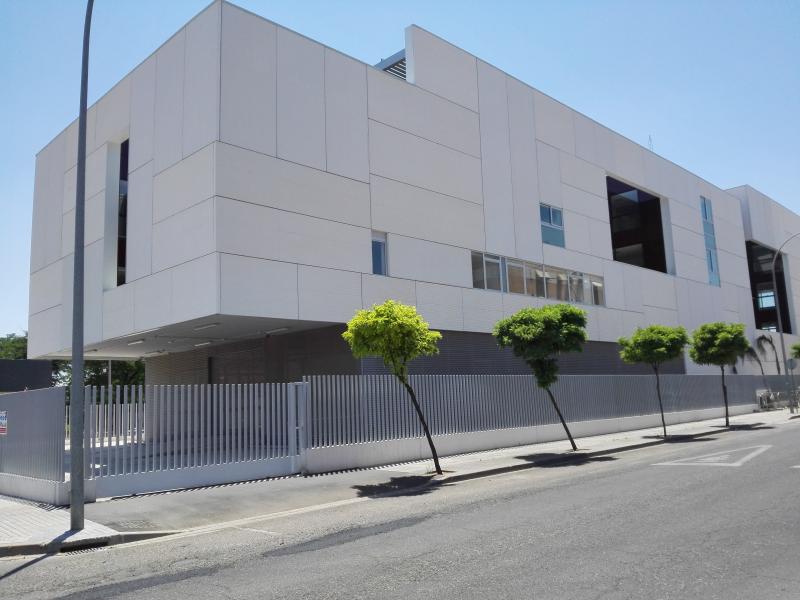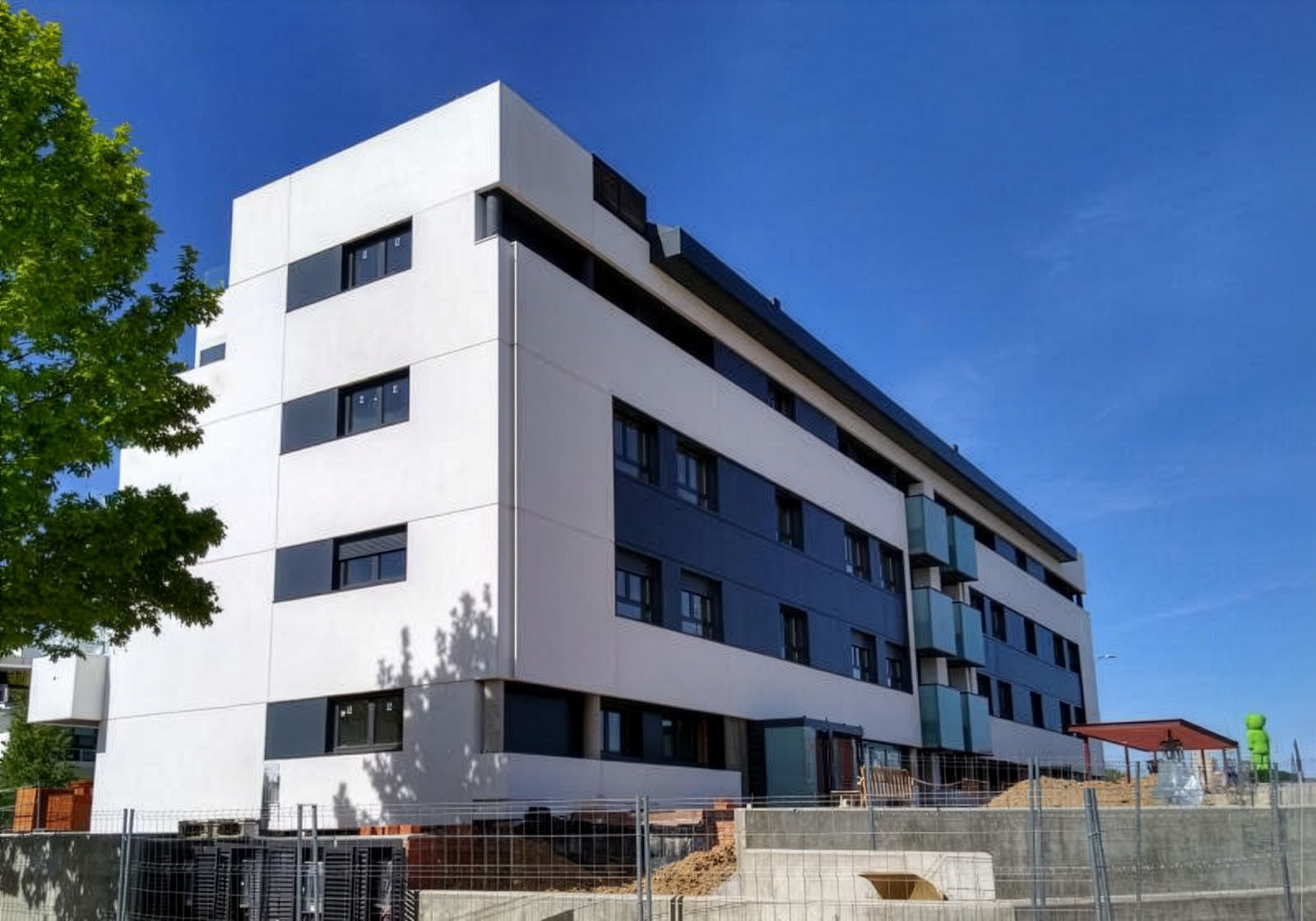


Residential construction in Spain is progressively moving toward more industrialized construction models, in which process control, final quality and reduced execution times are becoming key factors. Within this context, Hermanos Quijada has consolidated its position as one of the leading precast concrete manufacturers for residential façades in southern Spain, building on more than 20 years of experience in the precast sector and a strong commitment to the modernization of its production processes, aligned with the new demands of the industry.
With a well-established track record in the manufacture of precast concrete elements for building construction, the company has developed extensive technical expertise in precast façade systems, participating in residential projects that require high standards of dimensional accuracy, surface finish and structural reliability. This specialization has positioned Hermanos Quijada as a key player in the development of residential precast solutions within its area of influence.
A strategic investment to strengthen production capacity
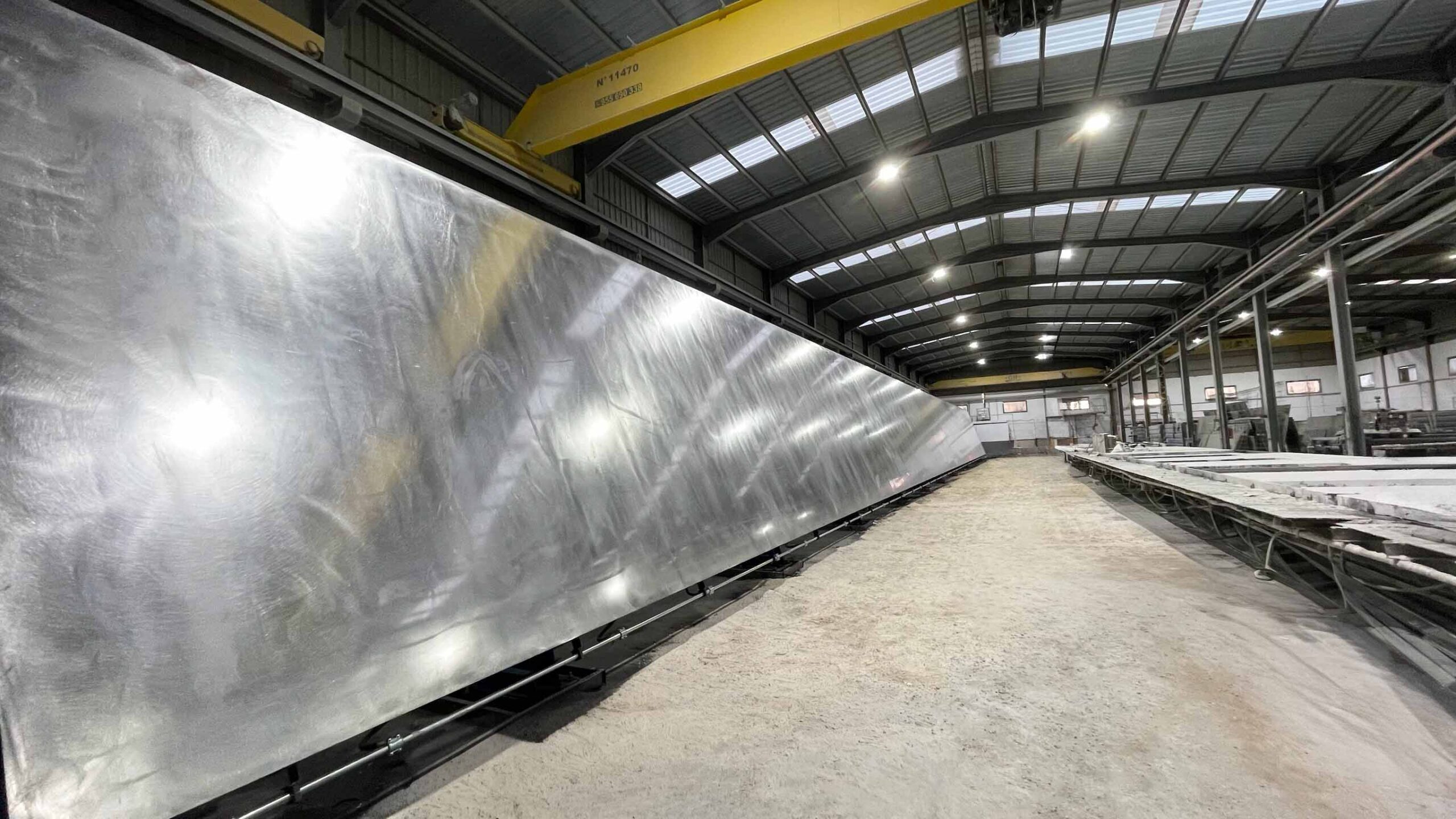
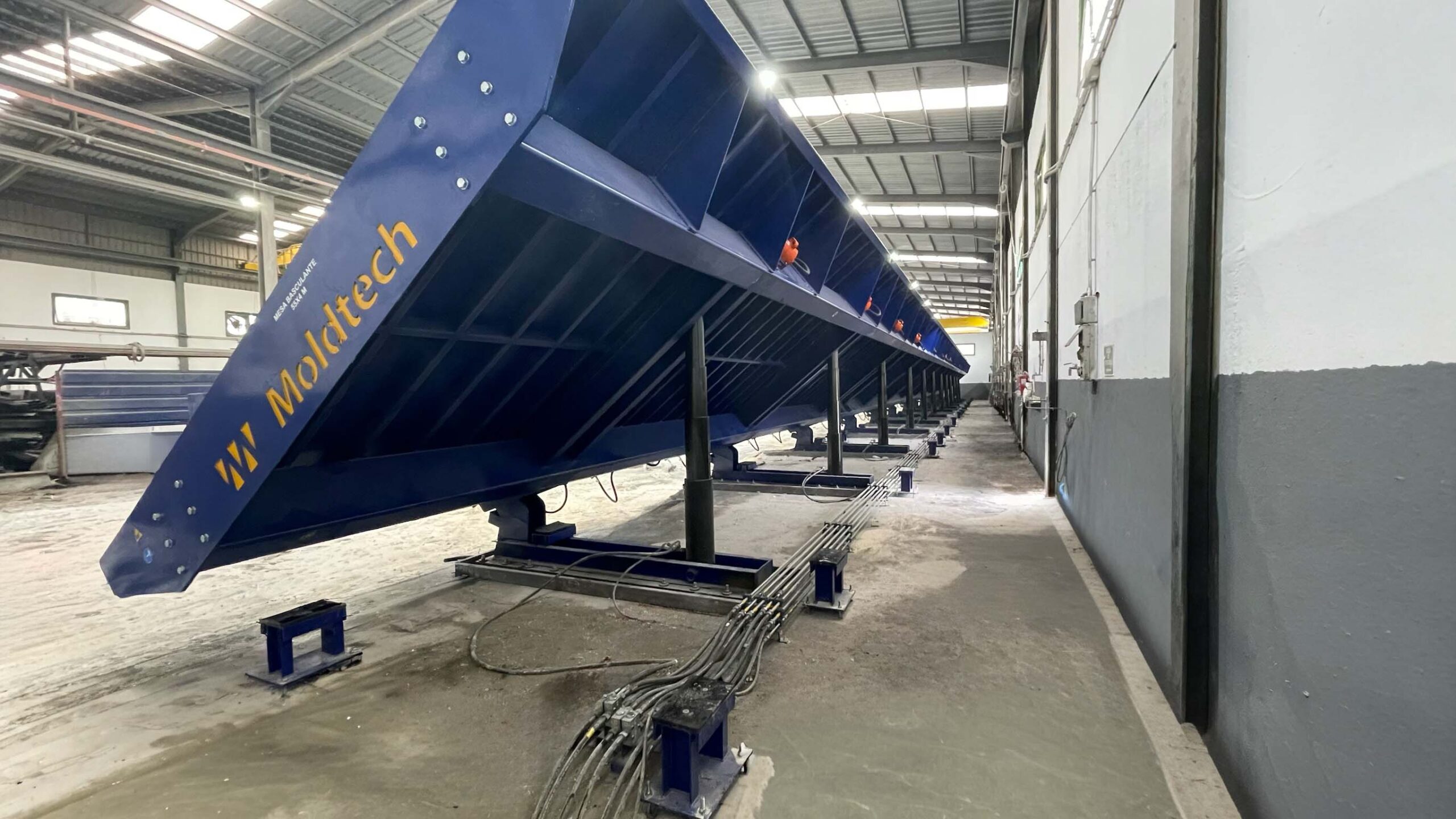
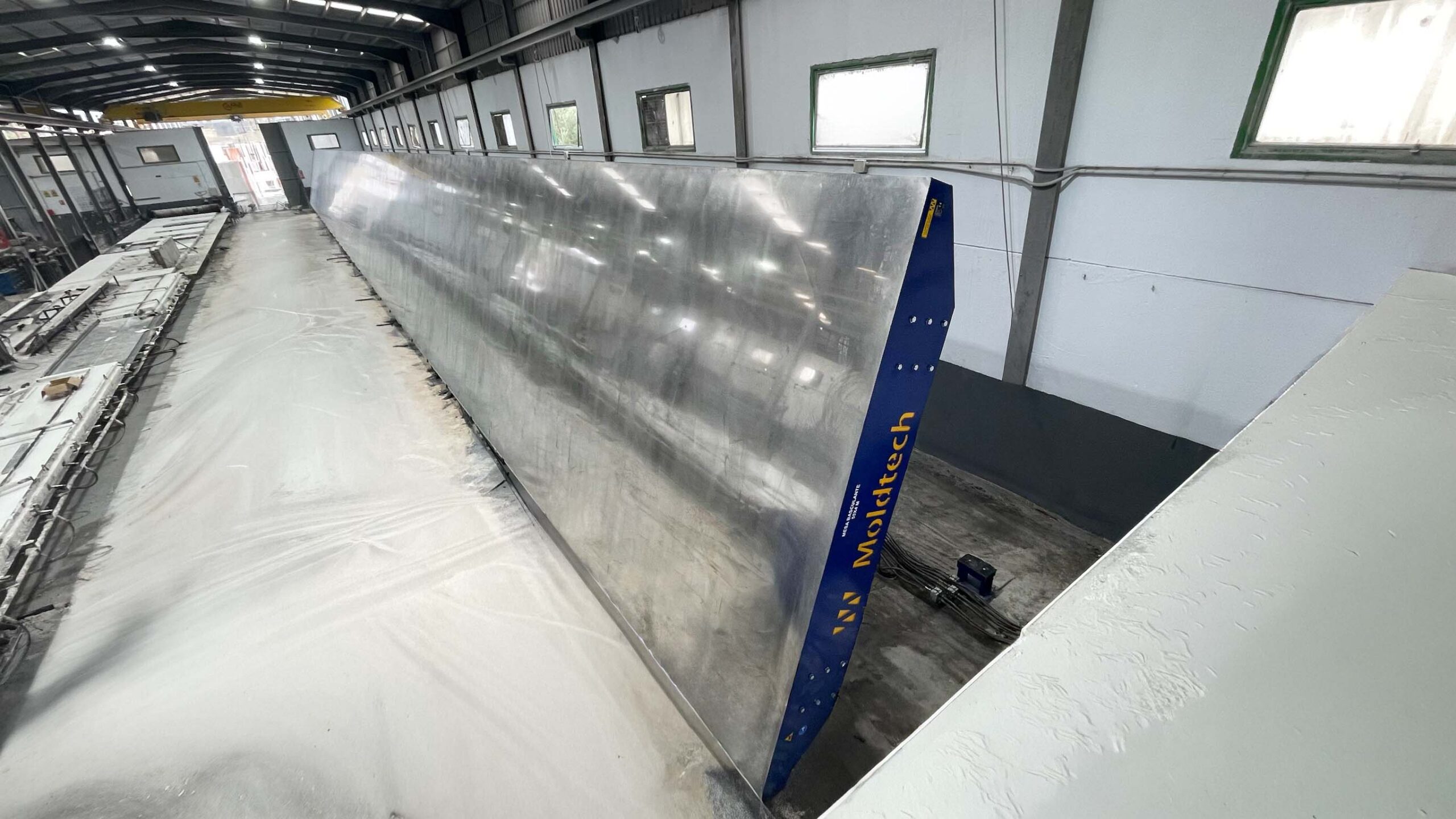
As part of its growth strategy and industrial modernization, Hermanos Quijada has recently incorporated a large-format tilting table supplied by Moldtech, designed for the production of non-prestressed precast concrete panels for residential façades.
The equipment has been designed for the manufacture of large-size panels, with maximum dimensions of up to 50 m in length, 4 m in height, and thicknesses of up to 24 cm, enabling the production of façade solutions adapted to contemporary residential architecture.
The tilting table consists of four independent modules, each measuring 13.75 m in length and 4 m in width. When combined, they form a production line 55 m long and 4 m wide. This modular configuration provides high operational flexibility, optimizes production cycles, and facilitates future expansions or system adaptations.
Each module is equipped with a fixed frame anchored to the foundation and a tilting surface capable of reaching a maximum inclination angle of 74°, ensuring safe and controlled handling of the panels during the manufacturing and demoulding phases.
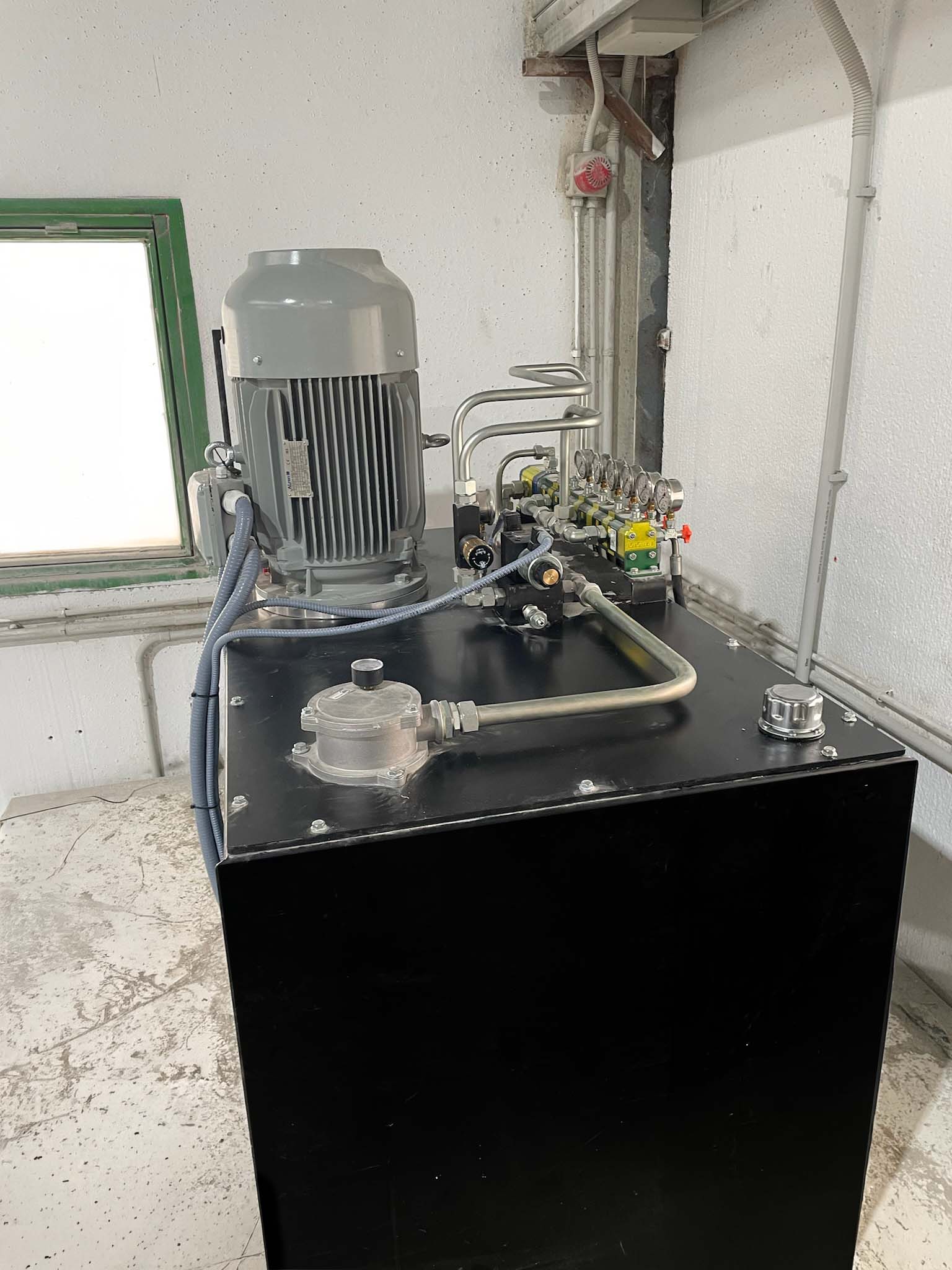
The tilting system is actuated by hydraulic cylinders, controlled through a hydraulic power unit and a main control panel, ensuring precise, synchronized, and repeatable operation. In addition, the table incorporates a pneumatic vibration system, which is essential to achieve uniform concrete compaction, improve surface finishes, and ensure the final quality of the façade products.
Precast concrete panels for residential façades: applications and advantages
The industrial production of precast concrete façade panels offers multiple advantages compared to traditional in-situ construction systems. These products can be used for external enclosures, load-bearing or non-load-bearing façades, and customized architectural solutions, combining structural performance, durability, and design freedom.
The main benefits include:
- Significant reduction in construction time by transferring most of the building process to the factory.
- Full quality control, both in concrete mix design and surface finish.
- Improved on-site safety by minimizing work at height.
- High repeatability and precision, especially relevant for large-scale residential developments.
These characteristics make precast façade panels an ideal solution to meet the current needs of the residential sector, where industrialization is playing an increasingly important role.
Moldtech, an international reference in precast technology
The supply of this tilting table is part of Moldtech’s extensive experience as one of the world’s leading manufacturers of moulds and equipment for precast concrete, with a particularly strong presence in the Spanish market.
With projects executed on all five continents, Moldtech designs and manufactures industrial solutions tailored to the real needs of precast producers, both for building construction and for civil works and infrastructure. In Spain, its leadership is especially notable, actively participating in the modernization of numerous precast plants and supporting national manufacturers in their transition towards more industrialized and competitive processes.
The future of residential precast construction in Spain
The growing demand for housing, the need to optimize resources, and the pressure to reduce timeframes and costs are driving a gradual transformation of the Spanish construction model. In this context, precast concrete is emerging as one of the solutions with the greatest growth potential in the residential sector.
The incorporation of advanced technology, such as large-format tilting tables, enables manufacturers to tackle increasingly complex projects with higher technical and architectural requirements. The combination of engineering, industrialization, and production expertise will shape the path towards a more efficient, sustainable, and future-oriented building industry.