

What Are Architectural Precast Panels?
Its Importance in Modern Construction
When we talk about the building envelope today, we are really talking about time, performance and image. Facades must close the structure quickly, meet strict technical requirements, and, at the same time, express the architectural concept. This is where architectural precast panels have become a key solution.
In simple terms, architectural precast panels are concrete elements manufactured in a controlled plant environment, designed not only to enclose the building but also to provide a specific aesthetic finish. Our clients use them in commercial buildings, industrial facilities, infrastructure projects and even modular construction, where repeatability and visual quality are non‑negotiable.
Key Characteristics of Architectural Precast Panels
Aesthetic Versatility and Surface Finishes
The real strength of architectural concrete panels is the design freedom they offer. With the right mould and production setup, we can integrate:
– Pigments and special aggregates
– Textured or patterned form liners
– Exposed aggregate and bush‑hammered finishes
– Polished or smooth architectural surfaces
From our experience, the earlier the mould design is aligned with the architectural concept, the higher the aesthetic consistency on site. When this coordination happens late, we often see unnecessary compromises in joints, reveals or panel modulation.
Structural Performance and Durability
Beyond appearance, architectural panels can be load‑bearing or non‑load‑bearing, depending on the project. Properly designed precast concrete façade panels offer:
– High dimensional accuracy and tight tolerances
– Excellent performance against weather and temperature changes
– Fire resistance inherent to concrete
– Long‑term durability with minimal maintenance
Working on coastal projects, we learned that corrosion protection details in the mould and reinforcement layout are critical. Small decisions, like how we position anchors, drips or lifting points, have a big impact on long‑term performance, especially in aggressive environments.
How Architectural Precast Panels Are Manufactured
From Design to Mould Engineering
The process always starts on paper (or BIM). We move from architectural drawings to shop drawings, and then to the engineering of precast panel moulds. At this stage, we define whether the client needs:
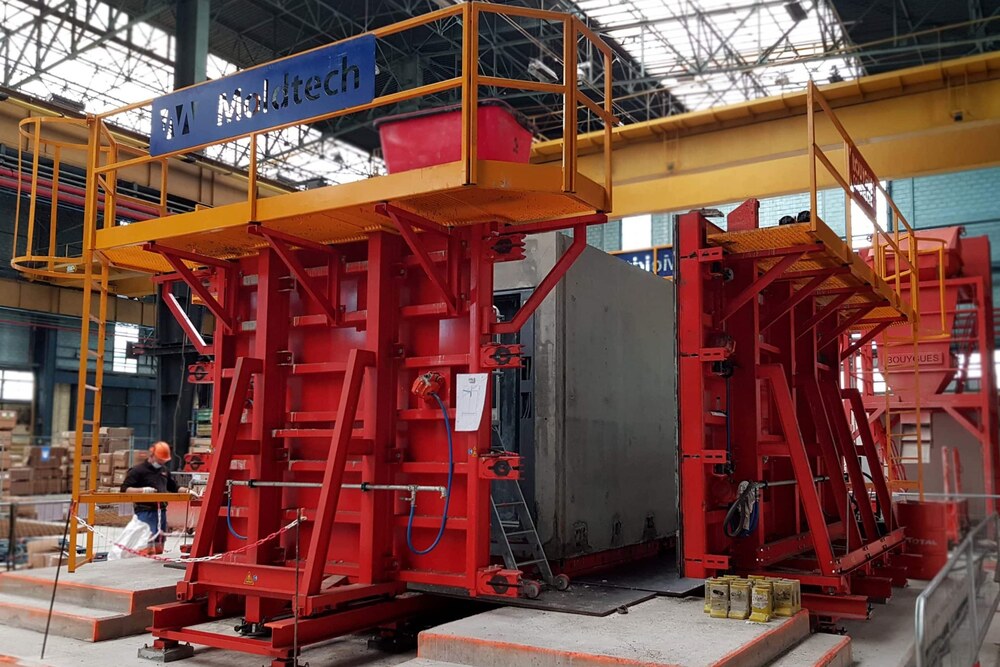
– Heavy‑duty steel moulds
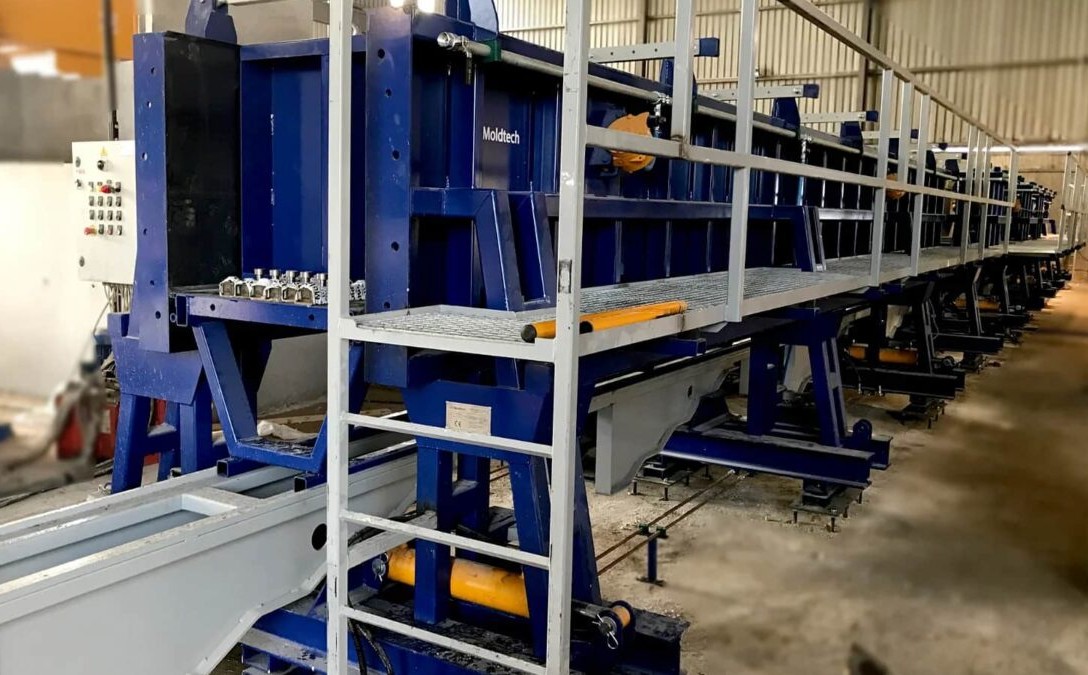
– Tilting tables for large flat façade panels
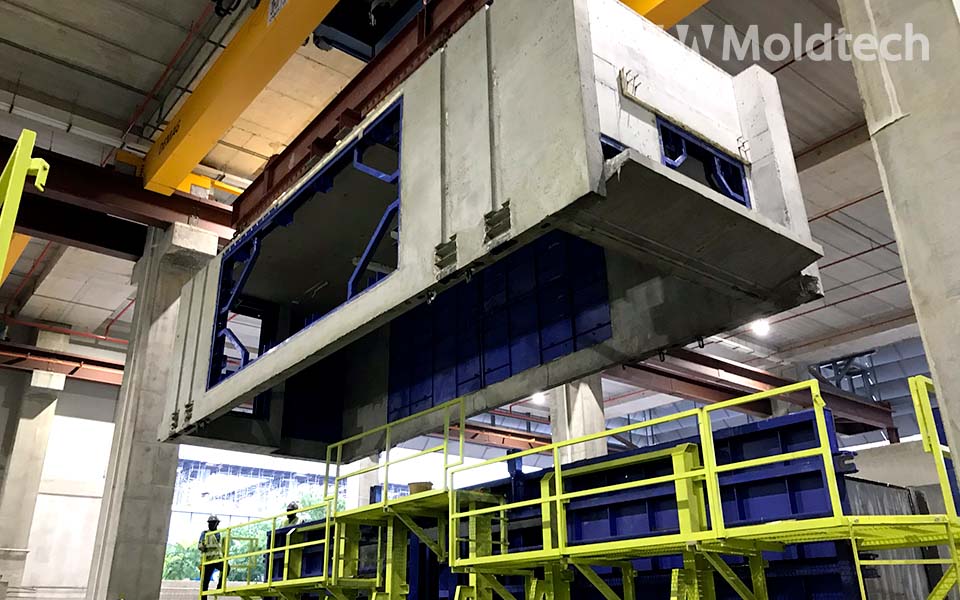
– Vertical or 3D moulds for more complex geometries
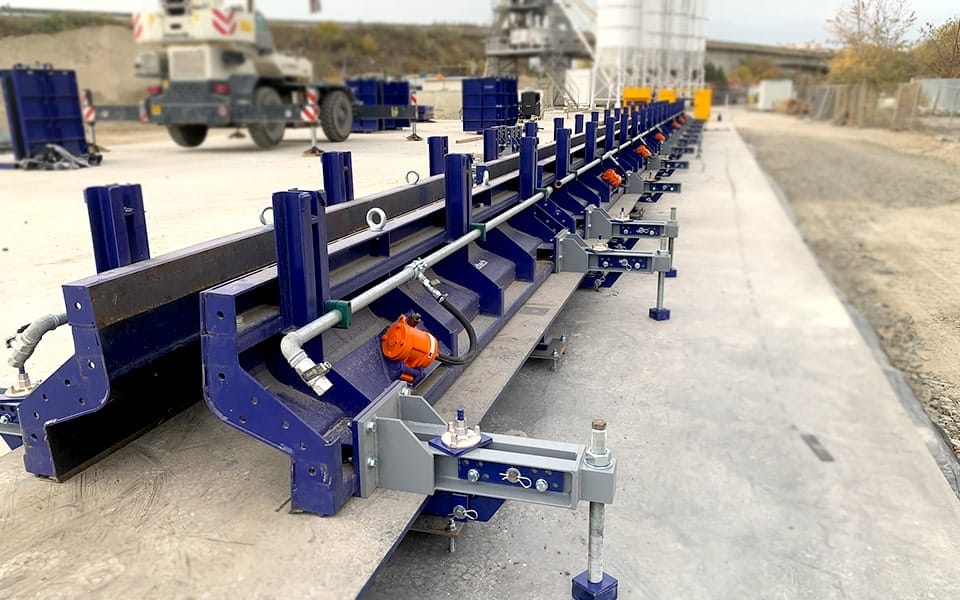
At Moldtech, we design custom moulds adapted to the exact panel geometry, reveals, inserts, insulation layers and openings. In one Mexican project, for example, we had to redesign the edge systems of a tilting table so that the same equipment could produce both standard façade panels and special pieces with large window openings, without increasing cycle times.
Production Process in the Precast Plant
Once the moulds and equipment are defined, the precast production line follows a fairly consistent sequence:
– Preparation of the reinforcement cage and embedded items
– Formwork setup, sealing and application of release agent
– Concrete casting with appropriate vibration
– Controlled curing (sometimes accelerated)
– Demoulding with tilting or lifting systems
– Final inspection and quality control
The choice of concrete precast equipment has a strong impact on cycle times. In several tilting table projects in Mexico and Canada, we saw how hydraulic tilting systems and integrated vibration reduced handling risks and improved finish quality. Automation is not always about robots; sometimes it is about designing simple, repeatable processes around robust equipment.
Advantages of Architectural Precast Panels for Projects and Plants
Benefits for Designers and Project Owners
For architects and owners, precast building envelope solutions bring a combination that is hard to match on-site:
– Faster enclosure of buildings and earlier interior trades
– High design freedom in geometry and finishes
– Integration of insulation, windows and embedded elements in the panel
– Predictable quality, independent of weather on site
From Moldtech’s point of view, one of the biggest gains comes when mould solutions allow more complex panels without penalizing schedules. We have seen plants move from simple flat panels to articulated façades simply by upgrading their tables and side forms, not by multiplying their equipment.
Benefits for Precast Factories and Contractors
For factories and contractors, architectural precast panels mean:
– Higher productivity and repeatability per mould
– Less on‑site labour and reduced scaffolding
– Better quality control under plant conditions
– Less waste of concrete and formwork materials
Here is something we would do differently if we could rewind a few early projects: plan capacity expansions from day one. In turnkey precast plants, leaving space and infrastructure ready for extra tables or a second casting line can save a lot of money later. We now insist more on this when we design customised layouts for clients.
Customised Moulds and Equipment for Architectural Precast Panels
When we talk about architectural precast, equipment selection really shapes the business model of the plant. In Mexico, our large Tilting Table 35 × 4.4 m project showed how a single robust table can produce a wide range of façade panels with high‑quality finishes for industrial and commercial buildings.
In another case, a Tilting Table 60 × 4 m in Mexico allowed the client to manufacture very large panels with excellent dimensional control. In Canada, we supplied a Tilting Table with Hydraulic Power Unit, integrating the table into a semi‑automated line for repetitive architectural pieces in a cold climate. All these cases share the same logic: custom precast moulds and equipment tailored to the client’s product mix and industrialised construction strategy.
When Does It Make Sense to Invest in This?
It is not always the right time to invest heavily in new technology, and we are honest about that. We usually see a good fit when:
– There is a growing demand for façades with repeatable designs
– The company handles recurrent projects with similar building types
– Project schedules and labour constraints push towards industrialisation
In those situations, we accompany clients in the technical and economic feasibility analysis, comparing different levels of automation and production capacity before any investment decision is made.
Bringing Projects to Life with Moldtech
Architectural precast panels sit at the intersection of aesthetics, structural performance and industrial productivity. When mould engineering, façade design and plant operations are aligned, the result is a façade system that looks good, performs well and is profitable to produce.
With projects delivered in more than 60 countries, we have seen very different ways of working, from small plants with one tilting table to fully integrated lines for large‑scale façades. If you are evaluating architectural precast panels for your next project or planning a new precast plant, we can help you define the right combination of moulds and equipment. You can contact us to review your drawings, discuss production targets and explore the most efficient configuration for your facility.