

What is Mold Maintenance in Precast Concrete Production?
Why is it critical in precast concrete plants
When we talk about mold maintenance in precast concrete plants, we are really talking about productivity, quality, and safety in the same sentence. In simple terms, it is the ongoing inspection, cleaning, adjustment, and repair of molds and ancillary equipment used to produce precast concrete elements. And when it is neglected, problems appear fast.
From our experience, poor maintenance leads to dimensional deviations, surface defects on panels or beams, and a higher rejection rate. Add to that unplanned stops, emergency repairs, and, in the worst cases, safety risks linked to stuck or misaligned components.
In our experience, the best‑performing plants see mold maintenance as an investment, not a cost, and manage the mold life cycle with the same rigor as any other strategic asset in the factory.
What does it actually include? Key tasks and routines
This is where many people fall short. They think that a good clean at the end of the shift is enough, and little else. But a serious maintenance plan goes much further and combines daily routines with structured periodic inspections.
Daily and shift-based mold care
Daily, good mold maintenance looks very operational and very simple (pero casi nadie lo hace con disciplina):
– Mold cleaning of working surfaces, corners, and edges to remove concrete residues before they harden.
– Visual inspection to detect damage, wear, rust, oil leaks, or loose elements.
– Quick check of locking systems, hinges, and hydraulic cylinders or hoses, where applicable.
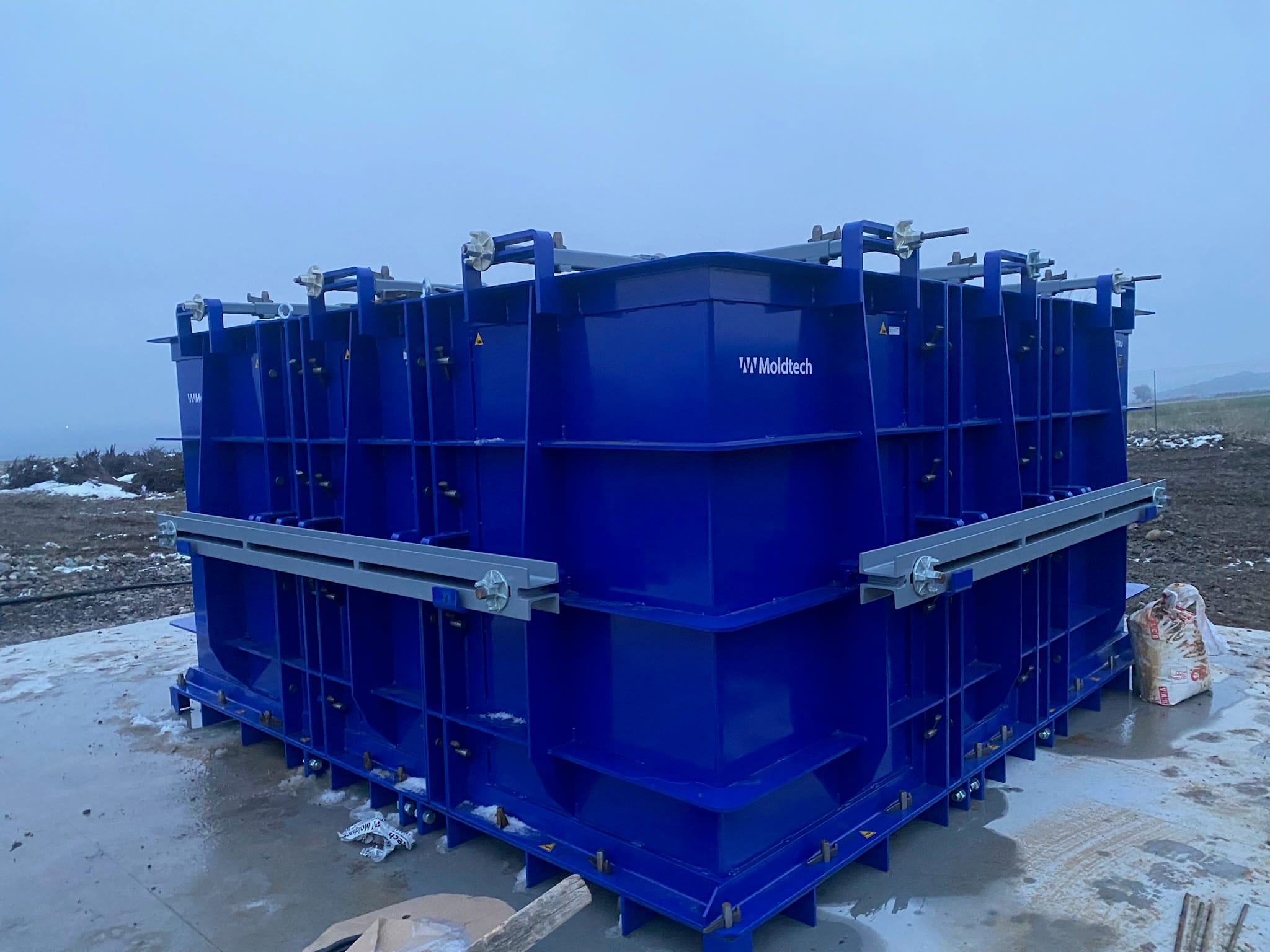
We learned that disciplined daily checks prevent most major failures we later see in the field. In one precast plant where we supplied custom beam and column molds, simply formalizing a 5‑minute visual check at each shift change reduced mold‑related quality claims in less than two months.
Periodic inspections and preventive adjustments
Beyond daily routines, preventive maintenance of molds should follow a clear inspection schedule (weekly, monthly, quarterly), adapted to production volume and environmental conditions. Typical tasks include:
– Dimensional checks with gauges to verify tolerances of precast concrete molds.
– Lubrication of moving parts, hinges, and locking bolts, and systematic bolt re‑tightening.
– Targeted replacement of wear parts such as seals, gaskets, vibration pad,s or contact strips.
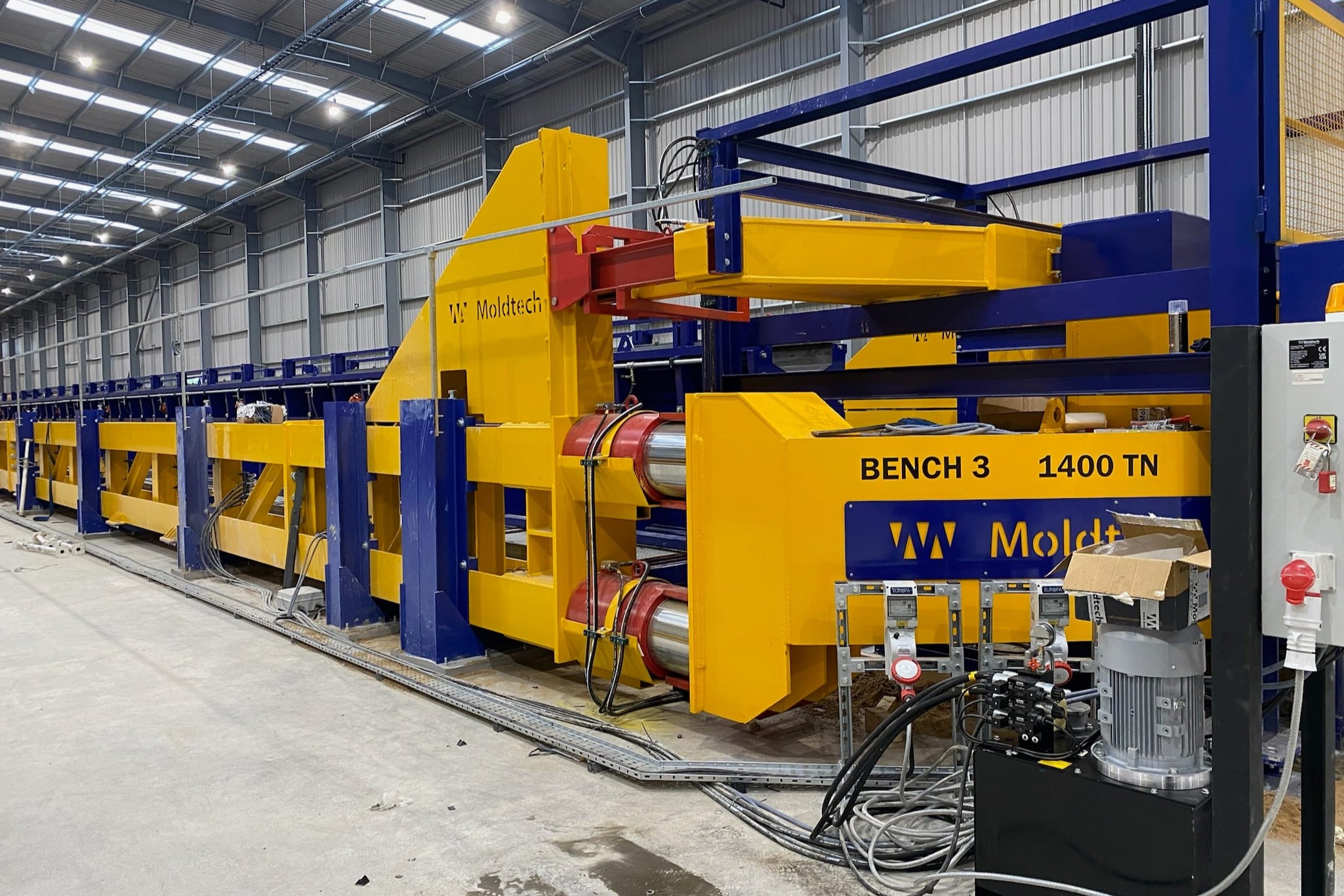
– Functional checks of vibration systems and hydraulic connections in more complex molds.
What we would do differently today, and we often recommend to clients, is to formalize these tasks with checklists and traceability. Plants that document interventions detect patterns of wear earlier and extend the service life of their molds significantly.
How good mold maintenance impacts quality, safety, and costs
You’ll see, the difference between a plant that “does its best” and another that smoothly scales up production usually lies in how it takes care of its molds.
Quality and repeatability of precast elements
Well‑maintained molds are the foundation for:
– Dimensional accuracy of beams, columns, wall panels, and 3D modules.
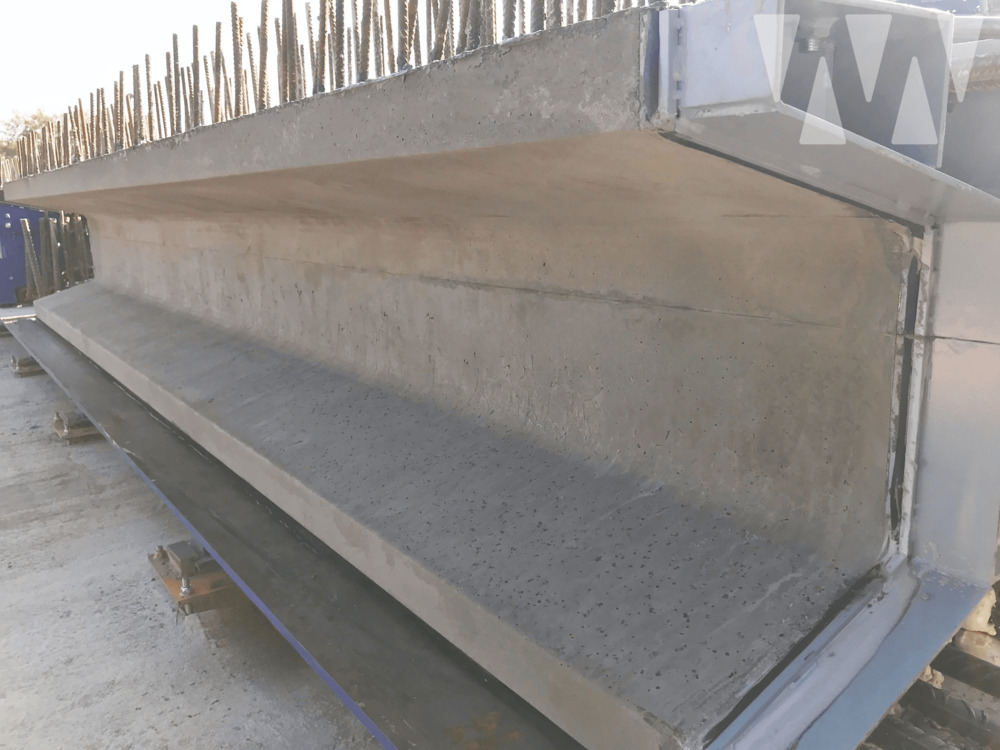
– Consistent surface finish, avoiding blowholes, marks, and deformations.
This is especially critical in industrialized construction and modular projects, where small deviations accumulate and cause serious assembly issues on site. We have seen modular projects where correcting misalignments on-site costs much more than having a robust maintenance plan in the plant.
Safety, uptime, and total cost of ownership
From a safety perspective, neglected molds increase the risk of:
– Accidents due to malfunctioning closing or tilting systems.
– Injuries occur when operators must force stuck parts or work around leaks and misalignments.
From a business view, good maintenance supports productivity in precast plants, reduces emergency stops and directly improves the total cost of ownership of the equipment. When we design customized molds, we already think about how maintenance will be done, so that lifetime operating costs and downtime are minimized, not just the initial investment.
Best practices: how Moldtech designs for easier mold maintenance
From our international experience, what customers value most is not just the mold itself, but how easy it is to maintain it for decades.
Our philosophy is to design customized molds with a maintenance-friendly design from day one:
– Robust materials and structures sized for long service life.
– Easy access to all areas for cleaning, inspection, and repair.
– Standardized spare parts and optimized hydraulic/vibration systems to simplify interventions.
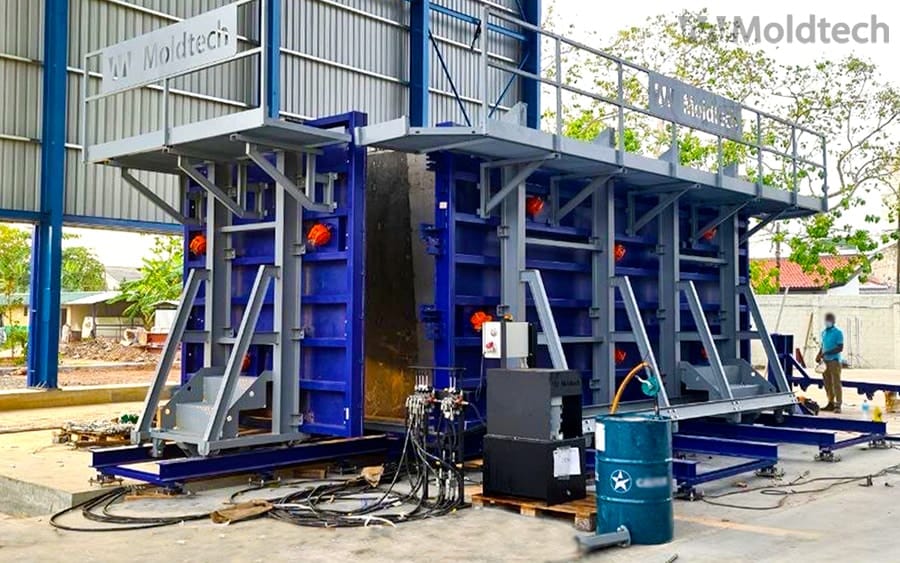
Working in more than 60 countries has taught us to adapt to very different plant realities, from highly automated turnkey precast plants to more manual facilities. In our turnkey projects, we do not just install equipment; we also define the maintenance concept, provide training and documentation, and align it with the client’s production strategy. That is exactly how we started in 1986: with maintenance and repair of precast concrete molds as our core business.
If you want to explore our approach to integrated solutions, you can take a look at how we design and supply complete lines for precast production in our turnkey solutions section on the Moldtech website.
Turning it into a competitive advantage
In short, mold maintenance is not just “keeping the molds clean”. It is a structured process that impacts quality, safety, uptime, and profitability in every precast plant.
Plants that treat maintenance as a strategic function, with clear routines, trained people, and maintenance‑friendly equipment, achieve higher reliability and better margins over the full life cycle of their molds.
If you are reviewing your maintenance strategy for precast plants or planning new investments in molds and equipment, we can help you design production lines that are easier to maintain and deliver consistent performance over decades.