

What is Energy Efficiency in Modular Construction?
When discussing energy efficiency in modular construction, we refer to modular buildings that require less energy to heat, cool, and operate throughout their life cycle, thanks to thoughtful design and precision-driven industrial production. In industrialized construction using precast concrete modules, the mold becomes more than a tool; it is a key factor in the building’s thermal performance. Specifically, 3D molds and precast modular systems allow for improved envelope designs, reduced thermal bridges, and enhanced airtightness. Increasingly, international clients prioritise sustainability, energy performance, and compliance with local energy codes when selecting solutions.
Why Energy Efficiency Matters in Modular and Precast Projects
From Cost Savings to Regulatory Pressure
Energy-efficient modular buildings reduce operational costs for decades, support ESG commitments, and ease the path toward green certifications or eligibility for incentives. Nowadays, energy ratings are often decisive in public and private tenders. Plants that invest in energy-efficient designs better position themselves to compete in large residential, hospitality, and social housing programs where lifecycle performance is a key criterion.
Industrialised Construction as a Driver of Sustainability
Sustainable modular construction brings a significant advantage: it shifts complexity from the construction site to the factory. This enables controlled production, less waste, repeatability of high-performance details, and much stricter quality control at every joint, corner, and opening. Clients who industrialise their process gain more control over the energy-efficient building envelope. Instead of solving thermal bridges individually on site, they can resolve them once in the mold design and replicate the solution across hundreds of units.
What Does Energy Efficiency in Modular Construction Really Mean?
Energy efficiency in modular construction focuses on minimising a building’s energy demand by combining:
- Optimised architectural and structural designs
• Appropriate materials and insulation strategies
• High-precision manufacturing of modules and panels
For precast concrete modular systems, performance is tightly linked to:
- Thermal insulation and reduction of thermal bridges in walls, slabs, and connections
• Airtightness and quality of joints between modules and panels
• Integration of passive design strategies (orientation, shading, openings, thermal mass)
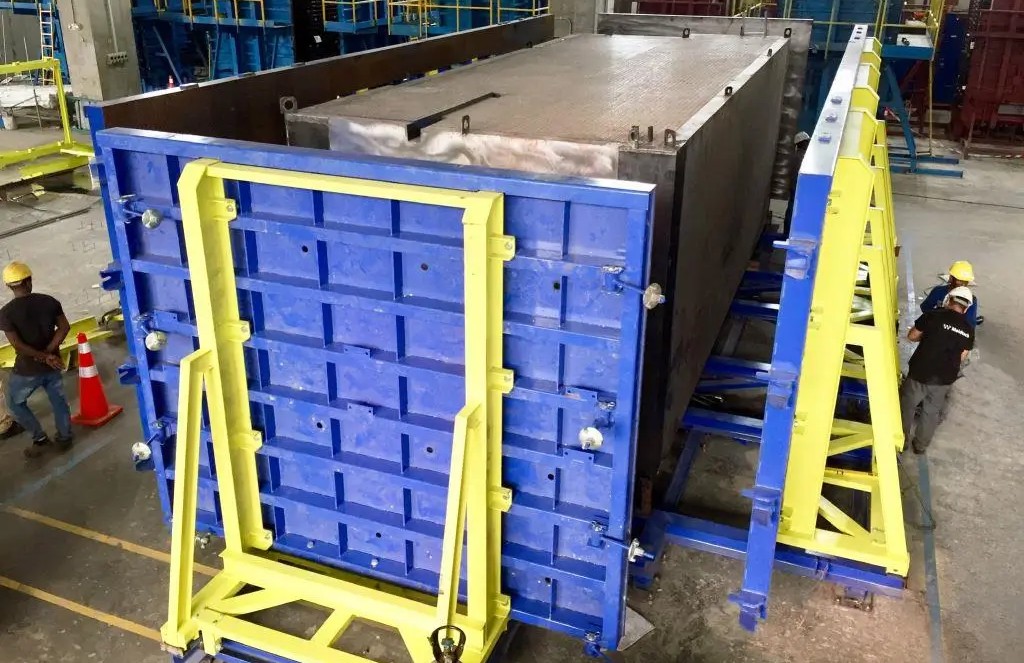
This is especially evident in student residences, hotels, or social housing projects; small improvements in thermal performance per room quickly add up. For example, our 3D molds for modular bathrooms in Miami were tailored to achieve energy efficiency with tight joints and integrated insulation, supporting overall building performance.
Key Design and Manufacturing Factors that Impact Energy Efficiency
Thermal Envelope and Panel Design
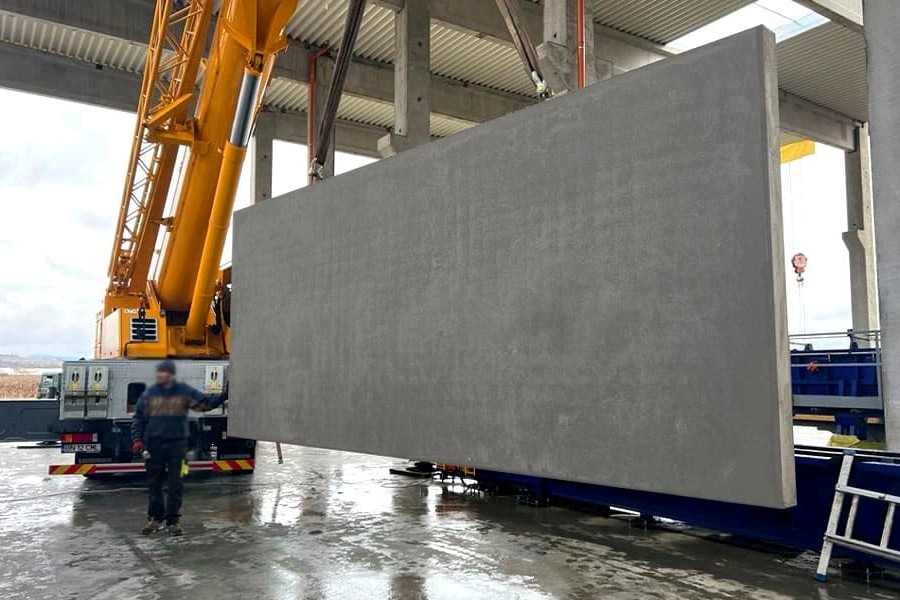
A weak envelope undermines any HVAC system. The thermal performance of precast panels and 3D modules is dictated by thickness, concrete type, insulation integration, and how joints and edges are handled. The demand for sandwich panels and 3D modules designed for superior thermal performance has grown, with increased focus on insulation layers and optimised coverings. Critical details such as balcony connections, corners, and window reveals are handled in the mold design, rather than improvised on site.
Precision, Repeatability, and Quality Control in the Plant
Energy efficiency is more than calculated U-values; it depends on the precision of plant manufacturing. Tight mold tolerances mean less deformation, better module fit, and fewer potential air leak paths. Even small deviations in a mold can cause recurring thermal weak spots across many units. For one North American project with 3D molds for different module sizes, tighter tolerances were implemented after prototypes proved that misalignment would compromise airtightness and the building’s overall energy performance.
Integration of MEP and Passive Design Elements
Modular precast systems allow pre-planning of MEP and passive elements within the mold. Custom 3D molds can include:
- Cavities for continuous insulation
• Pre-formed MEP ducts and shafts
• Recesses for external shading or facade features
In our 3D Bathroom Molds for Miami, for example, service ducts and connections were integrated with wall modules to prevent uncontrolled thermal bridges from plumbing and ventilation penetrations. When these details are resolved at the mold stage, installers on site do not need to improvise, preserving the building’s energy performance.
How Moldtech Solutions Supports Energy Efficiency in Modular Construction
Custom 3D Molds for High-Performance Modular Units
Our 3D molds for modular construction allow clients to create modules designed from the outset for energy performance: multilayer walls, integrated insulation, precise corners, and controlled joints. Modern molds feature more cavities for insulation and continuous thermal layers, responding to evolving codes and expectations. For a US residential volumetric PPVC project, our 3D molds accommodated different layouts while maintaining an energy-efficient envelope with continuous insulation and dimensionally accurate joints.
Turnkey Precast Plants Aligned with Quality and Sustainability
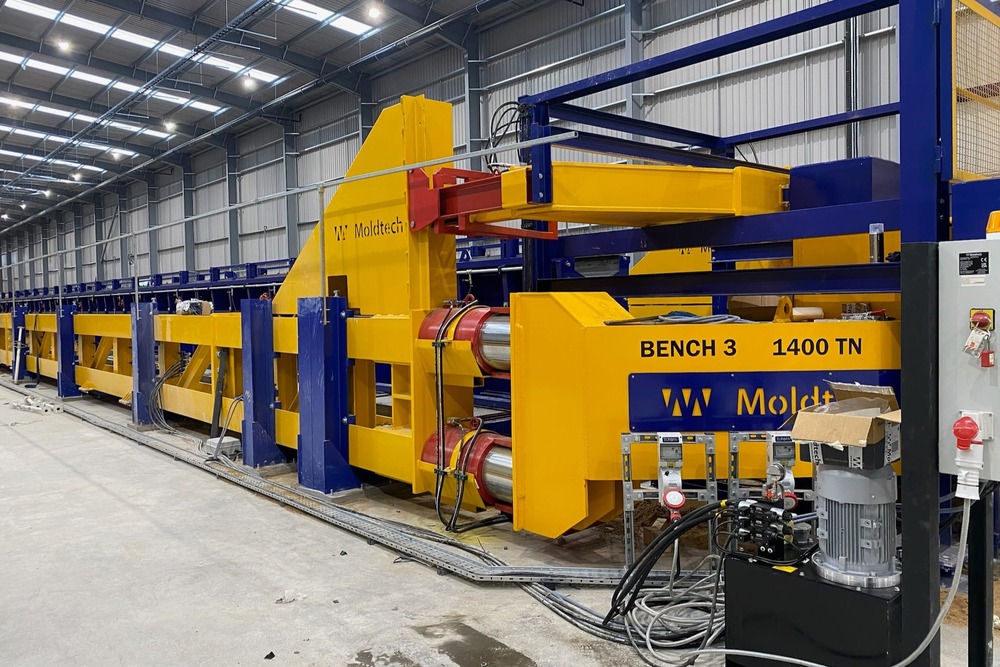
Energy efficiency is also a function of process. Our turnkey plants for precast concrete integrate automated reinforcement handling, controlled casting, and optimised curing, yielding more consistent dimensions and superior surface finishes. This results in better-fitting modules and fewer site adjustments. In the US, equipment supply for residential buildings and PBU molds, our solutions provided a production line meeting high volume and strict tolerances to comply with local energy codes, with plant procedures aligned to building thermal requirements.
Practical Recommendations to Improve Energy Efficiency in Modular Projects
Our experience suggests some key practices make a significant difference:
- Engage the mold and equipment supplier early when designing energy-efficient modules, as many issues stem from pre-production decisions
• Standardise high-performance details like corners, joints, and window interfaces, repeating them project-wide rather than reinventing each time
• Validate thermal and airtightness performance with prototypes before full production; mock-ups are more cost-effective than redesigning at scale
• Coordinate architects, structural engineers, and plant designers from the outset to maximise integration and minimise errors
Moving Towards More Sustainable, Energy-Efficient Modular Construction with Moldtech
Energy efficiency in modular construction is achieved through intelligent design, sound engineering, and robust industrial processes. The combination of modular precast concrete, high-precision 3D molds, and planned turnkey plants enables clients to deliver buildings that are energy efficient not only in theory but in actual operation. Moldtech’s team can help design custom 3D molds, plant layouts, and equipment tailored to your project’s specific energy, sustainability, and compliance goals. We encourage you to contact Moldtech to explore solutions for your next energy-efficient modular or precast project.